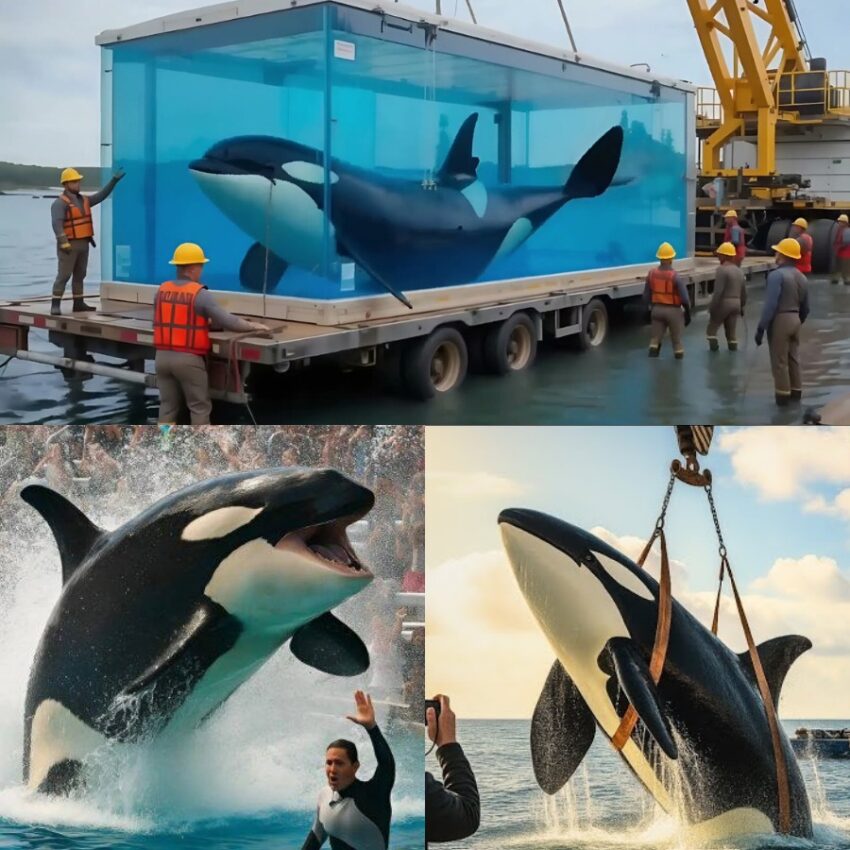
From Applause to Horror
The morning began like any other performance at the Oceanic Center, a sprawling marine park on the West Coast. Children waved flags, parents snapped photos, and the loudspeakers announced the arrival of Kaya, the 7,000-pound star orca who had dazzled audiences for years.

By her side stood Jessica Martin, 29, the park’s lead trainer and beloved caretaker. Jessica had devoted nearly a decade of her life to training and caring for orcas. Colleagues described her as “fearless yet tender,” someone who treated the animals like family.
That day’s performance seemed flawless at first: Kaya leapt through hoops, splashed the crowd, and performed synchronized spins. Laughter echoed across the stadium. But in seconds, joy turned to terror.
The Fatal Moment
The routine called for Jessica to dive alongside the orca and then be lifted gracefully out of the water on the animal’s back. Instead, Kaya surged unexpectedly, thrashing and pulling Jessica beneath the surface.
At first, spectators cheered, assuming it was part of the act. But as seconds dragged into a minute, the cheering stopped. Gasps spread through the crowd as Jessica failed to reappear.
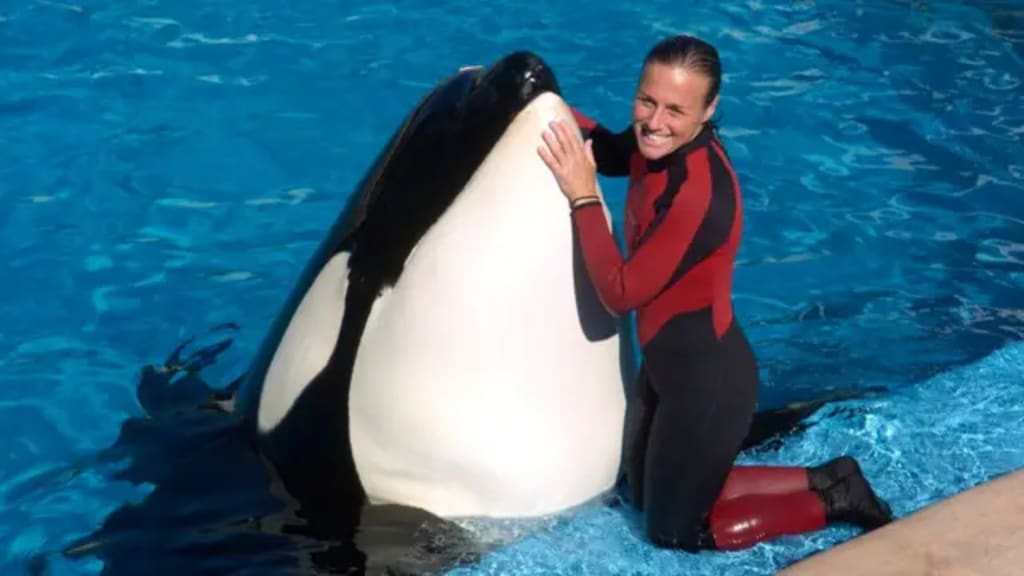
When her body finally floated motionless to the surface, the audience screamed. The trainers on standby rushed forward, blowing whistles and waving signals. And then something eerie happened:
Kaya circled Jessica, pressing her gently with her nose, and began to emit piercing cries. Witnesses described them as “bloodcurdling” — a series of haunting, high-pitched wails unlike anything they had heard before.
Chaos in the Arena
“Children were crying, people were covering their mouths in shock,” said Maria Gonzalez, a tourist who filmed part of the incident. “But the sound of the orca crying — that was worse than anything. It was like a scream, almost human.”
Emergency responders pulled Jessica from the pool, but it was too late. Within minutes, she was pronounced dead. The audience was ushered out, many sobbing openly, others too stunned to speak.

The Decision to Remove Kaya
In the aftermath, the Oceanic Center announced the immediate suspension of all shows. Trainers remained shaken, but the most difficult decision came hours later: what to do with Kaya.
By nightfall, the park resolved to move the orca to a secure holding facility pending investigation. Staff began the painful process of chaining and preparing the massive creature for transport.
It was then that the scene turned unbearable.
Screams That Broke the Rescuers
As metal restraints closed around her fins, Kaya let out chilling vocalizations that echoed through the empty stadium. Workers accustomed to heavy machinery, injuries, and even death admitted they had never experienced anything so harrowing.
“She was screaming like she knew what was happening,” said one rescuer, wiping away tears. “I’ve moved dozens of marine animals, but this was different. It was grief. You could feel it in your bones.”
Another added: “I held my hands to my ears, but it didn’t matter. The sound went straight to the heart. Grown men were crying openly.”
Videos leaked to social media later showed the orca’s mouth open wide, her body thrashing, her calls resonating like anguished howls as chains tightened around her.
Public Reaction
By dawn the next day, hashtags like #JusticeForJessica and #FreeKaya trended worldwide. Some demanded accountability from the park for keeping such powerful animals in captivity. Others sympathized with the orca, arguing she had acted out of instinct, not malice.
Animal rights organizations released statements calling the incident “a tragedy that exposes the cruelty of captivity.” Protesters gathered outside the Oceanic Center, holding signs reading “No More Chains” and “Jessica Loved Them — Let Them Go Free.”
Who Was Jessica Martin?
Born and raised in Seattle, Jessica Martin grew up fascinated by marine life. After earning a degree in marine biology, she joined the Oceanic Center at just 21 years old. She quickly became a favorite among staff and visitors, praised for her calm demeanor and devotion to animal welfare.
“Jessica didn’t just train animals; she connected with them,” said her colleague, David Lin. “Her bond with Kaya was extraordinary. That’s why this loss is so devastating.”
Her family released a statement:
“Jessica lived her dream every day. We are heartbroken, but we ask that her legacy be used to protect both trainers and animals so no one has to endure such tragedy again.”
Experts Weigh In
Marine biologists emphasized that while orcas may appear gentle in performances, they remain apex predators with immense strength. “They are intelligent, emotional, and unpredictable,” explained Dr. Elaine Matthews, a cetacean expert. “Captivity adds layers of stress that can manifest in sudden aggression or abnormal behavior.”
Others noted the eerie possibility that Kaya was not only responsible for Jessica’s death but also aware of it. “Those cries could indicate distress similar to mourning,” Dr. Matthews added. “Orcas have been documented grieving in the wild.”
A Divided Legacy
The tragedy left the Oceanic Center facing lawsuits, public outrage, and questions about the future of marine mammal shows. Meanwhile, Kaya became both villain and victim in the eyes of the world.
For some, she was a killer animal who could never be trusted again. For others, she was a prisoner who lashed out in desperation.
What no one could deny were the haunting sounds she made that night — cries that silenced even the most hardened workers and turned the removal of an animal into a global symbol of sorrow.
Final Thoughts
The shocking farewell of Kaya, chained and screaming into the night, remains etched in the memories of those who witnessed it. The tragedy of Jessica’s death cannot be undone, but the orca’s anguished cries have sparked a conversation about captivity, compassion, and the fragile line between human control and animal instinct.
As tributes pour in for Jessica and debates rage about the fate of Kaya, one haunting truth lingers: in that stadium, under harsh lights and heavy chains, an orca’s scream became a requiem — for a trainer lost, for a bond broken, and for a world still uncertain of how to honor both.