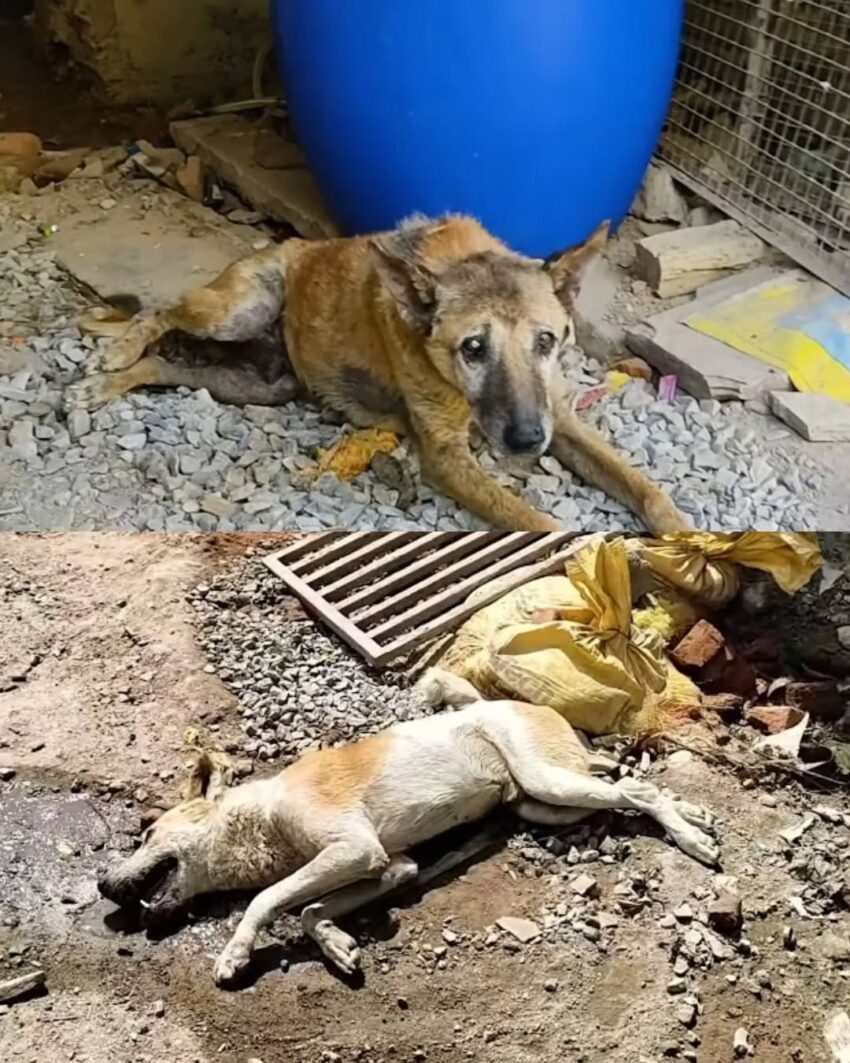
As dogs grow older, life on the streets shifts from difficult to almost impossible. Time, which once made them wiser and more confident, eventually begins to weaken their bodies. Their legs tremble more easily, their breath grows shorter, and their senses dull. The once-fierce independence that helped them survive now starts to fade. Competing with young, agile dogs for scraps of food becomes an exhausting battle they often lose. Finding a safe place to rest requires energy they no longer have. Many begin to withdraw, not out of choice, but because age leaves them too fragile to risk confrontation. For senior dogs living without a home, every day becomes a quiet struggle for survival.
When sickness or injury strikes — as it inevitably does — aging dogs no longer have the physical strength to recover on their own. Even small wounds can become life-threatening. Their immune systems weaken, making infections more severe. Joints stiffen, turning simple movement into painful effort. Eyes become cloudy, hearing fades, and bodies that once ran fast now move slowly, trembling with each step. In those moments, their vulnerability becomes painfully clear. Without help, many would not survive long. That is why rescue efforts for elderly and disabled animals are so crucial. These dogs, who have weathered years of hardship, need compassionate hands more than ever.
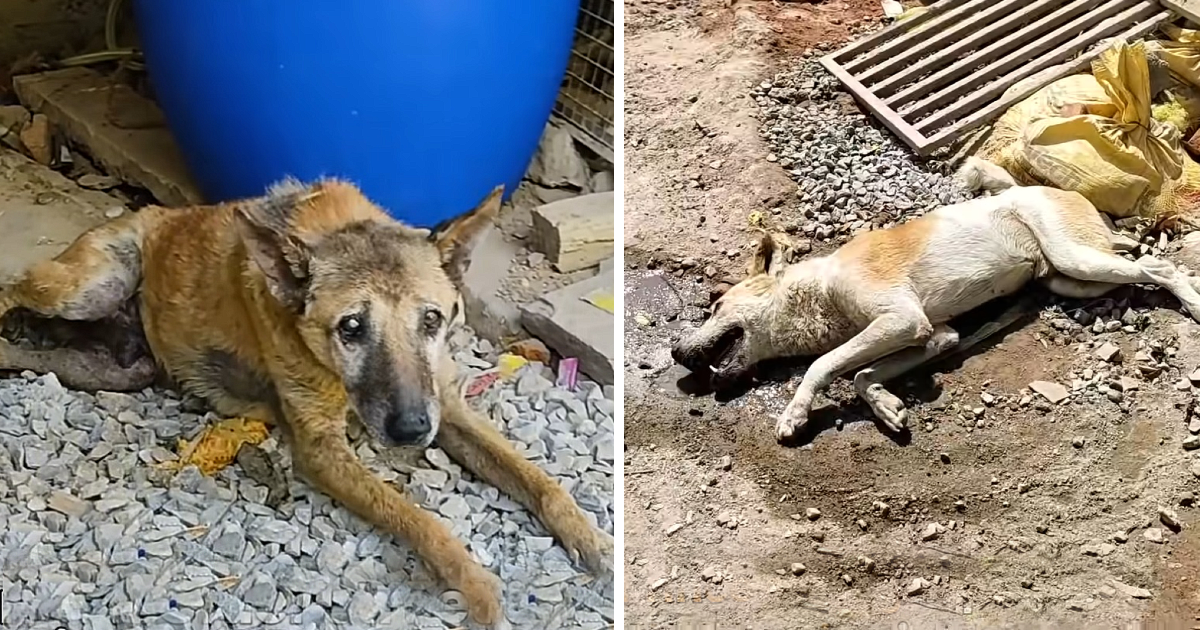
Thankfully, there are people who see these aging animals not as burdens, but as souls deserving of love and care. Around the world, more senior and disabled dogs are now finding safety and peace in forever homes where their special needs are met with patience, understanding, and tenderness. Instead of fighting for scraps, they receive warm meals. Instead of sleeping on cold pavement, they rest in soft beds. Instead of facing loneliness, they finally know companionship. These homes are more than shelters — they’re havens where older dogs can spend their remaining years in comfort and dignity.
Among the organizations devoted to this mission, Animal Aid stands out as a sanctuary of compassion. For years, they have been rescuing elderly dogs, disabled dogs, and animals whose age or injuries made them unlikely candidates for adoption. At Animal Aid, these animals are not seen as too old or too broken. They are seen as worthy — worthy of medical care, affection, and a peaceful life. The team provides everything from surgeries and rehabilitation to daily care, ensuring that each dog can enjoy safety for the rest of its days.
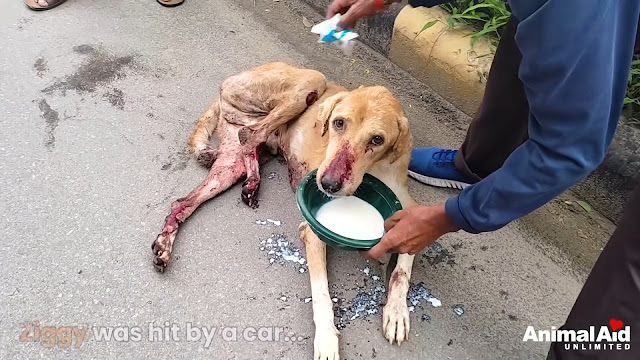
Four extraordinary senior dogs — Prince, Ziggy, Cooper, and Masala — embody the miracles such compassion can create. Each of them came from a world of hardship, yet today their lives are filled with quiet joy.
Prince, once thin and shaken from years of neglect, now walks with a soft, grateful spark in his eyes. He leans into every gentle touch, savoring the love he never knew before. Ziggy, who arrived fearful and frail, has blossomed into a calm, trusting companion. Cooper, rescued in critical condition, now spends his days wrapped in blankets, surrounded by people who watch over him with tenderness. And Masala — sweet, disabled Masala — greets every morning with a wagging tail, proving that age cannot dim the spirit of a dog who finally feels safe.
Their transformations are living proof that fairy tales don’t belong only to the young. Even dogs who are young only at heart can find happy endings when given a chance.

This work, however, does not happen on its own. It is carried forward by the tireless volunteers and staff at Animal Aid — people whose compassion has saved countless lives. To them, we offer a message from the deepest place of gratitude: Your dedication changes the world for animals who would otherwise be forgotten. We may not know all your names, but your kindness is unforgettable. You offer warmth to those who have known cold, hope to those who have only lived fear, and love to those who have survived far too much. Thank you for every rescue mission, every sleepless night, every wound cleaned, and every heartbeat you’ve helped protect.
Some images and videos of rescues can be difficult to watch, but they are shared for one purpose — to educate, to show the realities these animals face, and to inspire compassion for those who cannot speak for themselves. Behind every photo of a rescued senior dog lies a story of survival and the hands that lifted them out of suffering.
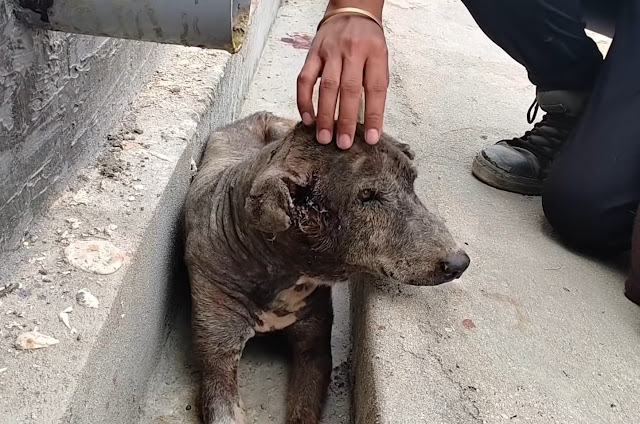
Senior dogs don’t ask for much — a warm place to rest, a bowl of food, a loving human, and a chance to feel safe. And because of organizations like Animal Aid, many finally receive those things in the final chapters of their lives.
Their stories remind us that kindness can rewrite an ending. And sometimes, the greatest love is given to those who have waited the longest to feel it.
Best Friends Through the Clippers: Luke and Rebecca’s Story.286
Whenever Darian McRose, cofounder of Right Choice Shearing, arrives at a farm, they take a quiet moment to observe the herd. As a professional shearer, McRose’s job is to shave the fleeced animals on the property efficiently, but rushing in isn’t an option. The animals’ comfort, emotional state, and trust are as important as the shearing itself. Each session begins with assessment — understanding the personalities and needs of every creature before the clippers buzz to life.
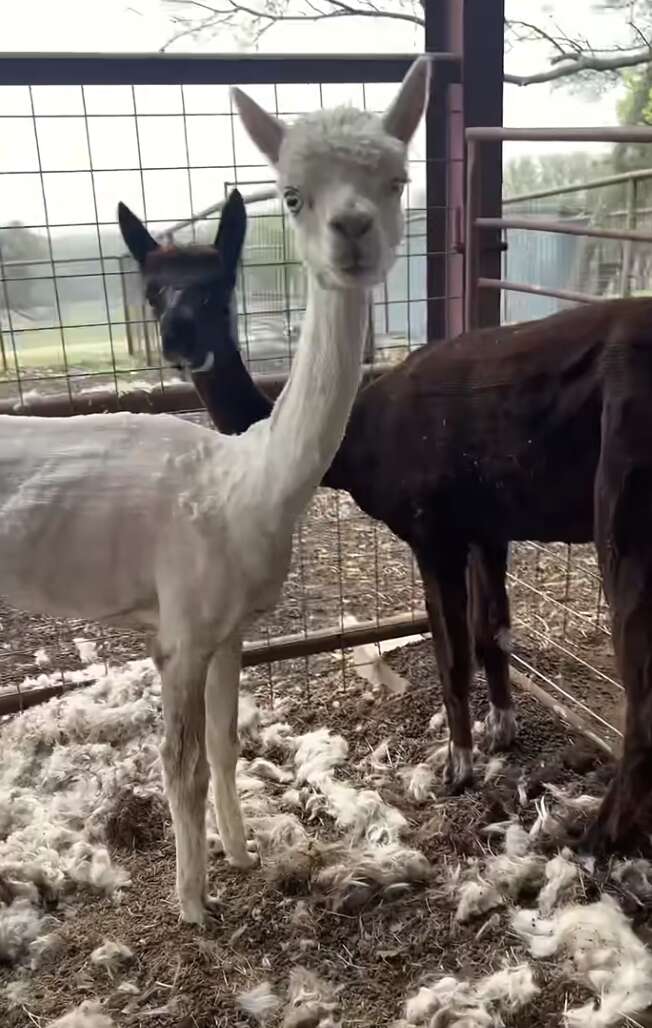
Last month, McRose arrived for an appointment that would reveal just how profound animal bonds can be. On this farm, two alpacas awaited: Rebecca, all brown and calm-eyed, and Luke, a strikingly white male with a sensitive demeanor. McRose carefully observed them before deciding the order of shearing — a crucial step for a smooth session. Animals, it turns out, often mirror each other’s emotional states. Picking the right alpaca to go first could set the tone for the entire session.

“The order of shearing is important because the animals will feed off each other’s energy,” McRose told The Dodo. “We pick the most observant animal in the herd to go first. This brown one had a calm demeanor and attentive eyes, so we had a feeling she would set the best example.”
Rebecca’s turn came first. Though she wasn’t necessarily accustomed to being handled, McRose’s intuition proved correct. She stood perfectly still as the clippers passed over her coat, demonstrating a serene confidence that would become a guiding example for her companion.
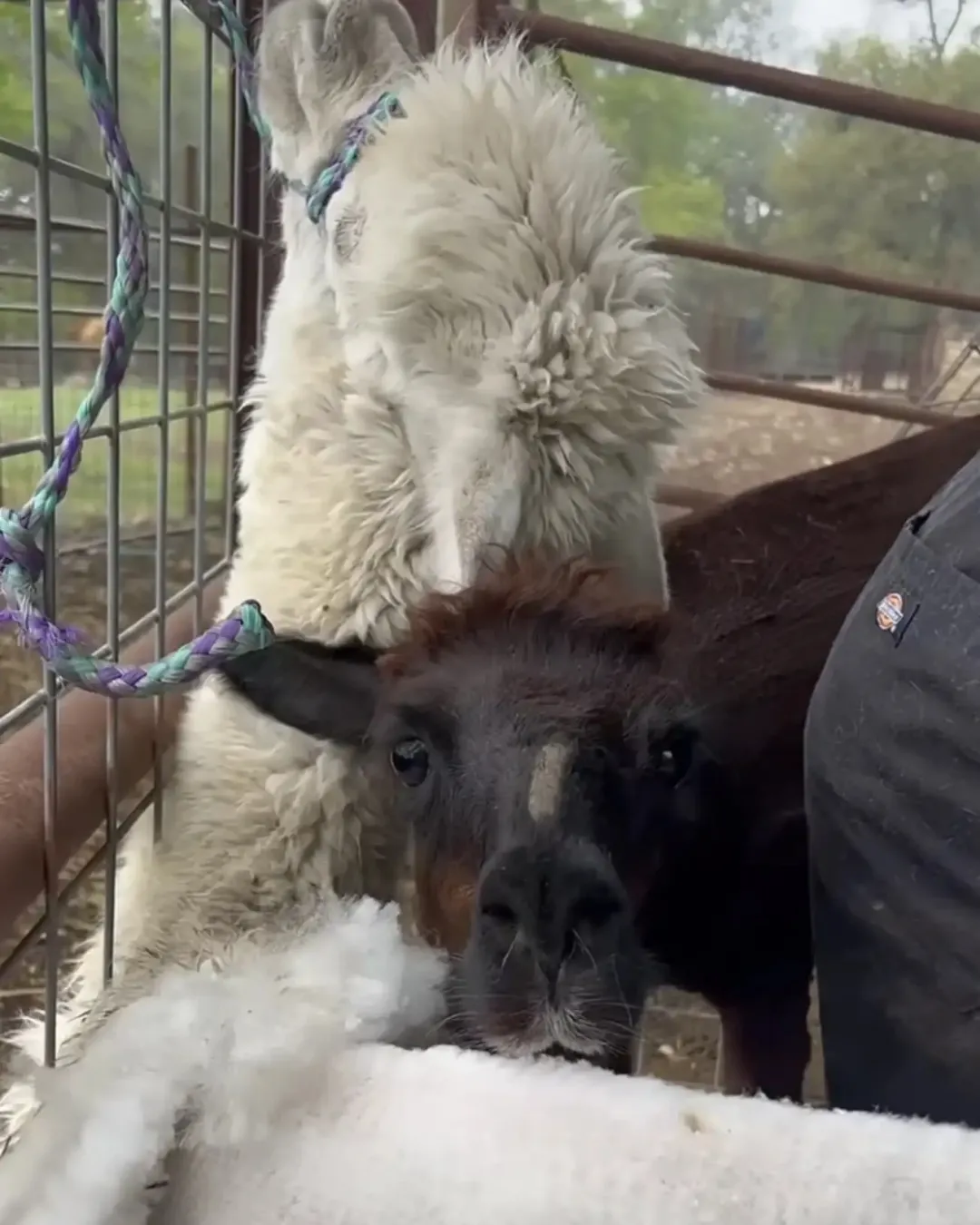
Then came Luke. Unlike his best friend, he was visibly anxious, jumping and pulling against his halter at the first touch of the clippers. Fear coursed through his body, making the shearing a potentially dangerous task for both him and McRose. Yet as Luke struggled, something remarkable happened. Rebecca, ever attentive and instinctively protective, stepped forward to comfort him.
“His pen-mate came up in response to his first buck to comfort him,” McRose explained. True to her nature, Rebecca remained by Luke’s side, offering physical reassurance as he thrashed. At times, the simple presence of her neck brushing against his was enough to soothe him. But when his nerves peaked, Luke needed more — a direct connection. Rebecca responded by positioning her face in front of his, allowing him to sniff her breath, a critical form of communication in alpacas that blends scent, posture, and trust.
“She basically got right in front of his eyes and let him smell her breath,” McRose said. “Scents seem to be a large part of their communication, along with body language. He instantly calmed down, even though he was still clearly nervous.”
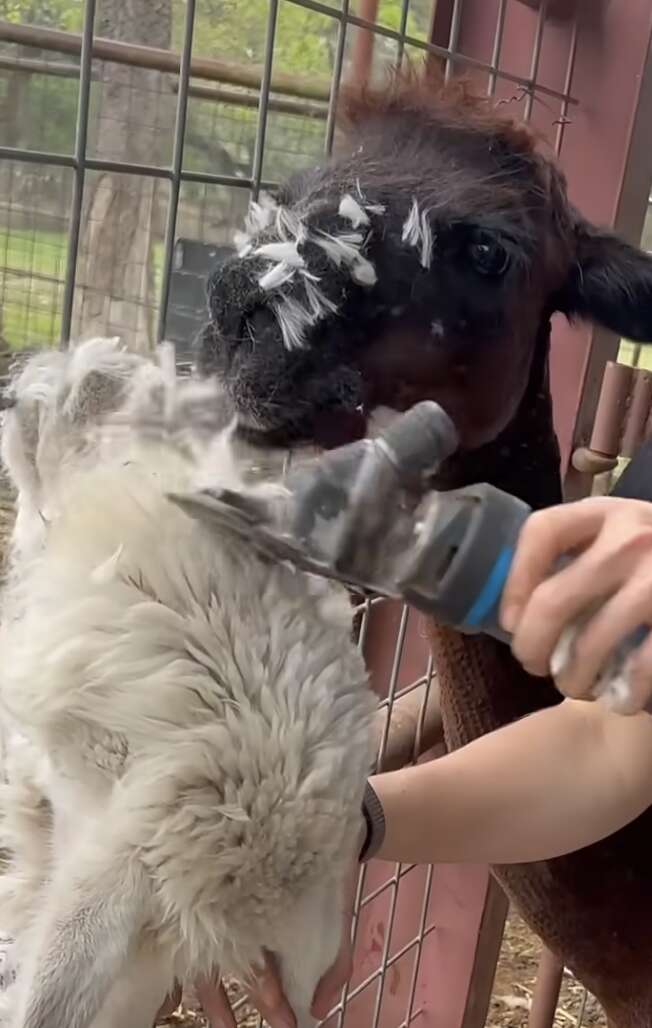
With each inhale of Rebecca’s breath, Luke’s tension eased. The thrashing slowed, his muscles relaxed, and he gradually allowed McRose to finish the shearing. What could have been a chaotic and stressful ordeal became a testament to the profound empathy and loyalty that animals can show toward one another.
By the end of the session, both alpacas had new haircuts, and more importantly, a strengthened bond. McRose reflected on the experience with awe. “When it happens in person, there is an overwhelming feeling of connection and appreciation for the depth of these animals,” they said. “It’s inspiring to witness the passage of wisdom between herd mates, something we often see between mothers and cria (babies) but seldom capture.”
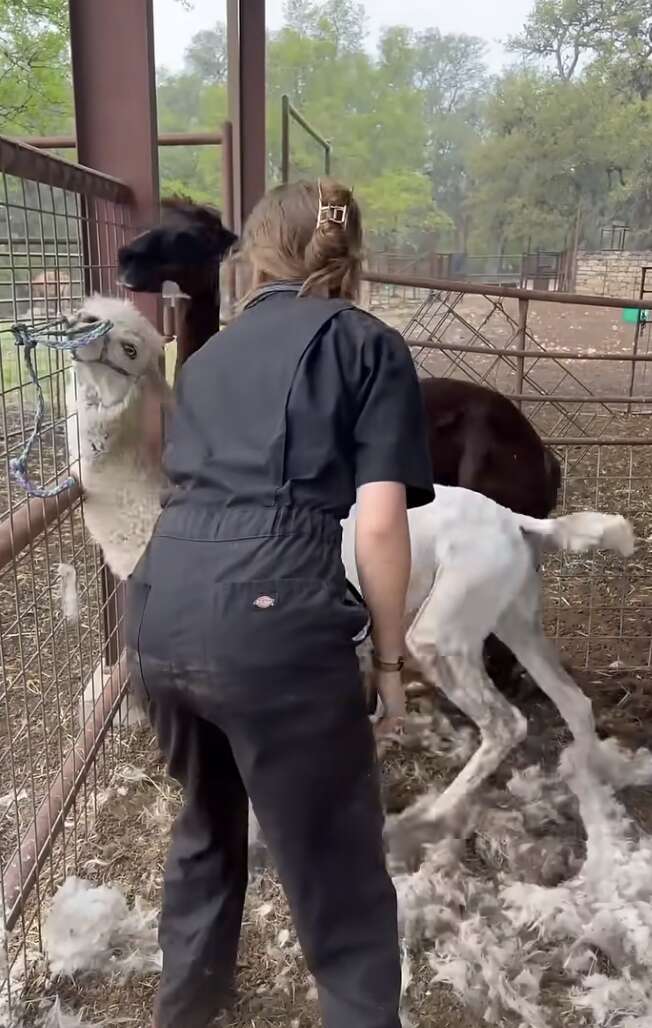
Luke and Rebecca’s story is a vivid reminder of the subtle but powerful emotional lives animals lead. Rebecca’s instinctive care, her unwavering presence, and the way she guided her friend through fear showcase empathy that transcends words. Meanwhile, Luke’s trust, once earned, reflects the transformative power of companionship and support.
The alpacas are due for their next haircut this spring, and McRose already looks forward to seeing them again. Though they hate to witness any animal in distress, the chance to observe such a loving bond — coupled with the satisfaction of a successful shearing — makes their work profoundly rewarding.
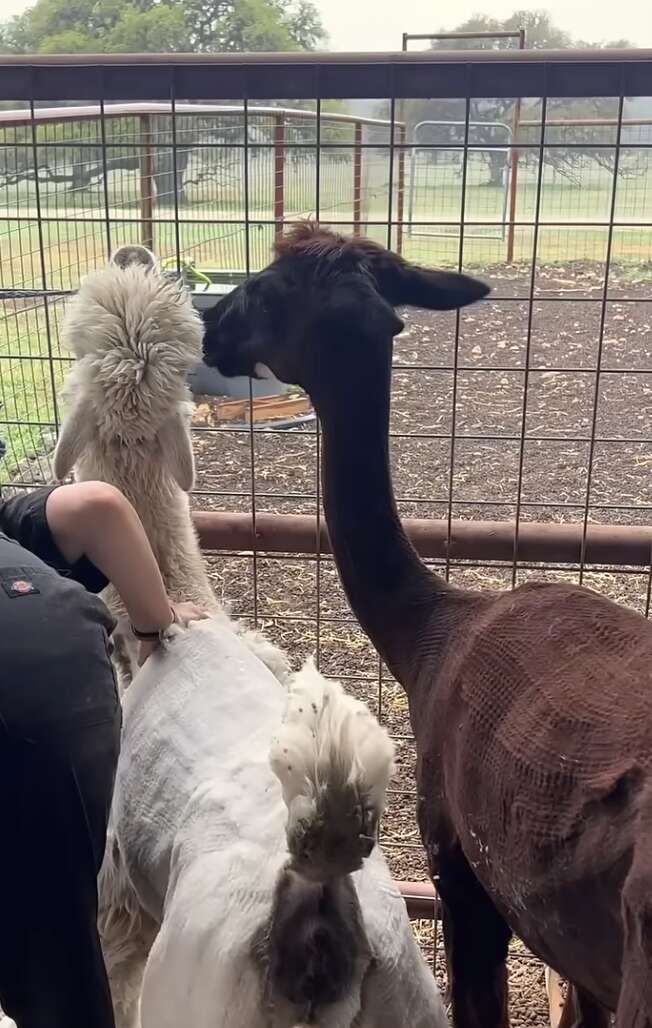
In the end, Luke and Rebecca walked away not only with sleek new coats but with a renewed affirmation of their friendship, a testament to the remarkable ways animals communicate, comfort, and care for each other. Their story reminds us that compassion is not just a human trait — it lives vibrantly in the animal world, often in ways that leave us in awe.