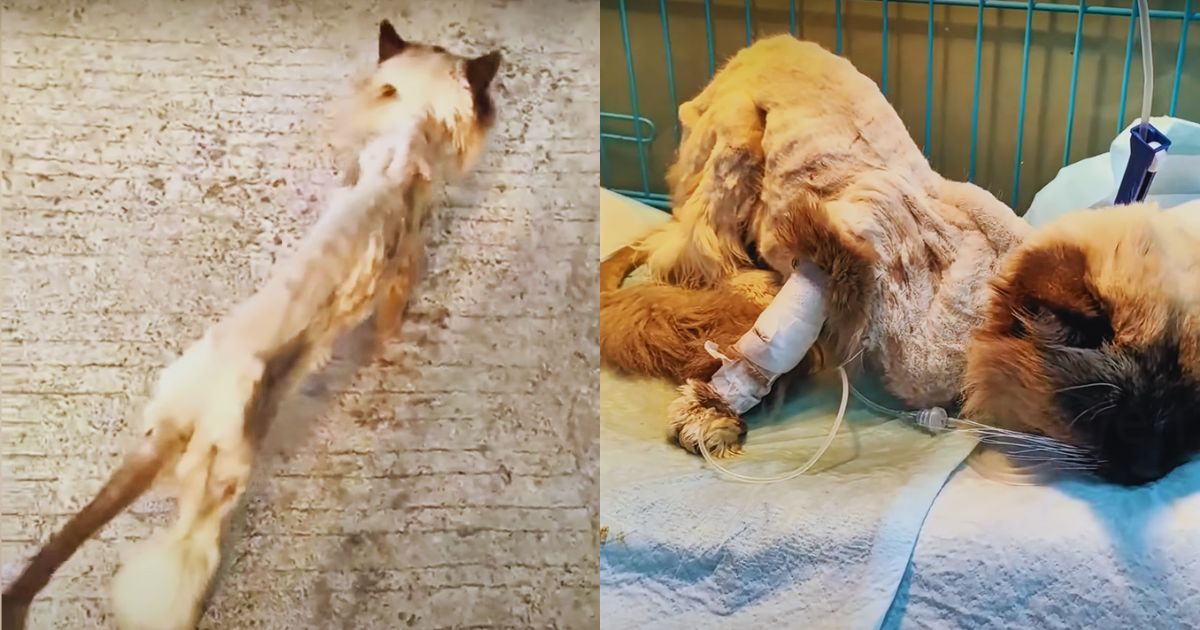
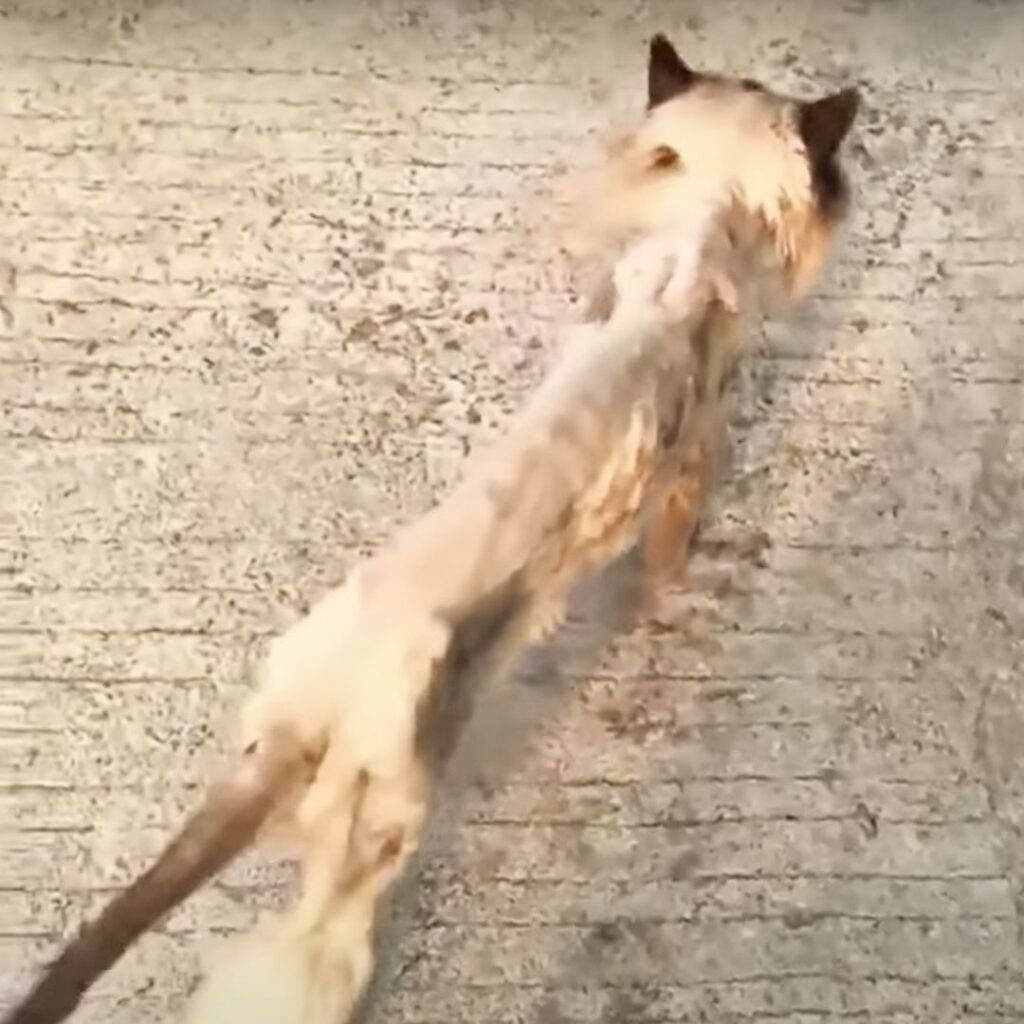
The cat staggered across the street, thin as a whisper. Bones pressed against dull fur, he moved with a fragile, faltering gait. I stopped my car. His eyes, cloudy and weary, met mine through the dusk. I couldn’t drive on.
A can of cat food sat in my glovebox, meant for a neighbor’s pet. I opened it, the scent drifting softly in the air. He didn’t move. His legs were too weak to carry him to the offering. I knelt on the cold pavement, and he looked at me with a quiet surrender, not hope. Carefully, I scooped him up. His body was as light as a fallen leaf. I took him home.
The house was still, except for the hum of the refrigerator. I set him on a folded blanket. He didn’t stir. Breathing shallowly, chest rising and falling faintly, he seemed suspended between life and something else. I sat beside him through the night, wondering if he’d make it through.
Morning came, gray and soft. A faint meow broke the silence, almost imperceptible. The blanket remained barely disturbed. The food I’d left was untouched, save for a small pile of vomit nearby, bits of shrimp shells and scraps of scavenged meals. My stomach twisted — not in disgust, but in sorrow for the hunger he endured, the fight he had waged alone on the streets.
I cleaned him gently, offering fresh food. He nibbled, stopped, his steps faltering as he tried to move. My heart ached. I called the vet, my voice low, careful, as if speaking too loudly might break him. They told me to bring him in at first light. Wrapping him in an old sweater, I held him close, feeling the tiny weight of his fragile body against my chest, and drove through the waking city.
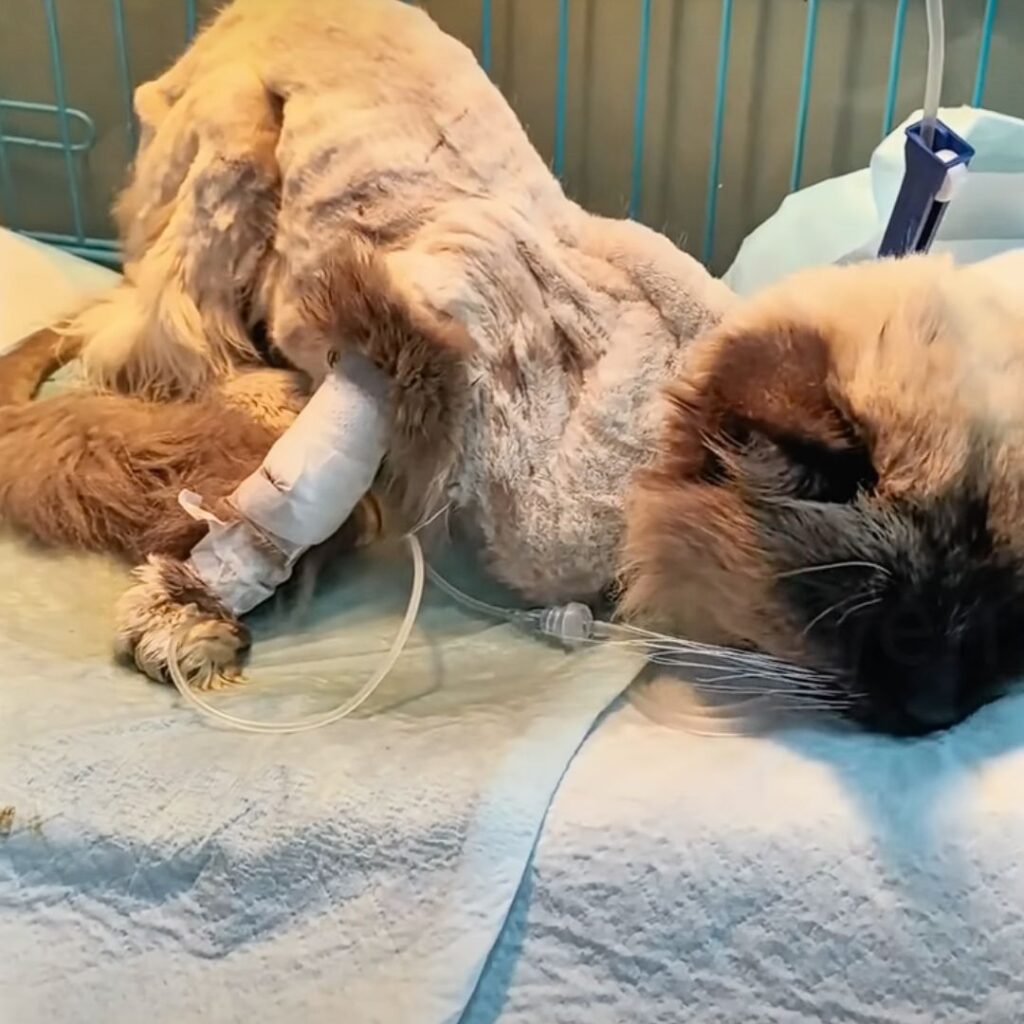
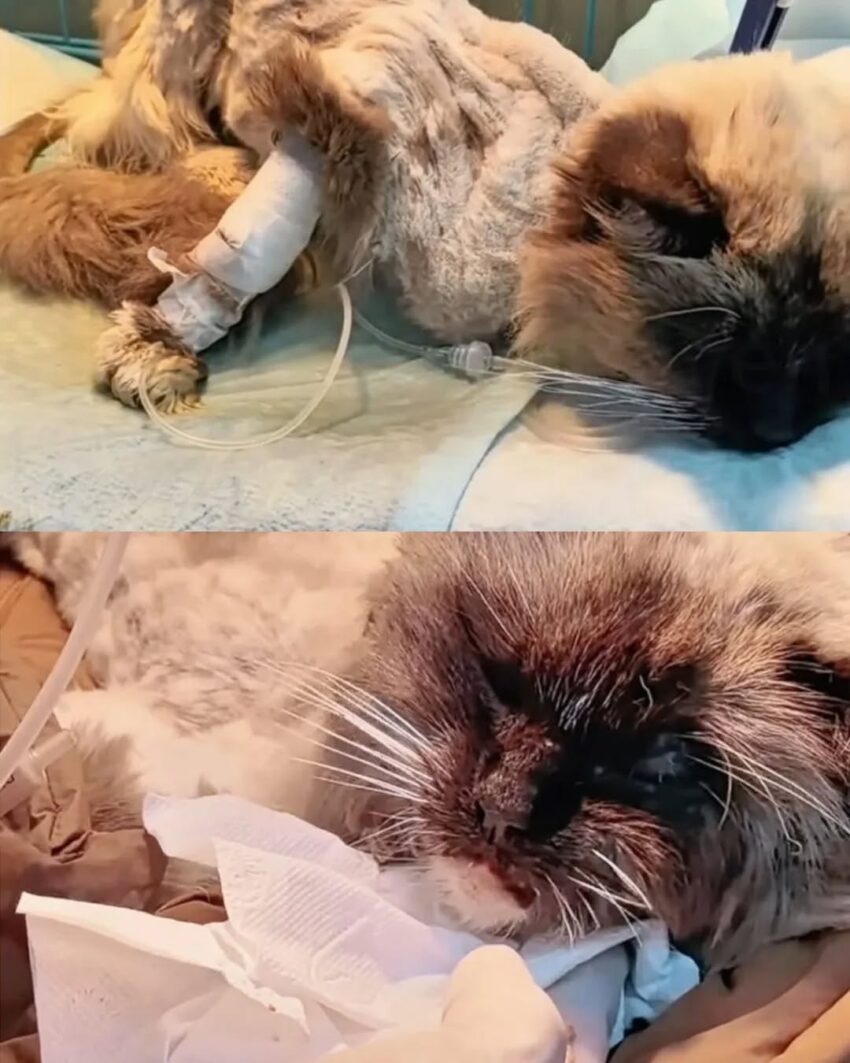
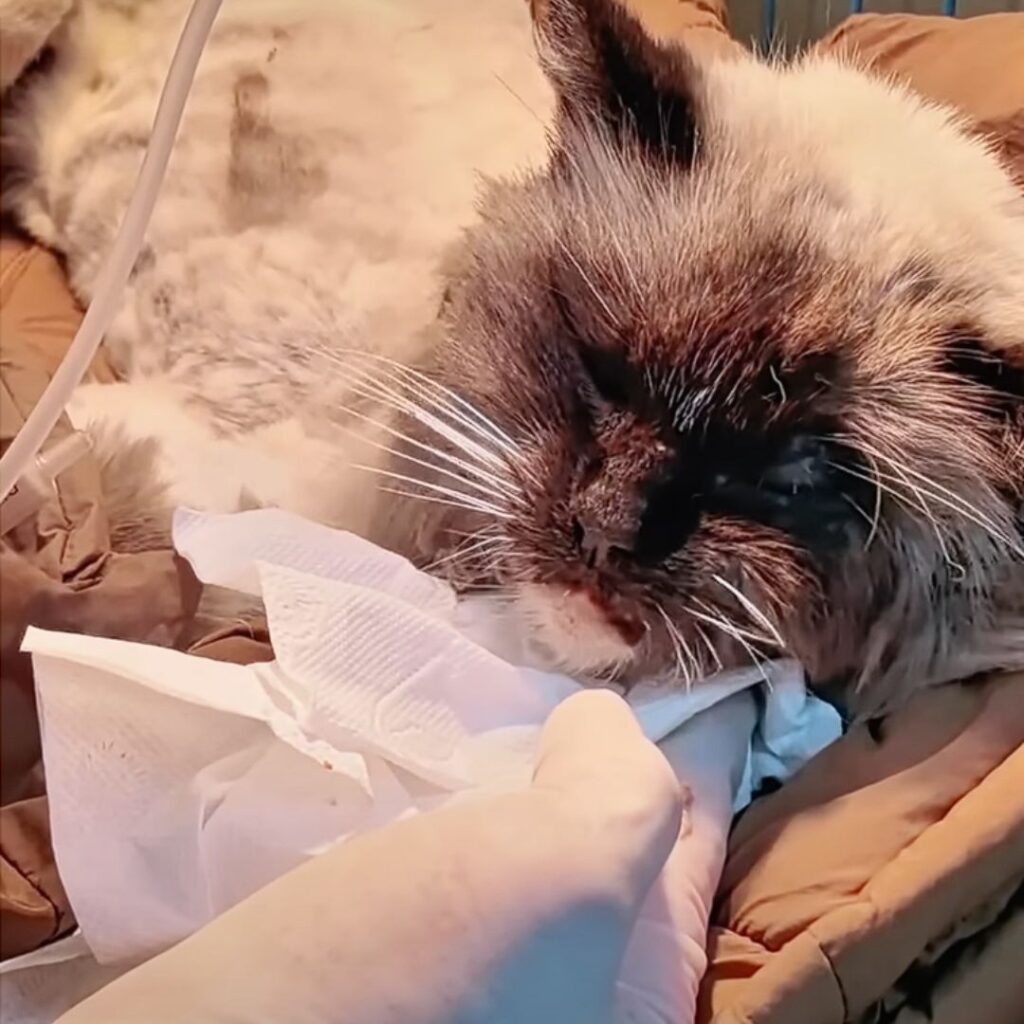
The vet’s office smelled of antiseptic and hope. The doctor’s hands were gentle, her voice calm. “He’s dehydrated,” she said, noting his low temperature. They ruled out feline distemper — a small mercy. An IV line dripped life back into him. He lay still, not fighting, not crying, his eyes tracking mine as I stood nearby, wondering what he saw in the world.
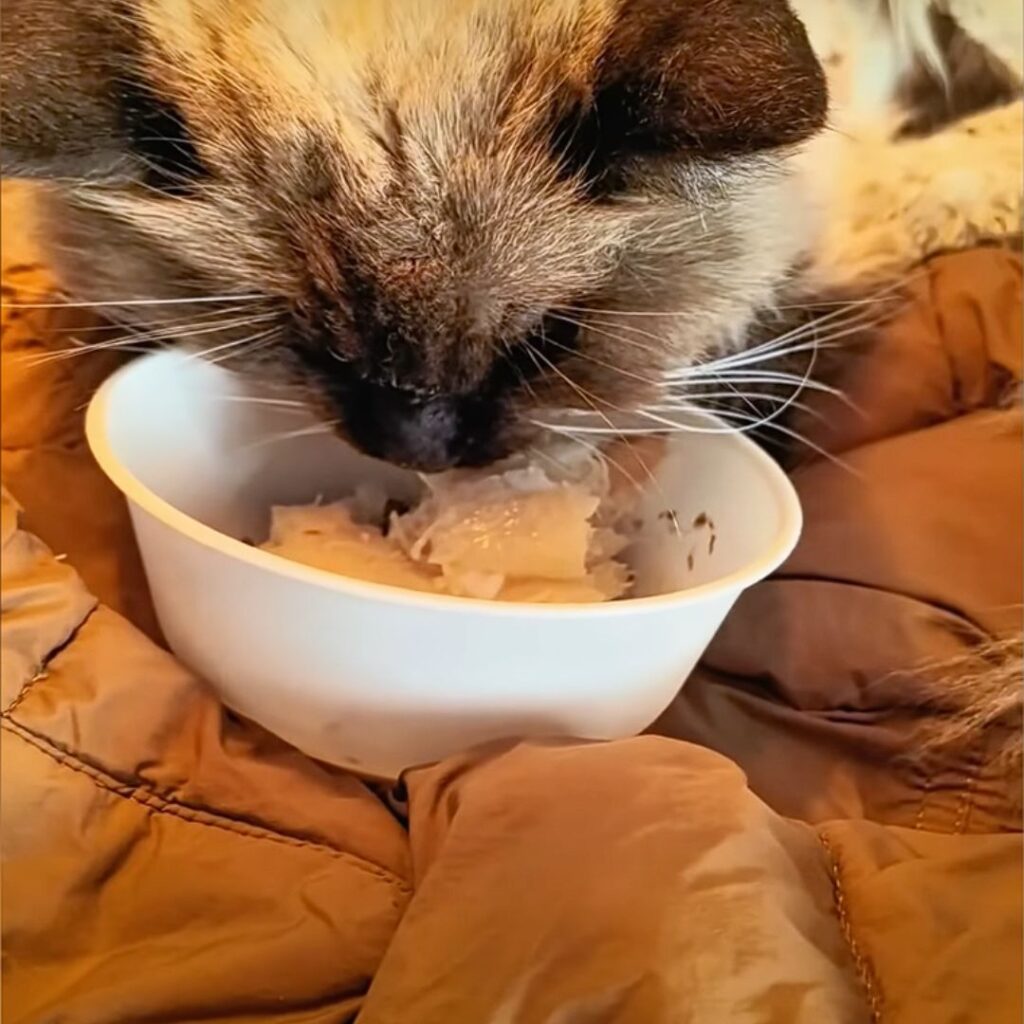
Days passed, each one a quiet battle. I visited daily, sitting in the hospital chair while machines hummed softly. His food bowl often held remnants from the day before, crumbs that became a measure of his recovery. Slowly, deliberately, he began to eat. His eyes, once empty, now held a flicker — like a candle catching a flame.
By the fifth day, he stood on his own. His hoarse meow broke the silence of the sterile room. The doctor smiled, rare and warm. “He’s eating,” she said. I watched him lap at the bowl, shaky movements growing stronger. His eyes met mine again, and I saw a spark — a will to keep going, to survive, to trust. Each day I returned, bringing only my presence, my patience. The nurses knew me by name. They called him a fighter
Seventeen days after I first found him, the call came: he was ready to go home. Entering the vet’s office, my steps felt lighter than they had in weeks. He sat in his crate, fur a little brighter, eyes clear, and let out a small meow that filled the room. I carried him out, crate warm against my side. The world outside felt different — softer, gentler, as if it had been waiting for us.
At home, I set up a bed by the window. Slowly, he climbed in, looking out at the street where I first met him. I watched as he adjusted to the safety and warmth of a home, eating more each day, walking steadily, regaining the strength and confidence that had been stolen from him. I named him Dusty, for the roads he had wandered, for the life he had almost lost, and for the resilience he carried in every fragile step.
Now, Dusty follows me room to room, paws soft on the floor. At night, he curls beside me, warmth pressed to my side, a quiet promise of trust and safety. His eyes speak of second chances, of home, of life reclaimed. Watching him sleep, chest rising and falling in calm rhythm, I feel a peace I hadn’t known I’d lost.
Dusty’s story is not grand, nor dramatic in the way the world often demands. It is gentle, quiet, and filled with the extraordinary courage of a small creature who fought for life — and the human who chose to stop, to care, and to give him another chance. It is a reminder that second chances often come in quiet moments, and that the act of caring can transform both giver and receiver.