On a chilly day beneath gray, dreary skies, a troubling scene unfolded that would stay with us forever. There, shivering on the sidewalk, was a frail, hungry stray dog, his ribs protruding, his fur matted and dull. His eyes were wide, filled with a mixture of fear and a glimmer of hope, silently pleading for help. It was a look that spoke volumes, and yet, it seemed to ask if he could dare to trust us.
As we approached cautiously, he lay on his back—a small gesture of trust that encouraged us to step forward. Every movement was tentative, as though he had learned from life’s harsh lessons that humans could be both kind and cruel. Yet here he was, exposing himself, showing vulnerability in a world that had so far shown him little mercy.
Moved by his plight, we offered the food we had with us. He hesitated at first, unsure, torn between his desperate hunger and the instinctive caution born of repeated disappointments. It was a heartbreaking moment—watching a life so fragile wrestle with instinct and fear. But hunger, undeniable and pressing, eventually overcame his hesitation. He accepted the meal, eating cautiously, yet with a visible urgency. His bony frame, so clearly starved for weeks, or perhaps months, was a painful reminder of the neglect he had endured. Every bite told a story of survival, of resilience, of a life spent fighting for the most basic of needs.
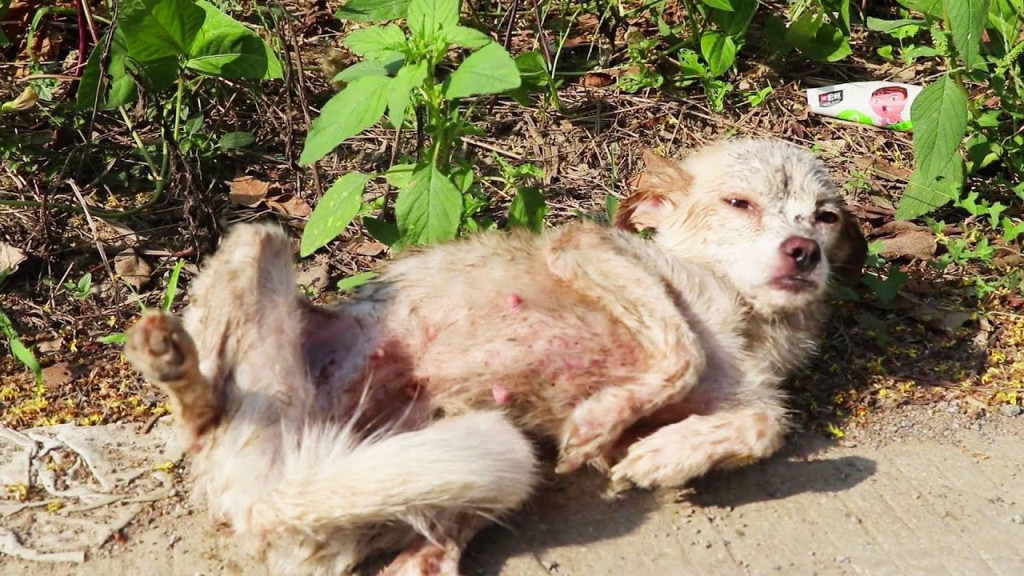
Yet even as he began to eat, his weak body could not sustain the effort. He vomited shortly after, a stark indication of just how far his health had declined. This fragile creature, so small and defenseless, had endured so much suffering that even nourishment was a challenge. It was a poignant moment, a reminder that saving a life is rarely as simple as giving food. It is about restoring strength, dignity, and hope, step by step.
Determined to change his fate, we carefully transported him to our shelter for professional care. At the clinic, veterinarians conducted a thorough examination, revealing the full extent of his neglect. Immediate medical attention was needed, not just for his nutrition but for his overall health, which had been compromised over an extended period. Infections, skin irritations, weakened immunity, and difficulty breathing painted a vivid picture of a life barely clinging to survival.
From that moment, a carefully crafted care plan began. Nutrition was introduced gradually, with the utmost attention to avoid overloading his fragile system. He was kept isolated initially to protect him from infections, his body too depleted to resist new challenges. Each meal was a cautious step, each day a test of patience and endurance. And yet, even in his timidity, there were signs of life that spoke of hope—tiny flickers of curiosity, cautious wagging of his tail, and the slow easing of tension in his body.

Days turned into weeks, and with consistent care, he began to show remarkable improvement. The red, irritated patches on his skin began to heal, his breathing became steadier, and his sunken eyes slowly regained a brightness that had been missing for far too long. Meal times became moments of enjoyment rather than fear. He began to explore his new surroundings, sniffing, walking, and tentatively engaging with his caregivers. Trust, once so elusive, began to bloom.
His coat, once dull and matted, grew shiny. Energy returned to his limbs, and he began to engage with the world with an enthusiasm that seemed almost miraculous given his past. What was most touching was the transformation in his eyes. The fear and sadness that had defined him were replaced by curiosity, gratitude, and an unmistakable sense of security. He finally knew what it meant to be safe.