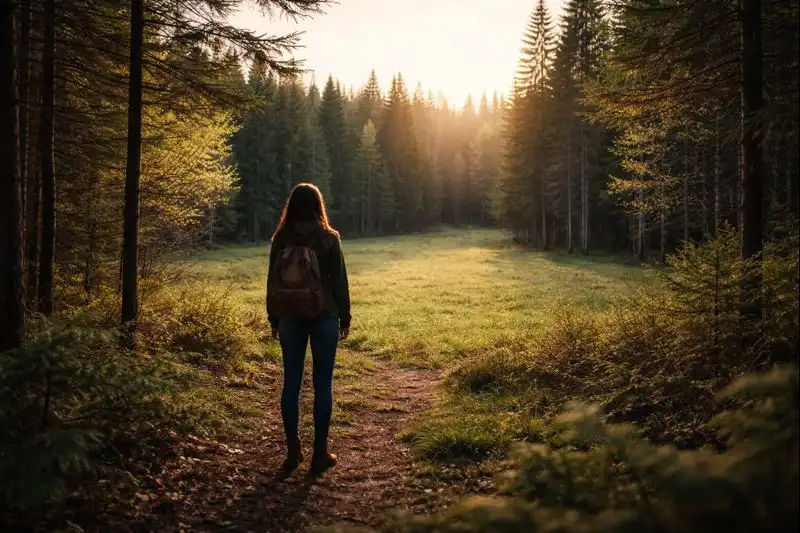
MY GRANDMA’S LAST WORDS WERE: “CHECK BEHIND THE FRAMES.” I laughed it off as end-of-life rambling… until I did it. And what I found made my stomach drop. Two days after the funeral, I went back to her old house in Burlington, Vermont. The place felt colder than I remembered—like it knew the only person who ever made it feel safe was gone. My eyes landed on the wall of family photos: weddings, birthdays, smiling faces that always felt… rehearsed. I could still feel her grip in the hospital—tight, urgent. “Ashley… check behind the frames.” So I started pulling them down. One. Nothing. Two. Nothing. By the time I reached the eighth frame, I was angry at myself for believing her—until my fingers caught something taped to the back. A sealed manila envelope. Inside were legal papers… and the first page stole the air from my lungs: A deed—ten acres in Vermont transferred to me. Signed and dated when I was fourteen. Fourteen. My father spent my whole life acting like I owed him everything. Like I was lucky he “kept” me. Like I didn’t deserve questions. But looking at that deed, one brutal truth hit me: I wasn’t living off him. He was living off me. Then I saw a second envelope—blue, sealed, in Grandma’s handwriting: “If something happens to me, this goes to Ashley only.” I opened it and found three things: a USB drive, a one-page letter, and a list of names—my father (Mark Turner), my stepmother (Brenda), and Mr. Whitaker… the middle school teacher who got fired after “an incident” involving me. I remember yelling. Police. My father’s rage. But I was too young to understand why. Grandma’s letter ended me in one sentence: “The incident with Mr. Whitaker was not what you were told. I have proof… Keep this USB safe. Your father will do anything to keep the truth buried.” My hands were shaking as I reached for my laptop… That’s when headlights washed across the window. My father’s car. And he was walking toward the house. If he got inside before I watched what was on that USB… I’d lose more than land. I’d lose the truth.
The porch light clicked on just as my father’s shadow slid across the frosted window—long, familiar, and wrong.
Two minutes ago, I’d been staring at Grandma’s blue envelope, the USB heavy in my palm, her warning burning through my skull: Your father will do anything to keep the truth buried.
1
Now his car idled in the driveway like it owned the place.
Like he owned the place.
I snapped the laptop shut so fast my fingers stung. The deed—ten acres signed over to me when I was fourteen—lay open on the table, my name printed in ink that suddenly felt dangerous.
1
Think. Hide. Move.
I stuffed the deed back into the manila envelope, shoved the blue envelope under my sweater, and slid both into the deep drawer beside the oven—the one Grandma kept for baking sheets and secrets. The USB was the problem. It was small enough to vanish, but only if I didn’t panic.
I yanked open my bag, dug past tissues and chargers, and found the old coin purse I hadn’t used since college. The zipper rasped. Too loud. Everything was too loud.
Footsteps on the porch.
I tucked the USB into the coin purse, then—on instinct—into my boot. Right against my ankle bone.
A knock hit the door, not gentle, not polite. A knock that said I’m being patient for the moment.
“Ashley!” My father’s voice cut through the house like it always had—sharp enough to make you feel guilty before you’d done anything.
My throat tightened.
I forced my face into something neutral, wiped my palms on my jeans, and walked to the door like I belonged in my grandmother’s home.
Like I hadn’t just uncovered a life he’d been stealing from me.
1
I unlocked it.
He didn’t wait for an invitation. Mark Turner stepped inside with cold air at his back, his coat still on, his jaw already clenched. His eyes flicked past me, scanning the living room wall—straight to the family photos.
The frames.
He didn’t look at me like a daughter. He looked at me like a lock he’d lost the key to.
“What are you doing here?” he demanded.
I kept my voice steady. “I came to get some of Grandma’s things. I… I didn’t think you’d be here.”
“I didn’t know you were here.” He corrected it like it mattered, like he’d caught me lying. His gaze narrowed. “The realtor said the house was being cleared next week.”
“Is it?” I asked carefully. “Funny. No one told me.”
His mouth twitched—almost a smile, but not one meant for me. “That’s because I handle these things. Like I always have.”
The old line. Be grateful. I kept you. I raised you.
I felt the truth pressing against my ribs: He wasn’t supporting me. He was living off me.
1
I swallowed it down.
He walked deeper into the house, boots thudding on the wood floor. His hand brushed the back of the couch like he was checking for dust—or for evidence.
“Where’s Brenda?” I asked.
That made him pause. “Home. Why?”
“No reason.”
He turned. “You didn’t come all the way from—where are you living now?—for no reason.”
“Boston,” I said automatically. The lie came out smooth. I lived outside Boston, technically. It counted.
His eyes stayed on mine, holding too long. “You look tired.”
I didn’t answer.
He looked back to the wall again. Counted the frames. I watched his lips move, just barely.
One of them was still on the floor by the dining table, facedown where I’d dropped it when the headlights hit the window. I hadn’t had time to put it back.
My father noticed.
He walked over slowly and picked it up.
My heart dropped into my stomach.
He turned it around, stared at the photo—Grandma smiling beside me at my high school graduation—and then flipped it, casual as a man checking a price tag.
His fingers found the tape residue.
He froze.
For a second, the mask slipped. Raw anger flashed in his eyes, fast and bright, like a match strike.
Then he looked at me again.
And the house felt smaller.
“Did you take something from behind these?” he asked quietly.
I forced a laugh that sounded like someone else. “What? No. Why would I—”
He stepped toward me.
Not fast. Not yet.
But the distance between us shrank like a threat.
“Because your grandmother was always hiding things,” he said. “Always thinking she knew better. Always putting ideas in your head.”
“I came for her jewelry box,” I said, grasping for something ordinary. “That’s all.”
He tilted his head, studying me the way he used to study a report card, looking for the mistake that gave him permission to punish.
“You’re lying.”
The word landed like a slap.
My pulse hammered in my ears. I tried to keep my face still—because my father’s favorite game had always been watch Ashley break.
“You can search my bag,” I said, because my bag was safe.
He didn’t move toward my bag.
He moved toward the kitchen.
Toward the drawer.
I stepped in front of him without thinking. “Mark—”
He stopped so close I could smell his aftershave under the winter air.
“Don’t call me that,” he said softly, as if I was the one being disrespectful. “Not in her house.”
Something inside me sparked—small, furious. “It’s not your house.”
His eyes narrowed. “What did you say?”
I held his stare. My ankle ached where the USB pressed against bone, a tiny reminder that the truth was literally attached to me now.
“I said,” I repeated, calmer, “it’s not your house.”
For a heartbeat, I thought he might hit me. The way his hand flexed—like it remembered what it used to do.
But he didn’t.
Instead, he smiled again. This time it was worse.
“Okay,” he said. “Then we’ll do this the right way.”
He reached into his coat pocket and pulled out a small ring of keys.
Grandma’s keys.
My stomach turned.
“How did you—”
“I’m the executor,” he said. “I’ve been handling her affairs for months. Since before she got sick.”
Liar. Grandma would never have done that. She’d clutched my hand in the hospital and begged me to check behind the frames for a reason.
1
He walked to the kitchen drawer and slid it open.
Metal clinked as he moved baking sheets aside.
His fingers brushed the envelope.
He pulled it out.
My lungs refused to work.
He flipped the manila envelope over, saw it was sealed, then tore it open with practiced impatience.
The deed slid into his hand.
He stared at it.
I watched his face change as he read my name.
My father’s eyes went cold. “Where did you find this?”
“In Grandma’s house,” I said, voice shaking despite my best effort. “Which you just told me isn’t yours.”
He stepped closer, waving the paper like an accusation. “This is fraud.”
“It’s dated,” I snapped. “When I was fourteen.”
His nostrils flared. “She had no right.”
“She had every right,” I said, surprising myself with how solid it sounded. “She owned it.”
He stared at me like he’d never seen me before.
Like I wasn’t his daughter, but a problem he’d miscalculated.
Then his gaze dropped—past my face, down to my boots.
And he smiled again.
“Why are you standing like that?” he asked.
My blood iced over.
He saw it. Not the USB—he couldn’t—but the way my weight shifted, protective, involuntary.
He stepped toward me.
“Take off your shoes,” he said.
I didn’t move.
His voice sharpened. “Ashley. Now.”
I backed up until my hip hit the counter. My hand slid across the surface until it found the edge of Grandma’s old knife block.
I didn’t grab one. I just needed the comfort of knowing it was there.
“I’m not doing that,” I said.
His eyes flicked to the knife block, then back to me. “You think you’re brave now?”
“No,” I whispered. “I think I’m done.”
Something flashed across his face—rage, fear, both.
He lunged.
Not at my throat, not at my face.
At my ankle.
He grabbed my boot and yanked.
I screamed, more from shock than pain, and kicked hard with my other foot. My heel connected with his shin. He swore, stumbled, tightened his grip.
I heard the zipper of the boot strain.
I felt the USB shift.
“No!” I shouted, and in the same second I did the only thing I’d never done as a kid:
I fought back with everything in me.
I grabbed the nearest object—Grandma’s cast iron skillet on the stove—and swung it down. Not at his head. Not trying to kill him. Just trying to make him let go.
It hit the counter beside his hand with a crash so violent it shook the cabinets.
He jerked back, startled.
I ripped my boot free and ran.
I didn’t grab my bag. I didn’t grab a coat.
I ran barefoot through the back hall, yanked the mudroom door open, and burst into the freezing night like a hunted thing.
My feet hit snow.
Pain shot up my legs.
Behind me, my father shouted my name, furious, disbelieving.
I sprinted to Grandma’s old Subaru in the driveway—thank God, she’d left it there—fumbled the keys from the hook by the door, and jammed one into the ignition with shaking hands.
The engine coughed, then caught.
Headlights swept the yard.
I backed out too fast, tires spinning on ice.
My father appeared at the top of the porch steps, coat flapping open, his face twisted with something I’d never seen that clearly before:
Panic.
Because he knew. He knew I had something.
I drove.
I didn’t stop until the town lights blurred behind me and the road turned into a ribbon of darkness through snow-covered trees.
Only then did I pull over, chest heaving, and shove my boot back on—USB still there, still safe.
I sat in the silent car and realized my hands were bleeding from the cold and the broken edge of the torn envelope.
And I laughed.
Not because it was funny.
Because the alternative was screaming until my throat tore.
I checked into the first motel I found, using cash from my wallet like I was in a bad movie. The room smelled like old smoke and industrial cleaner. The heater rattled like it had a grudge.
I locked the door. Then I locked it again.
I pulled the USB from my boot like it was a holy relic and set it on the bedspread.
My laptop was still at Grandma’s house.
My bag—my charger, everything—was still at Grandma’s house.
So I did the only thing I could: I drove to a twenty-four-hour pharmacy, bought a cheap prepaid phone, then drove to a big-box store that hadn’t closed yet and paid too much for the cheapest laptop they had.
Back in the motel room, I sat on the edge of the bed and stared at the USB until my eyes burned.
Keep this USB safe.
1
Grandma hadn’t said, “Watch this when you’re calm.”
She’d said safe.
Meaning: dangerous.
I plugged it in.
The laptop made a soft chime.
A folder opened automatically: ASHLEY — READ FIRST
My breath caught.
Inside were three files:
Letter.pdf
Audio_01.m4a
Whitaker_Truth.mp4
My hands trembled so hard I could barely click.
I opened the letter first.
It was Grandma’s handwriting, scanned into a PDF. The words blurred as tears rose, hot and sudden.
Ashley, If you’re reading this, it means I couldn’t protect you the way I should have. Your father has been taking what belongs to you for a long time. He will call it family. He will call it sacrifice. It is theft. The land is yours. It always was. And the “incident” at your school… you were never told the truth because the truth would have taken power away from the people who wanted to keep you quiet.
My stomach rolled.
I closed my eyes, hearing her voice in my head, tight and urgent in that hospital bed.
1
I clicked the audio file.
A woman’s voice—Grandma—filled the motel room, recorded close to the microphone, like she’d been afraid of being overheard.
“My name is Evelyn Turner,” she said, steady. “I am recording this because my son, Mark, has threatened me. If anything happens to me, I need it understood that it was not an accident.”
My skin prickled.
“There is a trust,” she continued. “Ashley’s trust. It was set up by her mother before she died. Mark has been using it for years. He has forged signatures. He has pressured banks. He has lied to lawyers. He told Ashley she had nothing so she would never ask questions.”
My throat tightened until it hurt.
“Mr. Whitaker tried to help,” Grandma said. “He reported concerns. He was punished for it. Mark made him the villain because it was easier than letting anyone look too closely at what Mark was doing at home.”
A sob broke out of me, sharp and ugly.
Not because I remembered everything.
Because I remembered enough.
The yelling. The police. My father’s face, red with rage. How afterward, he’d watched me like a hawk and said, “You will not embarrass this family again.”
I’d thought it was about school.
It had been about control.
I clicked the video.
Whitaker_Truth.mp4 opened to a shaky camera shot, like a phone propped up on a bookshelf. The image was dim, but I recognized the setting instantly: Grandma’s living room.
And the man sitting on her couch, shoulders hunched, hands clasped like he was praying—
Mr. Whitaker.
Older now. Tired. But unmistakable.
He looked into the camera and said, “Ashley, if you’re watching this, it means Evelyn kept her promise.”
My chest tightened so hard I could barely breathe.
“I never hurt you,” he said, voice breaking. “I never touched you. I reported what I saw—bruises, fear, the way you flinched when an adult raised their voice. I followed protocol. I did what a teacher is supposed to do.”
My vision tunneled.
“And your father,” he continued, “made sure I paid for it. He told people I was the problem because if they looked at me, they wouldn’t look at him.”
He swallowed hard.
“I’m sorry I couldn’t save you,” he said. “But I’m not sorry I tried.”
The video ended.
The motel room felt like it had no air.
I sat there, staring at the blank screen, the USB still warm from the laptop port, Grandma’s voice still echoing in my ears.
My father didn’t just want the land.
He wanted me ignorant.
Because ignorance was the leash he’d used my entire life.
And now it was snapped.
My prepaid phone buzzed an hour later.
Unknown number.
I stared at it until it stopped, my pulse racing.
Then it buzzed again.
And again.
On the fourth call, I answered—because some part of me already knew.
“Hello?”
Silence for a beat.
Then a man’s voice, low and cautious.
“Ashley?” he said.
My stomach dropped.
It wasn’t my father.
It was older. Rougher.
“I… I don’t know if you remember me,” the voice continued. “This is Daniel Whitaker.”
My fingers went numb around the phone.
“How did you get this number?” I whispered.
“I didn’t,” he said quickly. “I called every motel in the area until someone said there was an Ashley who checked in without a last name. I know that sounds insane, but—listen—your father was at my door tonight.”
Ice crawled up my spine.
“He asked me one question,” Whitaker said. “He said, ‘Where is she?’”
My throat tightened. “He doesn’t know where I am.”
“He doesn’t need to,” Whitaker replied. “Not yet. But he’s looking. And if Evelyn’s files are in your hands… he’ll keep looking.”
I pressed my free hand over my mouth, trying to steady my breathing.
“I watched the video,” I managed. “I heard her audio.”
Whitaker exhaled, shaky. “Then you know why I’m calling.”
“What do you want from me?” The words came out harsher than I meant—fear disguised as anger.
“I want you alive,” he said. “And I want you to have options. Evelyn left me something too—names, records. More than what’s on that USB. But I won’t say it over the phone.”
Outside my motel window, a car passed slowly, headlights sliding across the blinds.
My body went rigid.
Whitaker’s voice lowered. “Ashley… are you alone right now?”
I stared at the moving light.
The car slowed.
Then slowed more.
And stopped.
Right outside my room.
I didn’t breathe.
“I think,” I whispered, barely audible, “someone just pulled into the lot.”
There was a pause on the line—Whitaker listening to my silence like it was a siren.
“Do not hang up,” he said. “Do not open that door. Get away from the window.”
The doorknob rattled once—soft, testing.
Then again.
A familiar voice, muffled through the cheap wood:
“Ashley,” my father called, calm as a bedtime story. “Open up. We need to talk.”
I turned toward the door, shaking from head to toe, phone pressed to my ear like a lifeline.
Whitaker’s voice was sharp now. “Ashley. Listen to me. There’s a bathroom window, right?”
I swallowed hard, eyes darting.
Yes.
“Yes,” I breathed.
“Then move,” he said. “Right now.”
And as I backed toward the bathroom, my boot catching on the edge of the bedspread, one single thought kept repeating in my head like Grandma’s last instruction—clear, urgent, absolute:
Don’t let him bury the truth.
1
来源 继续 已思考 28s
The doorknob rattled again—harder this time—followed by the dull thud of my father’s shoulder against the door.
“Ashley,” he called, still calm, still pretending this was a conversation and not a hunt. “Don’t make this difficult.”
On the phone, Whitaker’s voice stayed tight and steady. “Bathroom. Now. Lock yourself in.”
I moved on instinct, feet silent on the cheap carpet, every nerve lit. The motel bathroom was barely big enough to turn around in—sink, toilet, tub, a mirror that made my face look like a stranger’s.
I shut the door and threw the latch.
Outside, the main door shook again.
“Good,” Whitaker whispered. “Window.”
I turned. Small sliding window above the tub. Frosted glass. A thin strip of night beyond it.
My fingers fumbled at the latch—stuck. Of course it was stuck.
“Come on,” I hissed under my breath, yanking harder.
The door to my room slammed once—like he’d kicked it. The lock held, but it wouldn’t hold forever. Motels didn’t build doors to protect people; they built them to look like they might.
“Ashley,” Whitaker said, sharper. “Talk to me. Can you open it?”
“It’s stuck,” I whispered, pulling again until my palms burned.
“Use the towel bar,” he said. “Anything with leverage.”
I grabbed the plastic trash bin, flipped it upside down, climbed onto it, and drove my elbow into the frame. Wood creaked. The window shuddered.
Again.
A crack of cold air hit my face like a slap.
The window slid open with a gritty scrape, and winter rushed in—clean, brutal, alive.
Behind me, the bathroom door handle jiggled once. Then twice.
He’d realized I wasn’t in the main room anymore.
“Open this door,” my father called, the calm gone now. “Ashley! OPEN IT.”
Whitaker didn’t raise his voice. “Out. Feet first. Don’t think. Move.”
I swung one leg over the tub, planted my knee on the slippery porcelain, and shoved my shoulders through the gap. The window was smaller than I thought. My coat wasn’t on; my sweater snagged on the frame and for one terrifying second I felt stuck—trapped halfway, like an animal in a fence.
I heard the bathroom latch pop.
My father was inside the room now.
I shoved hard.
Fabric tore.
Cold bit into my ribs as I spilled out into the night and dropped, landing on frozen grass behind the motel with a sound that didn’t feel real.
Pain shot through my ankles.
I didn’t stop.
I ran.
The back lot was dim—one flickering light, a row of cars glazed with frost. My breath came out in thick clouds, my lungs screaming. Somewhere inside, a door slammed open.
“Ashley!” he bellowed.
The sound traveled differently in winter—flat and far, like it belonged to another world.
I sprinted toward Grandma’s Subaru, hands shaking so badly I almost dropped the keys. The door handle was stiff with ice, but it opened. I threw myself inside, locked the doors, and jammed the key into the ignition.
The engine coughed.
“Come on,” I begged.
Cough. Sputter.
Footsteps pounded on asphalt. Closer.
Then the engine caught with a roar that felt like a miracle.
Headlights flashed across my windshield as a shape burst around the corner of the building—my father, coat open, hair wild, face lit by something ugly and desperate.
He saw me.
He lunged for the driver’s side door.
I slammed the car into reverse.
The tires spun on ice. The car fishtailed, and for a heartbeat I thought I’d lose control and he’d get me anyway, but the Subaru found traction and jerked backward.
My father’s hand slapped the hood as I swung past him.
His mouth moved—shouting, cursing, promising.
I didn’t hear the words.
I only saw his eyes.
Not anger.
Fear.
Because he knew I had something he couldn’t afford to lose.
On the phone, Whitaker exhaled like he’d been holding his breath the entire time. “You’re in the car?”
“Yes,” I gasped, turning onto the road so fast I nearly clipped the motel sign.
“Good. Keep driving. Don’t go back to Evelyn’s house. Don’t go somewhere familiar.”
“I don’t know where to go.”
“Police station,” he said immediately. “Not the town one if he has friends there. State police post if you can. You’re on Route—?”
I glanced at the sign flashing past. “Route 9.”
“Okay,” he said, thinking fast. “Stay on it for now. I’m going to text you an address. Do you have a phone that can receive texts?”
“I—” I looked down at the cheap prepaid sitting in the cup holder like a fake identity. “Yes.”
“Good. Ashley… listen to me.” His voice softened just a fraction. “You did exactly what you needed to do.”
My throat tightened. “He found me.”
“Yes,” Whitaker said. “And now you know something important: he’s willing to cross lines you didn’t want to believe he’d cross.”
A horn blared behind me. I looked in the rearview mirror.
Headlights.
Closing fast.
My stomach dropped.
“It’s him,” I whispered.
Whitaker’s voice went razor-sharp. “Don’t speed up. Not yet. Keep steady. Let him commit to following you. Stay in lit areas. And call 911 on the second phone if you can.”
My hands were slick on the wheel. “I don’t have a second phone.”
“Then keep me on,” he said. “If he hits you, if you go off-road—someone needs to know where you were.”
The headlights behind me brightened, then dimmed as the car tucked in closer.
My father’s car.
Of course.
He wasn’t going to let me just disappear.
Ten minutes felt like an hour.
Every intersection, every red light, my body braced for impact. My father stayed behind me like a shadow that learned to drive.
Then my prepaid buzzed.
A text from Whitaker:
STATE POLICE BARRACKS — 14 miles. KEEP GOING. DO NOT STOP.
“Fourteen miles,” I whispered into the phone.
“I know,” he said. “You can do fourteen miles.”
Behind me, the headlights flickered.
Then swung out.
He was trying to pass.
My heart slammed.
“No,” I breathed, and pressed the horn—long, loud—like noise could protect me.
Whitaker spoke fast. “If he pulls alongside you, don’t look at him. Don’t gesture. Stay in your lane. People like him feed on reaction.”
My father’s car came up next to mine, window down despite the cold. His face was lit by dashboard glow, eyes fixed on me with a fury that had nowhere left to hide.
He shouted something I couldn’t make out.
Then he pointed—two fingers from his eyes to me. I’m watching you.
And he cut in front of me hard enough that I had to brake to keep from hitting his bumper.
The Subaru skidded.
My vision tunneled.
I fought the steering wheel until the tires caught again.
Whitaker’s voice was the only thing tethering me to reality. “Ashley. Breathe. You’re okay. Keep going.”
My father slowed, blocking the lane.
Trying to force me to stop.
I swung into the right shoulder and surged past him on the gravel, stones pinging under the car.
His horn screamed.
Mine screamed back.
Lights ahead—bigger, brighter.
A wide sign: STATE POLICE
I could’ve cried just seeing it.
I turned into the lot like it was holy ground.
My father’s car followed.
Of course it did.
I skidded into a parking space right in front of the entrance and threw the car into park.
Whitaker said, “Go. Now.”
I grabbed the laptop bag I’d shoved into the passenger seat earlier—USB still tucked in the boot, pressed against my ankle like a heartbeat—and ran for the door.
My father slammed on his brakes behind me.
“Ashley!” he shouted as I reached the entrance. “Don’t you dare!”
I yanked the door open and stumbled inside.
Warmth hit my face. Fluorescent lights. A desk. Two troopers looking up, startled, hands moving automatically toward radios.
I didn’t even try to look composed.
“My father is following me,” I said, breathless. “He tried to break into my motel room. He—he grabbed me earlier tonight. I have evidence. I need help.”
One of the troopers stood instantly. “Ma’am, slow down. What’s your name?”
“Ashley Turner,” I said. Then, because the name suddenly tasted like poison, I added, “Ashley… Evelyn Turner’s granddaughter.”
That made something shift in the trooper’s expression—recognition, maybe. Or just the way small towns carry stories even to places like this.
The trooper nodded to his partner. “Go outside.”
The other trooper moved toward the door.
Through the glass, I saw my father step out of his car.
He straightened his coat like he was going to a meeting.
Like he was the victim of my overreaction.
He looked through the glass and saw me standing inside, and for a moment we were separated by nothing but a pane of window and the fact that I’d finally run toward witnesses.
His mouth formed my name again.
But the trooper was already outside.
Already approaching him.
Already making him perform innocence.
Whitaker’s voice in my ear was quieter now. “Ashley? Are you inside?”
“Yes,” I whispered. My knees started to wobble now that my body understood I wasn’t running anymore. “I’m inside.”
“Good,” he said. “Stay there. Tell them everything. And Ashley… don’t minimize it.”
My throat tightened. “I don’t know how to—”
“Yes you do,” he interrupted, gentle but firm. “You’ve been doing it your whole life. Stop. Not here. Not now.”
I swallowed hard, staring at my father through the glass as a trooper spoke to him.
My father smiled.
He laughed once, like the whole thing was ridiculous.
Then his eyes cut back to mine—sharp, warning.
And I realized something that made my blood run cold:
He wasn’t afraid of the police.
He was afraid of what I could say.
Because words—true words—were the one thing he couldn’t muscle into silence if I said them in the right place.
The trooper at the desk handed me a pen and a statement form.
“Start from the beginning,” he said. “Tell me what happened.”
I looked down at the paper.
My hand hovered.
My entire childhood had been training for this exact moment—training to protect him, to excuse him, to carry shame like it belonged to me.
Whitaker’s voice was still in my ear. “Don’t minimize it.”
I lifted the pen.
And I started writing.
An hour later, my father drove away.
Not because he wanted to.
Because a uniform told him he had to.
He left the lot with a controlled face and clenched jaw, his hands white on the wheel.
But before he pulled onto the road, he rolled down the window.
Even from here, even with the glass and distance, I heard him clearly.
“This isn’t over,” he called.
Then he was gone, taillights swallowed by the dark.
The trooper who’d taken my statement came back inside and shut the door behind him.
“He says you’re ‘confused’,” the trooper said, expression flat. “He says you’re upset about your grandmother’s estate.”
I almost laughed. It came out as a cracked sound that might have been a sob.
“He always does that,” I whispered. “He always makes it sound like I’m… dramatic.”
The trooper leaned forward slightly. “Do you have any evidence to support what you’re saying?”
My fingers curled around the edge of the counter.
I thought of the USB like a pulse in my boot.
I thought of Grandma’s voice—steady, clear, unafraid.
I thought of Whitaker’s tired eyes in that video, and the way he’d said he wasn’t sorry he tried.
I nodded.
“Yes,” I said. “I do.”
I lifted my foot, tugged off the boot with shaking hands, unzipped the coin purse, and pulled out the USB.
It looked so ordinary.
So harmless.
But it felt like the weight of every buried thing.
“I need to show you something,” I said.
Behind me, the door chimed.
A new person stepped into the station.
I turned—expecting another trooper.
Instead, I saw a man in a heavy winter coat, scarf wrapped tight, cheeks red from the cold, eyes scanning the room like he’d been afraid he’d come too late.
Daniel Whitaker.
He stopped when he saw me.
Relief crossed his face so quickly it almost broke him.
Then he looked down at the USB in my hand.
And something like grief settled into his expression, because he knew what it meant for me to be holding it here, in this place, in this light.
He walked toward us slowly.
“Ashley,” he said, voice low. “I’m here.”
I stared at him, the room suddenly spinning with exhaustion and adrenaline and the terrifying fact that the truth was no longer private—it was about to become real.
Whitaker nodded at the trooper.
“There’s more,” he said. “A lot more. And if you do this right… she won’t have to run anymore.”
My throat tightened.
I looked down at the USB again.
Then back up.
“Okay,” I whispered. “Then we do it right.” The trooper didn’t plug the USB into his computer.
He took it like it was evidence—because it was—and carried it through a locked door marked AUTHORIZED PERSONNEL ONLY.
“Protocol,” he said over his shoulder. “We’re going to copy it, log it, and view it on a secured machine. You’ll be present the whole time.”
I nodded like I knew how to be a person in a place like this.
I didn’t.
My hands were still trembling, and now that the adrenaline was draining out of me, the cold was settling into my bones. I hadn’t realized until this moment that my sweater was ripped on one side, and my hair smelled like motel soap and fear.
Whitaker stood a few feet away, silent, scarf loosened, eyes on the floor like he was giving me space to breathe without anyone watching.
The trooper returned with a woman in plain clothes—older than me, hair clipped back, expression sharp but not unkind. She introduced herself as Investigator Ruiz, and even her name sounded like the kind of thing that couldn’t be argued with.
She looked at me the way my grandmother used to when she was deciding whether to tell a hard truth.
“Ashley,” Ruiz said, “before we open anything, I need to ask you something directly. Are you afraid of your father?”
The old instinct rose in me—automatic, trained.
Don’t make it worse. Don’t make a scene. Don’t accuse. Don’t—
Whitaker’s voice, earlier: Don’t minimize it.
I swallowed.
“Yes,” I said.
Ruiz held my gaze. “Has he ever hurt you?”
My mouth went dry. My brain tried to skip sideways, to hide inside technicalities. Hurt how? Hurt when? Hurt enough?
I heard myself answer anyway, with a steadiness that felt like it came from somewhere deeper than fear.
“He’s grabbed me. He’s cornered me. He’s… made me feel like I didn’t have the right to breathe unless he approved of it.”
Ruiz nodded once, like she was filing that sentence into a drawer labeled Pattern.
“Okay,” she said. “Then we’re going to do two things tonight. One: we’re documenting what happened at the motel, and we’re opening an investigation. Two: we’re making sure you don’t leave here alone.”
I blinked fast. “I don’t want to be dramatic.”
Ruiz’s expression didn’t change. “You’re not. You’re being safe.”
A laugh tried to escape my throat—small and cracked and almost disbelieving—because no one had ever said that to me in a way that sounded like a decision, not an opinion.
The file labeled READ FIRST wasn’t a dramatic reveal under fluorescent lights.
It was worse.
Because it was real.
A scanned letter in my grandmother’s handwriting. Audio recordings with dates. Bank statements. A trust document with my name on it in clean, legal print—created before I could even spell fiduciary. A list of account numbers. A list of withdrawals. A list of signatures that weren’t mine.
Ruiz sat beside me while we watched, stopping when she needed to, taking notes. Her face didn’t show surprise. Only the slow tightening of someone watching a story line up with evidence.
When the video of Whitaker played, he didn’t look at the screen.
He stared at the wall, jaw clenched, hands clasped too tight, like he was holding himself in place while his own past spoke out loud.
When the audio of my grandmother came on—her voice calm as a will and sharp as a blade—Whitaker flinched.
I did too.
Because there was something both comforting and devastating about hearing a dead woman sound so alive.
“If anything happens to me,” Grandma said through the speaker, “it was not an accident.”
My breath caught, and Ruiz paused it immediately.
She turned to me. “Did you think her death was suspicious?”
“No,” I whispered, and then realized I wasn’t sure. I’d never let myself be sure. Uncertainty was safer than accusation.
Ruiz nodded like she understood that too.
“We’ll look,” she said simply. “We’ll do it right.”
I stared at the screen, at the list of numbers, at the neat violence of it all.
This wasn’t just a father being controlling.
This was a system. A siphon. A life built on the assumption that I’d stay small enough not to notice the drain.
Ruiz leaned back, exhaled once, and made a call.
Her voice on the phone turned precise, procedural—words like “forgery,” “financial exploitation,” “probate,” “protective order,” and “evidence intake” arranged into a sentence that sounded like a door locking.
When she hung up, she looked at me.
“Your father is going to call you unstable,” she said. “He’s going to claim you’re grieving. He’s going to try to make you doubt your own memory. That’s what people do when the facts don’t favor them.”
I stared down at my own hands.
“And it might still work,” I admitted, voice small.
Ruiz’s eyes softened, just slightly. “Then we’re going to build something stronger than his voice.”
She tapped the USB, now sealed in an evidence bag.
“Paper,” she said. “Records. Statements. Timelines. Things he can’t interrupt.”
An hour later, I sat with a blanket around my shoulders in a small interview room while a trooper took photos of the tear in my sweater and the bruising starting to bloom on my ankle from the boot and the running.
Whitaker sat across from me with a cup of coffee he didn’t drink.
When the trooper stepped out to print paperwork, the silence finally cracked.
Whitaker’s voice was quiet. “I’m sorry.”
“For what?” I asked, though I already knew.
“For not being able to protect you,” he said. “For thinking the system would do what it was supposed to do. For… not trying harder.”
I shook my head, slow. “You tried. That’s the point, isn’t it? You tried, and he punished you for it.”
Whitaker’s eyes flicked up to mine, wet and tired. “He didn’t just punish me. He taught you that telling the truth would get you hurt.”
The words landed heavy.
Because that was exactly what my body had learned, long before my mind caught up.
“Evelyn,” Whitaker continued, voice rough, “she came to me a few years ago. She said she’d been trying to untangle what he’d done, and she was afraid she’d run out of time.”
I swallowed hard. “Did she… did she know I’d run?”
Whitaker’s mouth tightened, a near-smile that didn’t make it. “She knew you’d survive. She put the truth in a place only you could reach, because she knew you’d be the only one who’d ever pay the price for it if it stayed hidden.”
My throat burned.
“I wanted her to be wrong,” I whispered.
Whitaker nodded. “I know.”
The trooper returned, and the moment broke into paperwork again.
But something inside me stayed unbroken.
Just before dawn, two state troopers drove with me to a different motel under their name—one my father wouldn’t find by calling around. Ruiz insisted.
They also sent a patrol car past my grandmother’s house to make sure my father wasn’t still there, prowling around like he owned the night.
When I finally lay down, my body exhausted and wired at the same time, I stared at the ceiling and waited for the guilt to arrive.
It didn’t.
Not the old kind, anyway.
Instead, I felt something new—thin, tentative, almost fragile:
Relief.
Because for the first time, my father didn’t feel like the only adult in the room.
The days that followed didn’t come with a neat montage soundtrack.
They came with phone calls. Forms. Meetings. Deadlines.
Ruiz helped me file for an emergency protective order. A public advocate connected me with a probate attorney who didn’t smile too much and didn’t flinch when I said the words “trust” and “forgery” in the same breath.
Whitaker gave a full statement. Then another. And another.
I gave mine too—about the motel, about the house, about the way my father had always pressed the air out of any room that belonged to him.
Every time I spoke, my voice wanted to shrink.
And every time, I made it stay.
My father left voicemails on my prepaid phone the first night.
He started gentle.
Sweetheart. You’re scared. Come talk to me.
Then annoyed.
You’re humiliating yourself.
Then furious.
You’re ruining this family.
Then the mask slipped fully.
You have no idea what you’re doing. You can’t win.
I didn’t respond.
Ruiz told me not to.
“I want him to keep talking,” she said. “It’s amazing what people will confess when they think they’re still in control.”
When the restraining order was served, he called my old number instead—because he still believed he could reach me through habit.
I didn’t answer.
I listened to the voicemail once.
Then I deleted it.
Not out of denial.
Out of choice.
Two weeks later, there was a hearing.
I sat in a courtroom that smelled like old carpet and seriousness, hands folded in my lap so tightly my knuckles ached, and watched my father walk in wearing a suit that screamed stability.
He looked around like he expected applause.
When he saw me, his expression softened into something practiced and concerned.
The look that used to make teachers trust him instantly.
The look that used to make me doubt myself.
He sat behind his lawyer and didn’t speak to me directly, but I felt his presence like a pressure against my skin.
When it was time, my attorney stood, calm and sharp, and laid out the evidence: the deed. The trust documentation. The bank records. The recordings. The chase. The break-in attempt.
My father’s lawyer tried to talk about grief. About misunderstanding. About “family conflict.”
Then Ruiz testified.
She didn’t talk about emotions.
She talked about patterns, timelines, and physical actions.
When the judge granted the protective order—extended, with conditions—my father’s jaw tightened so hard I thought it might crack.
His eyes cut toward me.
And for a moment, I saw the version of him he tried so hard to hide:
The man who couldn’t stand being told no.
His lips moved without sound.
But I could read it anyway.
This isn’t over.
I held his gaze.
And for the first time, I didn’t feel small.
Because now I knew something he didn’t want me to know:
Over wasn’t his decision anymore.
Spring came slowly, like it had to negotiate for permission.
On the day the attorney called to tell me the probate court had appointed an independent executor—no longer my father—I sat in my car and let the news sink into my chest like warm water.
It didn’t fix everything.
But it changed the direction of my life.
“You’re going to have to be patient,” my attorney warned. “These things take time. Investigations take time.”
Time.
I used to hear that word and think it meant waiting quietly while other people decided what I deserved.
Now it meant something else:
Building.
In late April, I drove to Vermont.
Not because anyone told me to.
Because the ten acres had been a sentence in my life for so long—ink on paper, a thing stolen in secret.
I wanted to see it as something that existed without him.
The road wound through trees just starting to green, and when I finally pulled onto the gravel edge of the property line, the air smelled like damp earth and possibility.
There was no house.
No sign.
No fence claiming it.
Just land.
Quiet, steady land that didn’t know my father’s voice.
I walked until the sounds of the road disappeared.
Birds moved in the branches. Wind slid through pine needles like whispered advice.
I stopped at a small clearing and stood there, hands in my pockets, trying to feel something dramatic.
Triumph. Vindication. Closure.
What I felt instead was simple.
Grief.
For the child I’d been—trained to apologize for existing.
And gratitude.
For my grandmother, who had loved me loud enough to leave a map out of the dark.
I pulled out my phone and played the recording again—just a few seconds of her voice.
“Keep this USB safe,” she said, steady as ever. “Your father will do anything to keep the truth buried.”
I smiled, small and tired.
“Too late,” I whispered into the trees.
Then, because endings don’t always announce themselves with fireworks, I did something ordinary.
I took a photo of the clearing.
And I texted it to Whitaker.
I’m here. It’s real.
A few minutes later, his reply came back.
Good. Now live.
I stared at the screen until my eyes stung.
Then I put the phone away and stood a little taller.
The land didn’t care about courtrooms or signatures.
It didn’t care about what my father claimed.
It simply existed—waiting, patient, truthful.
Like my life could be, if I let it.
And as I turned back toward the car, I realized the strangest thing:
I wasn’t running.
Not anymore.
I was going forward.
And for the first time in my life, I didn’t feel like a child waiting for permission to speak.
I felt like someone who could finally make noise loud enough to be heard.