The words cut through the chilly morning air at the Naval Special Warfare Training Center in San Diego. A steel canteen tilted, splashing icy water across the face of a kneeling recruit. Around them, other trainees stared straight ahead, trained not to react, not to question, not to interfere.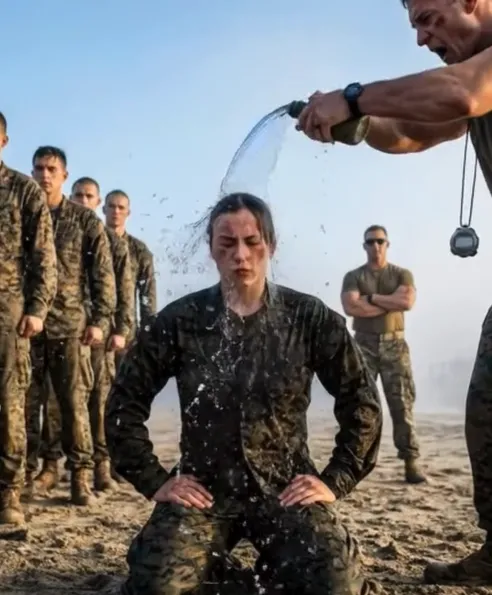
The man shouting was Chief Petty Officer Daniel Hargrove, a veteran notorious for breaking candidates through both humiliation and endurance. What he didn’t know—what no one on the grinder knew—was that the woman kneeling in the sand was far from an ordinary recruit.
The roster listed her as Rebecca Lawson.
Mud-soaked fatigues. No insignia. Hair pulled tight. Expression unreadable. She had arrived before dawn, received a number, and been told to stay silent. She had obeyed.
When the icy water hit, Rebecca didn’t flinch.
Hargrove stepped closer. “You drown out there, you’re done. You quit, you’re nothing.”
Rebecca simply wiped the water from her eyes. No words. No reaction.
But there was a subtle tightening of her jaw. Not anger—control.
Because she was Lieutenant Commander Rebecca Lawson, a combat-decorated Naval officer with seventeen years of service, multiple deployments, and newly appointed lead combat instructor for the facility. Her orders were precise: observe first. Intervene only when necessary. Document everything.
And this moment? It was necessary—but not yet.
For weeks, whispers had circulated among Naval leadership. Unofficial complaints. Unexplained medical anomalies. Dropout rates exceeding historical norms. The training center was tough, but discipline had crossed into degradation.
Rebecca had been sent in undercover, stripped of visible authority, to see what happened when power assumed it was unobserved.
Hargrove continued his tirade. Another instructor laughed. A stopwatch clicked.
Rebecca stayed kneeling.
The grinder fell silent as a senior officer approached the line. Hargrove stiffened, expecting a reprimand—but the officer’s attention went straight to Rebecca.
“Candidate Lawson, stand,” he said calmly.
She rose.
“State your full name and rank.”
Rebecca met Hargrove’s gaze for the first time.
“Lieutenant Commander Rebecca Lawson, United States Navy.”
The air shifted. Faces drained of color. Hargrove opened his mouth—then realized he had no words.
The woman he had humiliated wasn’t a recruit. She was his commanding officer.
As Rebecca pulled a folded document from her pocket, one question lingered over the grinder like a held breath:
What exactly had she been sent to uncover—and who would fall when Part 2 began?
WHAT BREAKS MEN, AND WHAT BREAKS SYSTEMS
Silence followed Rebecca Lawson’s introduction—not the respectful kind, but the stunned kind that exposes unprepared minds. The recruits were ordered back to formation immediately. Instructors were dismissed from the training ground with clipped, professional commands.
Chief Petty Officer Hargrove did not move.
He stared at Rebecca as if the words she had spoken might rearrange themselves into something less catastrophic.
“Sir,” he finally said, defaulting to instinct, “this must be some kind of—”
Rebecca held up a hand. “Save it.”
She turned to the senior officer who had revealed her identity, Captain Elaine Morris, commander of the facility.
“Captain,” Rebecca said evenly, “thank you. I’ll take it from here.”
Captain Morris nodded once and walked away without another word.
That, more than anything else, confirmed it for Hargrove.
This was real.
Rebecca waited until the grinder was empty. Only instructors remained. Sand stuck to her uniform. Water dripped from her sleeves. She made no attempt to clean herself.
“I arrived three weeks ago under authorization from Naval Training Command,” she began. “My assignment was to observe, document, and evaluate instructional conduct at this facility. Unannounced.”
Hargrove swallowed. “With respect, ma’am, this program has traditions—”
Rebecca cut him off. “Traditions are not immune to review.”
She pulled out a small, weatherproof notebook. “Let’s start with today. Public humiliation involving non-consensual physical distress. Not corrective. Not instructional. Explain.”
Hargrove straightened. “Pressure reveals weakness.”
Rebecca nodded slightly. “That’s the justification. Now the outcome.”
He hesitated.
“Four stress fractures reported last cycle,” she continued. “Three cases of hypothermia misclassified as dehydration. One recruit hospitalized after delayed medical referral.”
She looked up. “Pressure didn’t reveal weakness. It hid damage.”
Another instructor, Senior Chief Miller, shifted uncomfortably. “Ma’am, this is how it’s always been.”
Rebecca turned to him. “No. This is how it’s been allowed.”
The investigation unfolded quickly—and quietly at first. Rebecca conducted private interviews with recruits who had already been dropped from the program. Many hesitated to speak. Some refused entirely. Fear lingered long after they had left.
But patterns emerged.
Instructors competing for dominance. Punishments escalated without documentation. Medical staff pressured to underreport injuries to preserve graduation statistics. Recruits labeled “mentally weak” when they requested care.
Rebecca documented everything.
When the first internal report reached Naval Training Command, the response was immediate. A temporary oversight team was dispatched. Medical logs were seized. Training footage was reviewed frame by frame.
Hargrove was placed on administrative leave pending investigation.
The backlash came just as fast.
Anonymous complaints accused Rebecca of “softening standards.” Online forums lit up with accusations that the program was being “watered down.” Retired operators weighed in publicly, some in support, others in outrage.
Rebecca did not respond.
She kept working.
The turning point came when a junior corpsman stepped forward with archived medical records—copies he had kept after being ordered to alter reports. The data showed injuries systematically downgraded to avoid triggering reviews.
That evidence changed everything.
Naval investigators expanded the scope. What began as an instructional review became a formal inquiry into systemic misconduct. Not criminal—but corrosive.
Hargrove was interviewed under oath. His defense relied on precedent. On culture. On the idea that survival justified excess.
Rebecca testified last.
“I endured worse as a junior officer,” she said plainly. “That doesn’t make it right. It means it went unchecked.”
When asked whether she believed toughness and accountability could coexist, she answered without pause.
“They must.”
Within months, findings were released. No public spectacle. No dramatic firings. But consequences came.
Several instructors were reassigned permanently. Two senior trainers retired early. New medical autonomy protocols were implemented. Training methods were revised to separate stress conditioning from degradation.
The most controversial change: instructors were now evaluated not only on attrition rates—but on long-term operational performance of graduates.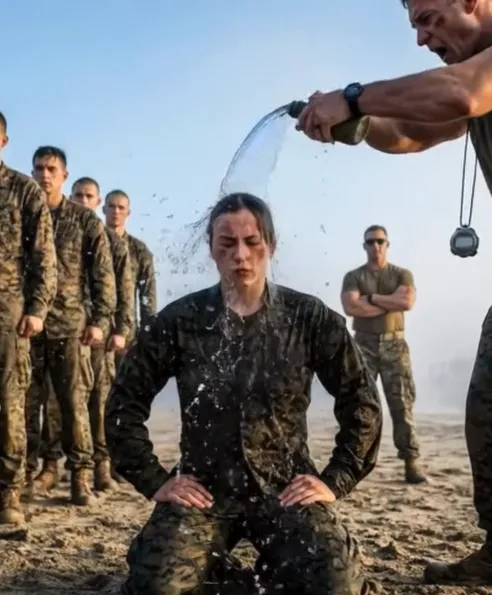
Results followed.
Injury rates dropped. Completion rates stabilized. Operational readiness metrics improved.
Rebecca remained at the facility, not as a reformer seeking praise, but as a commander focused on sustainability.
Yet the hardest part remained.
Trust.
Some instructors resisted quietly. Others adapted. A few admitted, privately, that they had crossed lines because no one had ever drawn them.
Rebecca listened to all of it.
Because Part 3 would not be about punishment.
It would be about whether an institution built on silence could learn to speak honestly to itself.
WHEN DISCIPLINE IS FINALLY HELD ACCOUNTABLE
The hardest phase did not begin with investigations or policy drafts.
It began after the cameras left.
Once the inquiry moved out of headlines and into internal directives, the Naval Special Warfare Training Center entered a quieter, more dangerous period—one where resistance no longer shouted, but whispered.
Lieutenant Commander Rebecca Lawson understood this phase well. She had seen it in combat units, intelligence commands, and joint task forces. Open defiance was easy to address. Passive obstruction was not.
The reforms were now official. New training boundaries were codified. Medical autonomy was protected in writing. Instructor evaluations were tied not only to attrition but to ethical conduct, injury transparency, and operational readiness of graduates one and three years out.
On paper, the system had changed.
In practice, habits die slowly.
Some instructors complied mechanically but withheld mentorship. Others followed rules while quietly undermining them, warning recruits that “real teams won’t be this forgiving.” A few believed the reforms were temporary, waiting out what they assumed was a political moment.
Rebecca addressed none of it publicly.
Instead, she changed the incentives.
She restructured instructor selection, requiring rotation through operational commands and peer reviews from outside the training pipeline. Instructors who resisted documentation found themselves flagged—not punished, but reassigned away from influence.
The message was subtle but unmistakable: authority would now follow accountability.
The most controversial change came six months later.
Rebecca authorized anonymous upward reporting—a mechanism allowing recruits and junior staff to flag safety and conduct issues without fear of retaliation.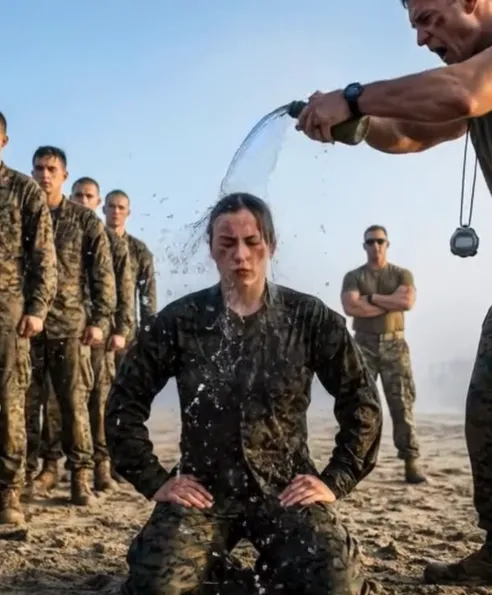 Critics argued it would weaken cohesion. Rebecca countered with data.
“Cohesion built on fear fails under pressure,” she stated during a closed briefing. “Cohesion built on trust survives it.”
The results were immediate. Reports increased—then stabilized. Patterns emerged earlier. Issues were corrected before injuries occurred.
The culture began to shift not because it was ordered—but because silence no longer offered protection.
One year after Rebecca’s arrival, Naval Training Command conducted a comprehensive audit. External observers compared performance metrics before and after the reforms.
The findings were difficult to dispute:
Serious training injuries dropped by 38%.
Voluntary withdrawals decreased without lowering standards.
Graduates demonstrated higher psychological resilience in follow-on assignments.
Team-based evaluations improved measurably.
The conclusion was blunt: the program was producing stronger operators with less waste.
Even skeptics took notice.
Several retired instructors requested meetings. Some were defensive. Others quietly apologetic. One said, “I didn’t realize how much we’d normalized.”
Rebecca listened.
She never said, I told you so.
Because the goal had never been to win an argument.
It had been to protect the mission.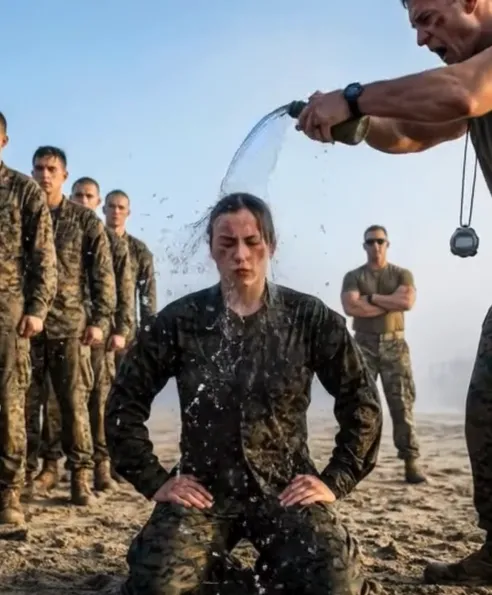
Chief Petty Officer Hargrove’s reassignment became final. Before he left, he requested one last conversation.
This time, he did not justify himself.
“I confused suffering with strength,” he said.
Rebecca responded evenly. “Many people do. That’s why systems exist—to correct human error.”
He nodded once. “I hope it sticks.”
Rebecca answered honestly. “It will—because it’s documented.”
Years later, recruits would hear stories about the “old days.” About instructors who ruled through fear. About the woman who knelt in the sand and changed the air without raising her voice.
Rebecca never confirmed or denied those stories.
She had already moved on to another command.
Her name did not appear on plaques. The reforms were not branded. They became standard operating procedure, quietly embedded into how training functioned.
That was the point.
Because real reform does not announce itself as a revolution.
It survives as routine.
On her final day at the facility, Rebecca stood alone at the edge of the grinder. Recruits ran drills under the California sun. Instructors corrected, pushed, evaluated—but did not degrade.
The water canteens were used for hydration.
Not humiliation.
Rebecca turned and walked away without ceremony.
She had not softened the program.
She had strengthened it—by proving that discipline without accountability is not toughness at all, but negligence wearing authority’s uniform.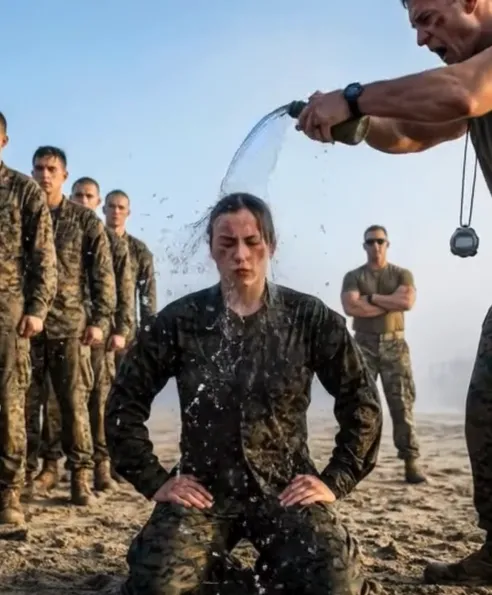
And that lesson would outlast her presence.
If this story matters, share it, discuss it, and demand accountability—because strong American institutions survive only when integrity is enforced daily.
SINGLE MOTHER LOSES JOB TO SAVE GIRL-bichnhu

I never imagined the worst day of my life—one gray Tuesday when it felt like the world collapsed on my shoulders—would become the first chapter of a story I wouldn’t have dared to dream.
My name is Marina Castillo, I’m thirty-two, and until recently my identity could be folded into a stiff blue polyester uniform, a name tag, and a constant fear of being replaced.
I was the kind of worker people look through, not at, the woman who cleans, carries, stocks, wipes, smiles, apologizes, and disappears before anyone remembers her face.
At home, I was also the kind of mother the world judges in silence: a single mom doing two jobs with one body, raising a little boy who deserved more than my exhaustion.
That Tuesday started like every other day—alarm, coffee, rushed kisses, a list of bills that never got shorter—until the moment the world decided to test what I valued most.
Outside the building where I worked, traffic was thick and impatient, horns sharp, engines hot, and people moving fast as if being late was a crime worse than cruelty.
I saw the little girl because she moved differently than adults: small, unprotected, stepping off the curb with the trust of someone who doesn’t yet know the world lies.
The car came too fast, a luxury SUV with dark windows, the kind people assume is “safe” because it costs more than my yearly rent.
I didn’t think, because thinking is slow, and instinct is faster, and sometimes the body moves before the mind can protect it with excuses.

I ran, grabbed her, pulled her back, and felt the edge of disaster brush my skin like a knife that missed by a breath.
She fell into my arms and started crying, not hurt, just terrified, and the sound hit me in the chest because it sounded like my son on his worst nights.
I expected “thank you,” or maybe nothing, because people rarely thank women like me, but I did not expect what came next.
My supervisor stormed out, red-faced, shouting about “abandoning your post,” as if my job mattered more than a child’s life.
I tried to explain, but explanations don’t work when someone is already hungry to punish, and punishment is cheaper than compassion in most workplaces.
“You’re done,” he snapped, loud enough for bystanders to hear, turning my act of saving into a public humiliation, as if I should feel guilty for caring.
The little girl’s nanny arrived late, breathless, grabbing her hand, apologizing to everyone except the one person who had actually intervened.
The child looked at me with wet cheeks and wide eyes, and whispered, “Don’t go,” like she understood that adults often leave when things get messy.
I walked away with my hands shaking, my pride wounded, and my mind screaming one question I couldn’t answer: how do you tell your child you lost your job for doing the right thing?
That night, my apartment felt smaller than ever, because fear shrinks space, and I stared at the fridge like it might produce a miracle between the eggs and the last slice of bread.

I rehearsed what I would say to my son—soft words, brave voice, a smile that wouldn’t crack—because mothers learn to perform stability when life is chaos.
The next morning, my phone rang with a number I didn’t recognize, and I almost didn’t answer, because unknown numbers usually mean debt collectors or bad news.
A man introduced himself calmly and asked if I was Marina Castillo, and when I said yes, he paused, as if measuring whether my name belonged in his world.
He said he represented the family of the little girl I saved, and my first thought was that they wanted to blame me, sue me, erase me, make me the problem.
Instead, he asked me to come to an address that sounded unreal—gated, private, polished—because the girl’s father wanted to speak with me personally.
I told myself not to go, because every story like this on the internet turns into a trap, but my rent did not care about my pride, and my son did not deserve my fear.
I arrived wearing my best clothes, which still felt like a costume, and the security guard looked me up and down like I was a package delivered to the wrong house.
Inside, everything was quiet in the expensive way, the kind of silence that comes from space, insulation, and the absence of neighbors who argue through thin walls.
Then the little girl ran into the room, saw me, and hugged my waist without hesitation, and in that second, my throat tightened because children don’t perform gratitude.

Her father stood up, a man with a watch that could pay for my son’s school, and eyes that looked tired in a way money does not fix.
He said, “You saved my daughter,” and I waited for the “but,” because rich apologies often come with conditions, and praise often comes with control.
There was no “but,” only a statement that felt like a door opening: “I watched the footage. I saw what you did. And I saw what they did to you after.”
I didn’t know what to say, because the idea of someone powerful noticing injustice felt as fictional as a fairy tale written for people who never miss rent.
He asked about my job, my son, my life, and I answered carefully, because when you’re poor, honesty can be dangerous and pity can be weaponized.
Then he told me something that made my stomach drop: he owned the company that managed the building where I worked, and my firing had already reached his desk.
He said the supervisor who fired me was being investigated, not because of politics, but because “a system that punishes a rescue is a system that will punish anything good.”

That line hit me harder than any check could have, because it sounded like moral clarity, the kind that rarely survives boardrooms and lawyers.
But here’s where the story turns into controversy, because the internet loves a rich man fixing a poor woman’s life, and it also hates it for the same reason.
He offered me a job with better pay and real benefits, and part of me wanted to cry, while another part wanted to scream: why did it take a millionaire’s attention for me to matter?
He also offered something else—a scholarship fund for my son, immediate childcare support, and a written apology from the building management, made public to everyone.
That public apology was the first thing that felt like justice, because it didn’t just help me; it forced the system to admit it had been wrong out loud.
Within hours, someone posted the security footage online, and the clip went everywhere: a woman in a blue uniform snatching a child away from a speeding SUV.
People called me a hero, others called me “lucky,” and some, strangely angry, claimed it was staged, because cynicism is how many people protect themselves from hope.

Then came the backlash: comments saying I should have “stayed at work,” that “it wasn’t her responsibility,” that “parents should watch their kids,” as if blame matters more than breath.
And there were also people furious at the millionaire, accusing him of “buying redemption,” using charity for publicity, or turning a worker’s pain into a brand moment.