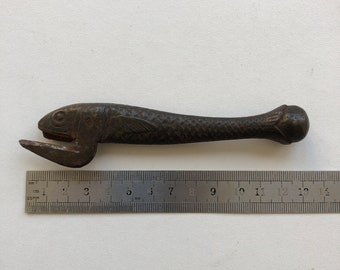
At first glance, this small fish-shaped hand tool might look like nothing more than a decorative trinket or a curious piece of metal shaped for novelty.
However, objects like this are wonderful examples of early 20th-century “kitchenalia”—a term collectors use to describe vintage kitchen tools that combine everyday practicality with charming design.
In an era when household items were expected to last for decades, even the most ordinary gadgets were often crafted with personality. This fish-shaped opener is a perfect illustration of that tradition.
A Tool That Blends Utility and Whimsy
The fish design is not simply decorative. In fact, the shape serves several practical purposes. The body of the fish forms a comfortable grip that fits naturally in the hand, making the tool easier to hold and control while opening tins.
The textured scale pattern commonly found on these handles also improves grip, especially when hands are wet or oily from kitchen work.
In addition, the distinctive shape made the tool easy to identify among other utensils in a busy kitchen drawer. Long before modern plastic gadgets and uniform stainless-steel tools, many kitchen implements had recognizable shapes or decorative features that helped people quickly locate the item they needed.

What the Tool Is Called
This object is most commonly known as a figural fish sardine can opener. You may also hear it described as:
- Fish-shaped tin opener
- Novelty sardine tin opener
- Figural metal can opener
The word “figural” simply means that the tool is shaped like a recognizable object—in this case, a fish. Because sardines were one of the most popular canned foods of the early 20th century, manufacturers often used fish imagery for tools designed to open those tins.
The Time Period It Comes From
Most examples of this type of opener date from the early 1900s through the 1920s or 1930s. During this period, manufacturers began producing many small household tools that combined practical use with decorative appeal.
This trend reflected a broader cultural shift. Kitchens were becoming more modernized, but people still appreciated craftsmanship and visual charm. Instead of purely industrial designs, companies produced utensils that felt pleasant to use and attractive enough to leave out on a countertop.

Who Made It?
One of the interesting aspects of tools like this is that they were rarely made by just one famous manufacturer.
Instead, many different companies produced similar versions. Hardware companies, kitchen-supply manufacturers, and even general household-goods distributors sold tools like this through catalogs and local shops.
Unless a specific example has a stamped brand name, patent number, or maker’s mark, it can be very difficult to identify the exact company that produced it. Marks are sometimes found on:
- The underside of the handle
- The metal cutting headMay you likeThe 1980s model who redefined beautyRedefining Beauty in a Man’s WorldThe Star of ‘Fast Times at Ridgemont High’ and Her New Life
- Near the pivot screw or rivet
If no marking is present, collectors generally classify the piece simply as an unmarked early 20th-century novelty sardine opener.
How It Was Used
The primary purpose of this tool was to open small metal tins, particularly those used for sardines and other preserved fish. These cans were typically flat and made from thin tinplate. Unlike modern cans with pull tabs, they required a separate opener.
The device works through a simple lever-and-blade mechanism. The metal head contains a curved cutting edge designed to pierce and slice the thin metal lid.
How the Opening Process Worked
Using the tool was straightforward:
- The user placed the cutting edge against the lid or seam of the tin.
- Gentle downward pressure allowed the blade to pierce the metal surface.
- The handle was then rocked or levered forward.
- Each movement advanced the cut along the edge of the lid.
- By repeating this motion around the perimeter, the lid could eventually be lifted away.
This design required a bit more manual effort than modern openers, but it was reliable and easy to repair if the blade became dull.
Visual Characteristics
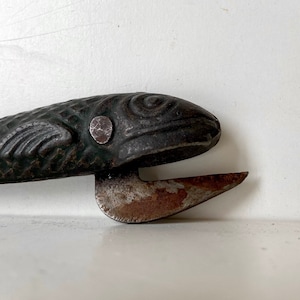
Several distinctive features help identify this type of opener:
- Fish-shaped handle that forms the main grip
- Textured scale pattern to prevent slipping
- Cast metal construction, often iron or steel
- Pivoting head held in place by a large screw or rivet
- Curved cutting blade designed for thin tin lids
Over time, many examples develop a dark patina or show signs of wear, which collectors often appreciate as evidence of age and authenticity.
Why Collectors Love It
Today, these openers are popular among collectors of antique kitchen tools. Their appeal comes from several qualities:
First, they represent a time when everyday tools were built for durability. Most were made from solid metal and could last for generations.
Second, they combine function with playful design. The fish shape perfectly matches the food it was intended to open, creating a clever visual connection between form and purpose.
Finally, they capture a small piece of domestic history. Before disposable packaging and electric appliances dominated kitchens, tools like this played an important role in daily meal preparation.
A Quick Identification Guide
If you come across one of these tools, here are the key points that help identify it:
- Name: Figural Fish Sardine Can Opener
- Era: Early 20th century, roughly 1900–1930
- Maker: Usually unknown unless stamped with a brand or patent
- Material: Cast metal handle with steel cutting mechanism
- Use: Opening sardine tins and other small metal food containers
A Small Tool With a Big Story
Although it may seem like a simple gadget, this fish-shaped opener reflects an era when even the smallest kitchen items were thoughtfully designed. It reminds us that practical tools once carried a sense of character and craftsmanship that is often missing from modern disposable gadgets.
Today, pieces like this serve not only as useful antiques but also as charming reminders of the creativity and ingenuity that shaped early 20th-century kitchens. A humble sardine opener may not seem extraordinary, yet it tells a story about how people cooked, ate, and designed the objects they used every day.