When you visit a military cemetery and notice small coins resting on a headstone, it can be a quietly powerful moment—especially if you don’t know what they mean. To an outsider, the coins may seem random or accidental.
But within the U.S. military community, this is a long-standing and deeply symbolic tradition. Each coin is placed with intention, carrying a message that speaks of respect, remembrance, and an unbroken bond between those who served.
These coins are not left casually. They are a form of communication—one that requires no words and asks for no acknowledgment.
For families of fallen service members, understanding this tradition can bring unexpected comfort, reassurance, and even a sense of connection to people they may never meet.

A Language Without Words
The tradition of leaving coins on military graves is believed to have become widespread during the Vietnam War. During that time, emotions surrounding the conflict were complex and often painful.
Many veterans wanted to honor fallen comrades, but approaching grieving families could feel intrusive or overwhelming. Words sometimes felt inadequate, or even harmful.
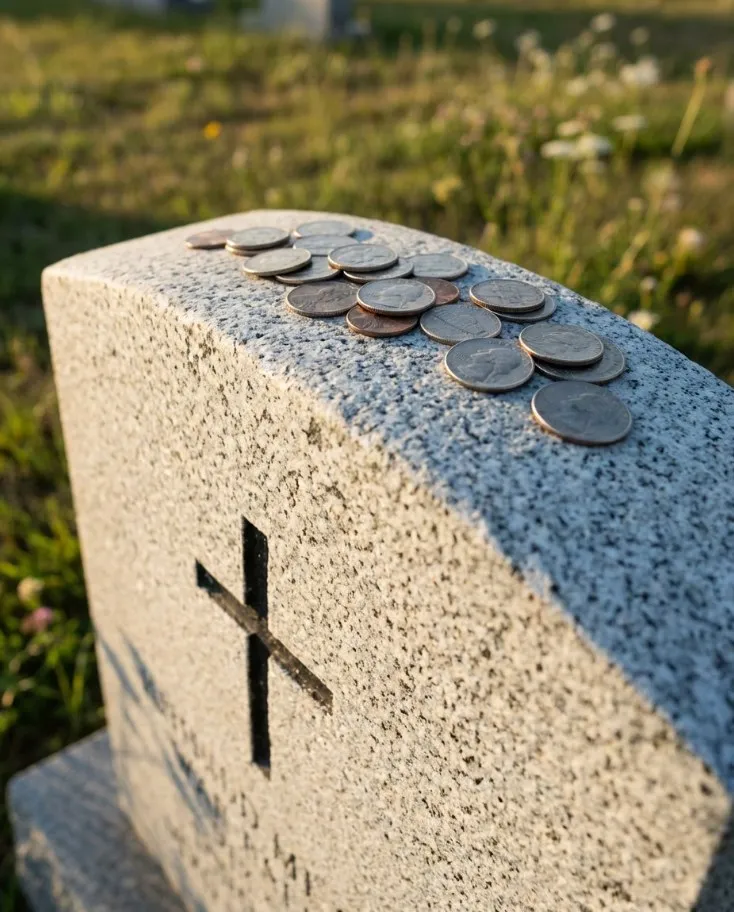
Coins became a quiet solution.
By leaving a small token behind, veterans and visitors could pay their respects without forcing a conversation or reopening wounds. Over time, this gesture evolved into a shared language—one that veterans instantly understand, even if no one ever explains it aloud.
Each type of coin tells a different story.
The Meaning Behind Each Coin A penny is the most common coin found on military headstones. Its meaning is simple, yet deeply moving. A penny signifies that someone has visited the grave to honor the fallen service member.
The visitor may not have known your husband personally. They may be a fellow veteran, a passerby, or someone who simply wanted to acknowledge his service.
Leaving a penny says, “You are remembered.”
It is a quiet assurance that his sacrifice has not been forgotten, even by strangers.
A nickel carries a more personal message. It means the person who left it trained with your husband during boot camp. This represents a unique bond formed at the very beginning of military life—a time of intense discipline, shared struggle, and transformation.

Boot camp is where civilians become soldiers, sailors, airmen, or Marines. Those who go through it together often form connections that last a lifetime. A nickel on the grave tells you that someone who stood beside your husband during that formative time still remembers him.
A dime signifies an even closer connection. It indicates that the visitor served with your husband in the same unit. This means they shared daily routines, missions, hardships, and responsibilities.
They likely relied on each other, trusted each other, and understood the realities of service in a way few others could.
Seeing a dime is a reminder that your husband was not alone during his service—that he was part of a team, a family bound by duty and shared experience.
A quarter holds the deepest and most solemn meaning of all. It means the person who left it was present when your husband gave his life. This coin speaks of a moment that changed everything. It is left by someone who witnessed his final sacrifice firsthand.
A quarter says, “I was there. I remember. I will never forget.”
For many families, this knowledge can be both heartbreaking and profoundly meaningful. It confirms that in his final moments, someone was there to remember him, honor him, and carry his story forward.
Why This Tradition Endures

What makes this practice so powerful is its simplicity. No speeches. No ceremonies. Just a small, deliberate gesture that carries enormous emotional weight.
Over the decades, the tradition has continued, passed down from one generation of service members to the next. Today, it is recognized across military cemeteries and memorials, serving as a symbol of brotherhood, loyalty, and respect that transcends time.
Coins are often collected by cemetery staff and donated to organizations that support veterans, further extending the impact of the gesture. Even in this way, the act of remembrance continues to serve a greater purpose.
What This Means for You.
If you see coins on your husband’s grave, know that they are not signs of pity or obligation. They are signs of honor.
They mean that people—some known, some unknown—are taking time out of their lives to acknowledge his service. They are standing quietly before his resting place, reflecting on what he gave, and leaving behind proof that he mattered.
In doing so, they are also honoring you and your family. The military community understands that sacrifice is never carried by the service member alone. Families serve too, in their own way.
What You Can Do With the Coins
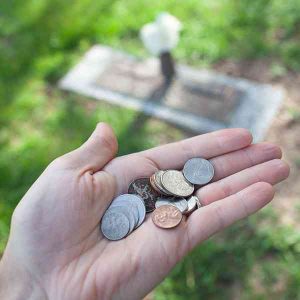
There is no requirement to remove the coins, and many families choose to leave them in place for a time.
Others collect them gently, treating them as keepsakes. Some place them in a small box, a shadow frame, or alongside medals, photographs, and letters.
If you are curious, you may ask cemetery staff whether they know who has been visiting. Sometimes they are fellow veterans, former unit members, or friends who return quietly year after year.
You may also consider reaching out to veterans’ organizations or your husband’s former unit. Often, they can offer support, share stories, and help you learn more about the life he lived among those who served with him.
Most importantly, allow the coins to bring you comfort.
They are not just symbols of loss. They are symbols of respect, loyalty, and an enduring bond that does not end with death. They are proof that your husband’s sacrifice left a lasting mark—one that continues to be recognized by those who truly understand what it means to serve.
He is remembered. And through these small coins, that remembrance lives on.