At first glance, the object might look a bit unusual or even puzzling to someone unfamiliar with older kitchen tools. However, what you’re actually looking at is a specialized kitchen device known as an adjustable roast or ham holder mounted on a carving board.
In simple terms, it is a purpose-built carving station designed to hold large pieces of meat firmly in place while they are being sliced. Before modern kitchen gadgets became common, tools like this were considered essential for serving large meals, especially during family gatherings or holiday dinners.
This device is known by several different names depending on the manufacturer or region. Some people refer to it as a roast holder or roast clamp, while others call it a ham holder, ham carving board, or even a meat carving board with spikes.
In some cases, it is described as a carving board with adjustable spike grips or simply a carving station. Regardless of the name, the idea behind the tool remains the same: it provides stability and control while carving large cuts of meat.
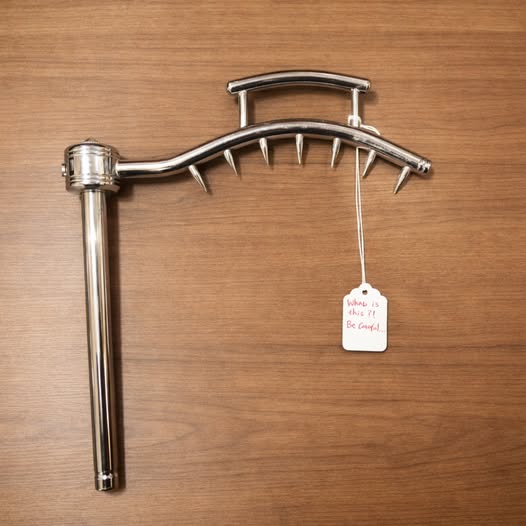
The construction of this carving station is both practical and clever. The base is typically made from a solid piece of hardwood, chosen for its durability and resistance to knife marks. Hardwood carving boards often feature a juice groove, a shallow channel carved around the edge of the board.
This groove is designed to catch juices that run from the meat during carving, preventing them from spilling onto the table or countertop. Many boards also include a slightly recessed carving area that helps contain the juices in one place.
Attached to the board is a vertical metal post, usually made from stainless steel or chrome-plated metal. This upright post serves as the support structure for the clamping mechanism.
Connected to the post is a horizontal arm equipped with several sharp downward-pointing spikes. These spikes are designed to press into the surface of the meat, holding it securely in place.
One of the most useful features of the design is its adjustability. The horizontal spiked arm can be raised, lowered, or repositioned along the vertical post. This allows the user to adjust the clamp to fit different sizes and shapes of meat.
Whether carving a large holiday ham, a beef roast, or a turkey breast, the adjustable mechanism ensures that the meat remains firmly anchored to the board.
Many versions of these carving boards also include side handles or rails. These handles make it easier to lift the entire board and bring it directly to the dining table for serving.
In many households during the mid-20th century, the carving board was not just a kitchen tool—it was part of the presentation. Hosts would carve the meat in front of guests, adding a sense of ceremony and tradition to the meal.

The primary purpose of this tool is simple but extremely helpful: it prevents the roast from sliding while it is being carved. Anyone who has tried slicing a large roast on a flat cutting board knows how easily it can shift or rotate under the pressure of the knife. This movement can make carving uneven slices difficult and sometimes even dangerous.
By anchoring the meat with spikes, the carving station offers several advantages. First, it provides stability. The spikes grip the meat firmly, preventing it from sliding across the board. Second, it improves precision. With the roast held steady, the carver can make smoother, more even slices. Third, it increases safety.
Because the meat is secured, the knife is less likely to slip, reducing the chance of accidental injury. Finally, the board’s grooves and recessed areas help contain juices, keeping the carving area cleaner and less messy.
Using the tool is fairly straightforward. First, the vertical post is secured firmly to the board. Then the roast or ham is placed in the center of the carving area. Once positioned, the horizontal arm is lowered so the spikes press gently into the top of the meat.
The arm is adjusted until the roast is held securely in place—firm enough to prevent movement but not so tight that it crushes the meat. After that, the carving process can begin. As the roast becomes smaller, the arm can be raised and repositioned to continue holding the remaining portion steady.
Although meat-carving tools have existed for centuries, this particular style of board-mounted adjustable clamp became especially popular during the mid-20th century, particularly between the 1950s and 1970s.
This era saw a boom in home entertaining, with families hosting formal dinners, holiday gatherings, and weekend parties. During that time, manufacturers created many specialized kitchen tools designed to make hosting appear elegant and effortless.
Unlike some kitchen inventions that are linked to a single inventor, the adjustable spike-style carving board appears to have evolved from earlier tools. Butchers had long used meat clamps and holding forks to stabilize large cuts while cutting them.
At the same time, household carving boards already existed with grooves designed to catch meat juices. Eventually, manufacturers combined these two ideas into one integrated device: the modern carving station.

Because many different companies produced these boards, there is no single widely recognized creator of the design. Many were manufactured without prominent branding, especially if they were sold as part of department store kitchenware collections.
Occasionally, a brand name or maker’s mark can be found stamped into the metal clamp or printed on the underside of the wooden board.
These carving stations were designed to handle a variety of large cuts of meat. They were especially useful for baked holiday hams, rib roasts, pork loin, and turkey breasts. Any roast that tends to roll or slide while being sliced could benefit from the stability provided by the spikes.
Proper care helps ensure that these tools remain functional for many years. Because the spikes are sharp, they should always be handled carefully by holding the metal bar rather than the points themselves.
The wooden board should be washed by hand and dried promptly to prevent moisture damage. Applying food-safe oil occasionally helps keep the wood from drying out or cracking. Many owners also store the spike bar in a raised position to avoid accidental contact.
Today, collectors and vintage kitchen enthusiasts appreciate these carving boards not only for their practicality but also for their distinctive mid-century style.
The combination of warm hardwood and polished metal reflects the design trends of the time, when kitchen tools were built to be both functional and visually appealing.
For many people, these carving stations serve as conversation pieces—reminders of a time when family meals were elaborate events and carving the roast at the table was part of the dining experience.
In the end, this adjustable roast holder represents more than just a clever kitchen device. It is also a small piece of culinary history, reflecting how home cooking, hospitality, and design evolved during the 20th century.
Even today, when modern tools are widely available, these sturdy carving boards remain both useful and charming artifacts of a past era when meals were meant to be shared, celebrated, and carefully prepared.