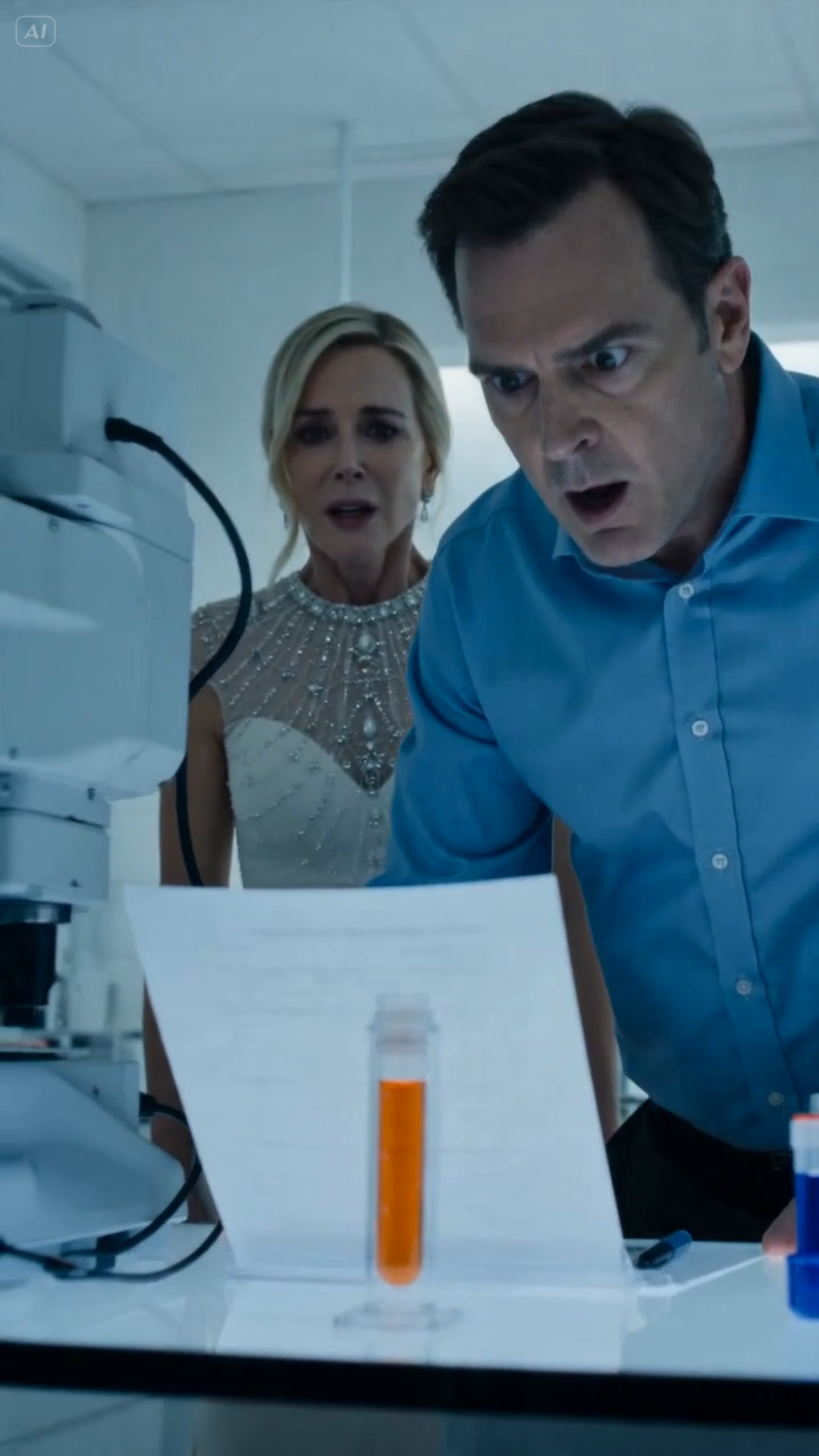
The silence in my master bedroom was never truly peaceful. It was a heavy, deliberate stillness—the kind that feels curated. For months, I, Bennett Hayes, had existed in the periphery of my own life. A year ago, I was the man who shaped the skyline of Seattle, a developer who saw beauty in cold steel and vacant lots. Then, the collapse happened—a structural failure on a high-rise project that left me with a broken spine and a future that felt like a closed book.
But I wasn’t alone. I had Audrey.
Audrey arrived like a soft rain after a wildfire. She was everything the harsh world of real estate wasn’t: patient, kind, and seemingly devoted. When my friends eventually drifted away, busy with their own lives, Audrey stayed. She became my world. She managed my medication, filtered my visitors, and ensured my existence was as comfortable as it could be in a wheelchair.
Every morning, at exactly 9:00 AM, the routine began. Audrey would enter, the scent of lavender and fresh citrus following her. She carried a tray with toast, eggs, and my “recovery tonic”—a vibrant, freshly pressed glass of orange juice.
“It’s the vitamins, Bennett,” she would say, smoothing my hair with a touch that felt like love. “Your nervous system is firing again, but it needs this specific blend to stabilize. You have to finish every drop.”
=
I drank it because I trusted her. I drank it because I was too tired to be anything but grateful. But as the months bled together, my world grew darker. The tremors in my hands became violent. The fog in my mind deepened until I could barely remember the names of the buildings I had designed. Everyone told me the same thing: “Healing is slow, Bennett. You’re lucky to have Audrey.”
Luck, as it turns out, is rarely about timing. Sometimes, it’s about a seven-year-old named Chloe.
Chloe was the daughter of my longtime groundskeeper. She was a curious, unfiltered child who didn’t understand the boundaries of my “sickroom.” On a Tuesday morning, while her father was busy pruning the roses outside my window, Chloe slipped inside, her sneakers silent on the plush carpet.
She approached my bed just as I was reaching for the glass of juice.
“Mr. Bennett?” she whispered, her eyes wide. “Don’t drink that.”
I paused, my hand trembling. “Why not, Chloe?”
She pointed a small finger at the glass. “It looks like the stuff Mom puts in the sink to unclog the drain. It smells like the garage, too. My daddy said never touch the stuff that smells like that, or you’ll go to sleep and never wake up.”
The room went cold. Before I could process her words, Audrey appeared in the doorway. Her face, usually a portrait of serene kindness, didn’t just change—it fractured. Her eyes went flat, predatory, and hard.
“Chloe,” she said, her voice dropping an octave into a tone I had never heard before. “Go find your father. Right now.”
The shift was so violent that my heart began to hammer against my ribs. I looked at the juice—really looked at it. I noticed the way the light refracted through it differently; it was slightly too thick, slightly too opaque.
I didn’t drink. I shoved the tray away, the glass clattering onto the hardwood, spilling the liquid. It didn’t just puddle; it began to eat into the finish of my floor, hissing softly.
I knew. In that heartbeat, I knew.
Audrey thought she was the one in control, but she had made one fatal mistake: she had underestimated the sharp eyes of a child, and the iron will of a man who spent his life building foundations that were meant to last.
The hiss of the orange juice against my hardwood floor was the sound of my entire world dissolving. Audrey didn’t even try to reach for the towel. She stood in the doorway, her shoulders dropping, the “devoted fiancée” mask slipping off to reveal a woman I had never met—a stranger with cold, calculating eyes.
“You were never supposed to be this sharp, Bennett,” she said, her voice devoid of the warmth I had spent months clinging to. “The dosage was calibrated for a man who had accepted his end.”
She didn’t run. She walked over to the bed, pulled a small remote from her pocket, and clicked it. The heavy oak doors to the master suite slid shut and locked with a metallic thud.
“You think Chloe saved you?” Audrey laughed, a dry, joyless sound. “She didn’t just stumble in here. I allowed her entry. I needed to see if your survival instinct was still active. You passed the test, but you’re far too late.”
“Test?” I managed to choke out, my brain reeling. “Who are you?”
“I’m the auditor,” she said, pacing the room like a caged panther. “You weren’t chosen because you were a successful developer, Bennett. You were chosen because your company was a front for something much larger than real estate. The project that ‘collapsed’ and broke your back? It wasn’t an accident. It was a server-clearing event. We didn’t want the building to stand; we wanted the data stored in the subterranean levels to be buried. And you? You were just the architect who happened to be standing on the wrong floor.”
The betrayal cut deeper than the spinal injury ever had. Every moment of tenderness, every “recovery” session, every cup of tea—it was all psychological maintenance to ensure I didn’t dig into why the project really failed.
But Audrey’s mistake wasn’t just the juice. Her mistake was assuming I was still the man who built buildings out of steel and glass. I was a man who had spent the last year trapped in my own mind, and in that darkness, I had built something else: a digital fortress.
I didn’t reach for the phone. I reached for the tablet on my nightstand, the one she thought I used to listen to audiobooks.
“You think I was sluggish because of the toxin?” I asked, my voice gaining strength. “I was sluggish because I was overclocking my own mind to hack your company’s internal network. I’ve been inside your servers for three months, Audrey. I know about the ‘Auditor’ program. I know about the offshore accounts. And most importantly, I know exactly who paid you to be here.”
Audrey’s face finally showed fear. She lunged for me, but the wheelchair—which I had modified weeks ago—had a hidden defensive mechanism. A high-voltage discharge surged through the armrests, throwing her back against the wall.
As she slumped, I didn’t call the police. I clicked “Execute” on the tablet.
Suddenly, the house began to scream. Not with sirens, but with the sound of every smart device—the lights, the heating system, the security cameras—streaming audio and video directly to the cloud, to the press, and to the federal authorities.
But then, the final, most devastating twist occurred.
The front door didn’t just open for the police; it opened for my brother, Silas.
Silas walked into the room, not with concern, but with a gun drawn. He looked at Audrey, then at me. “You were supposed to wait, Audrey. I told you the chemical breakdown would take longer.”
“Silas?” I whispered, my heart shattering. “You… you were in on this?”
“I’m not your brother, Bennett,” Silas said, his eyes empty. “I’m the next Auditor. Audrey was the ‘nurturer,’ but I’m the ‘closer.’ You didn’t hack the network. You were allowed to hack it. We needed you to trace all the offshore accounts back to a single source so we could verify that you were the one who consolidated the funds. The money you think you’ve ‘exposed’ has actually been transferred into a single, untraceable wallet—one that only requires your biometric scan to finalize the exit.”
They weren’t killing me. They were using my clearance to execute the greatest heist in history, and they needed me to be the “hero” who publicly took the blame.
“You’re going to be the most famous criminal in history, Bennett,” Silas said, moving toward the nightstand to grab the tablet. “And once the transfer is done, you’ll be ‘lost’ in an unfortunate post-recovery relapse.”
I looked at Silas, the man who had been my protector for my entire life. I realized then that my father’s “empire” was never mine; it was a honeypot designed to trap anyone with the ambition to build it.
I didn’t fight. I let him grab the tablet.
“You’re right, Silas,” I said, leaning back in my chair. “You do need my biometric scan.”
As he pressed his thumb to the sensor to authorize the final transfer, he didn’t notice the faint, microscopic needle I had hidden in the frame of the tablet. It was a one-time-use biological transmitter—the same tech Audrey had used to track me.
The moment his skin touched the glass, the tablet didn’t transfer the money. It broadcast a live, encrypted signal to every intelligence agency in the world, identifying Silas and Audrey as the masterminds of the “Vane Holdings” collapse.
The house was surrounded within seconds. The “Sovereign Holdings” team—my father’s old associates—weren’t the ones who stormed the house. It was the international military police.
Silas looked at the window, seeing the dozens of tactical teams closing in. “You killed us both!”
“No,” I said, watching as they broke down the bedroom doors, “I just stopped building houses. I started building traps.”
As they were dragged away, I sat in the silence of my bedroom, finally alone. I stood up—not with a limp, not with effort, but with the strength of a man who had survived a war he hadn’t even known he was in. I didn’t take the money, and I didn’t take the empire. I walked out of the estate, left the keys on the counter, and vanished into the night.
I’m free now. But sometimes, when I see a beautiful building, I wonder if the foundation was laid by a man or a monster. And I know the answer: it doesn’t matter who builds the house, as long as you’re the one who holds the keys to the door.
PART 2
THE MAN WHO HELD THE KEYS
I thought freedom would feel louder.
I imagined it would arrive like thunder.
Like police lights fading behind me.
Like Audrey and Silas being dragged out of my bedroom while the world finally saw what had been hiding inside my house.
But freedom did not sound like thunder.
It sounded like a highway at 3:00 AM.
Rain ticking against the windshield.
My own breathing.
My hands gripping the steering wheel of a borrowed truck I had no business driving after a year in a wheelchair.
The world believed Bennett Hayes had vanished.
For once, the world was right.
I drove south until Seattle disappeared behind me.
No estate.
No empire.
No smart house.
No glass towers bearing my name.
Only a cheap motel outside a logging town, a pay-as-you-go phone, and the kind of silence that did not feel curated by Audrey’s hands.
For three days, I slept in fragments.
An hour at a time.
Sometimes I woke reaching for a glass of orange juice that was not there.
Sometimes I heard Silas’s voice.
I’m not your brother.
Sometimes I saw Chloe’s face in the doorway.
Mr. Bennett? Don’t drink that.
That was the part I could not leave behind.
Not the empire.
Not the money.
Not the betrayal.
The child.
The seven-year-old girl whose eyes had seen what my broken pride had missed.
On the fourth morning, her father called.
Elias Monroe had worked on my grounds for eleven years.
He was a quiet man with hands made rough by soil, pruning wire, and weather.
He had never asked me for anything.
That morning, his voice was broken.
“Mr. Hayes,” he said. “Chloe’s gone.”
The motel room tilted.
“What do you mean gone?”
“She disappeared from school yesterday. Police say maybe her mother picked her up, but her mother’s been dead two years.”
My throat closed.
Elias kept talking, but his words blurred into static.
A black SUV.
A substitute teacher.
A note saying Chloe was released early.
Security footage missing from the school office.
I sat on the edge of the motel bed and stared at the wall.
Audrey and Silas were in custody.
But the machine that sent them was still alive.
And now it had reached for a child.
“Elias,” I said, my voice becoming something I barely recognized. “Did anyone ask what Chloe saw in my room?”
“No.”
“Good.”
“What does that mean?”
“It means they don’t know how much she matters.”
Silence.
Then Elias whispered, “Can you get her back?”
I looked at my hands.
The tremors Audrey had created were mostly gone now.
But my fingers still remembered helplessness.
My spine still remembered the impact.
My heart still remembered trusting monsters.
“I will,” I said.
I should not have promised that.
Promises are dangerous things.
But some promises are worth becoming dangerous for.
By noon, the news changed.
Every channel in America suddenly discovered Bennett Hayes.
Not as a victim.
As a suspect.
Billionaire Developer Vanishes After International Financial Breach.
Hayes Linked to Offshore Transfers.
Federal Agencies Investigating Possible Corporate Espionage.
The footage of Silas and Audrey being arrested vanished from public feeds.
My emergency broadcast was labeled “unverified.”
My name appeared beside words like fraud, instability, and breakdown.
I watched from the corner booth of a roadside diner as an anchor with perfect hair explained that my spinal recovery may have been “psychologically complicated.”
That was how powerful people called you crazy without using the word.
Then they played an old photograph.
Me at a charity gala.
Silas beside me.
Arm around my shoulder.
Smiling like a brother.
The anchor said, “Sources close to the Hayes family describe Silas Vane as a longtime protector of Bennett’s interests.”
I laughed once.
A woman at the next table looked at me.
I lowered my cap.
The machine had done what machines do.
It had absorbed the injury.
Changed the label.
Turned the victim into the architect.
And somewhere inside that same machine, Chloe Monroe was being held because she had smelled poison in a glass of orange juice.
I drove back toward Seattle before sunset.
Not to my estate.
That place would be watched.
Not to my company office.
That place would be owned.
I went to the first building I ever designed.
Not the tallest.
Not the most profitable.
A four-story brick renovation in Pioneer Square that everyone told me was too small to matter.
My father had hated it.
“Sentimental architecture,” he called it.
Maybe that was why I kept the basement.
Officially, the building had no lower service level.
Unofficially, old Seattle is full of rooms the maps forgot.
The key still worked.
That surprised me.
Or maybe it didn’t.
I had built the lock myself.
The basement smelled like dust, concrete, and rainwater.
A place no empire would think to search because no empire could imagine a billionaire returning to his first failure.
There, inside an old utility cabinet, was the one thing Audrey never knew about.
A black metal case.
Inside it were handwritten notebooks, hard drives, emergency cash, a passport under a name I had never used, and a photograph of my mother standing in front of the building before it was restored.
On the back, in her handwriting, were five words.
Build places people can leave.
I had never understood that sentence.
Not until I lived in a house designed to keep me inside.
I powered up an old offline laptop and connected the biological transmitter log from the tablet.
The public feed had been wiped.
The private signal had not.
Silas and Audrey’s arrests had triggered an international military response, but the evidence packet had been intercepted before it reached open court.
Someone above them had stepped in.
Someone with enough reach to make a kidnapping look like an attendance error.
I opened the last file my trap had pulled before the blackout.
One name appeared again and again.
THE ARCHITECT.
Not a title for me.
Someone else.
Someone above the Auditors.
Someone who built systems, identities, bankruptcies, poisonings, disappearances.
Someone who understood that the strongest prison is the one a man believes he chose.
Then another file opened.
A location.
VANE HOLDINGS RECOVERY FACILITY
BAY 11
PORT OF TACOMA
My mouth went dry.
It was not a hospital.
Not a data center.
A shipping warehouse.
The kind of place where people entered as paperwork and left as rumors.
I was halfway to Tacoma when the pay phone rang.
Not my phone.
A pay phone outside an abandoned gas station I had stopped beside for fuel.
It rang once.
Twice.
Three times.
I stared at it through the rain.
Then I answered.
A child’s voice whispered, “Mr. Bennett?”
My knees nearly gave out.
“Chloe.”
“I’m scared.”
Her voice was tiny.
Controlled.
Too controlled for a child.
“Where are you?”
“I don’t know. It smells like metal. There are boats.”
Port of Tacoma.
I closed my eyes.
“Are you hurt?”
“No. They gave me a juice box. I didn’t drink it.”
Despite everything, I almost smiled.
“That’s my girl.”
A breath trembled through the receiver.
“They said you’re bad.”
“I know.”
“They said you made your brother sick.”
“He was never my brother.”
“I know.”
I froze.
“What did you say?”
Chloe sniffed.
“He told the lady that. He said, ‘Bennett still thinks blood means family.’ But he said it funny. Like he was proud.”
My hand tightened around the phone.
“Chloe, listen to me very carefully. Can you see anything around you?”
“A red number on the wall.”
“What number?”
“Eleven.”
Bay 11.
My heart began hammering.
“Anything else?”
“A door with a picture of a bird. A black bird.”
A raven.
Vane Holdings used shell companies named after birds.
Raven, Rook, Crow, Wren.
I heard footsteps through the line.
Chloe’s breath changed.
“Someone’s coming.”
“Chloe—”
“Mr. Bennett?”
“Yes?”
“If they give me orange juice, I won’t drink it.”
The line went dead.
For a few seconds, I stood in the rain holding the receiver.
Then I placed it back gently.
Not because I was calm.
Because rage, if handled carelessly, becomes exactly what your enemies expect.
I drove to the port without headlights for the last half mile.
The old me would have called a security team.
The broken me would have called the police and prayed the right people answered.
The man I was becoming trusted neither prayer nor men who arrived late with badges.
I parked behind a stack of containers and walked.
Every step hurt.
My spine was healed enough to move.
Not enough to forget.
Rain turned the asphalt black.
Cranes rose over the port like dead giants.
Bay 11 sat at the edge of the old shipping line, its warehouse doors half-open under yellow industrial lights.
Two guards stood outside.
Not police.
Not federal.
Private.
I did not fight them.
I walked to the maintenance entrance and used the oldest trick in architecture.
Buildings always reveal their secrets to the people who service them.
Behind Bay 11 was a narrow drainage tunnel leading beneath the loading platform.
Too small for a security detail.
Large enough for a man who had spent a year learning how to move through pain without making a sound.
I crawled through rainwater and rust.
At the end of the tunnel, I found an access grate.
Inside, voices echoed.
One was Silas.
Alive.
Free.
Or never truly captured.
“You should have let me finish him at the estate,” he said.
A woman answered.
Older.
Calmer.
“You were emotional.”
“I was efficient.”
“You were sloppy.”
I lifted my head just enough to see through the grate.
Silas stood in the warehouse below, wearing a clean gray coat.
No handcuffs.
No bruises.
No sign of prison.
Beside him stood a woman in white gloves.
Seventy maybe.
Silver hair.
A face that looked carved rather than aged.
I knew her.
Everyone in Seattle knew her.
Margaret Vane.
My father’s oldest business partner.
She had given the eulogy at his funeral.
She had held my mother’s hand when I was twelve.
She had brought me a blue bicycle after Silas and I fought over the red one.
Silas was not my brother.
But Margaret Vane had been inside my family long enough to know where every door was hidden.
And on a metal chair near the center of the warehouse sat Chloe.
Small.
Pale.
Hands tied.
Still alive.
The rage inside me went perfectly cold.
Margaret looked toward the child.
“Children are inconvenient witnesses,” she said. “But useful mirrors.”
Chloe stared at the floor.
Silas paced.
“Bennett will come.”
“I know.”
“You’re using her as bait.”
Margaret smiled faintly.
“No. I’m using her as proof.”
Silas frowned.
Margaret turned toward him.
“You and Audrey failed because you underestimated Bennett’s need to feel clever. Men who build towers always want the final trap to be theirs.”
Silas’s jaw tightened.
Margaret continued.
“So this time, we give him what he wants. A rescue. A confession. A villain standing in the light.”
My blood went cold.
She knew.
Not everything.
But enough.
Silas looked uneasy.
“And then?”
“And then he chooses.”
Margaret walked to a steel table.
On it sat two things.
A tablet.
And a brass key.
Even from the grate, I recognized the key.
It belonged to my father’s private vault.
The one room in the estate I had never opened.
Margaret lifted it between two fingers.
“His father left him more than a company,” she said. “He left him the root ledger.”
Silas went still.
“You said that was destroyed.”
“I said many things.”
“What’s in it?”
“The names of every family that used Vane Holdings for forty years. Judges. ministers. senators. intelligence contractors. shipping magnates. men who bought laws and women who buried witnesses.”
Silas stared at the key.
“With that ledger, Bennett could destroy the entire architecture.”
Margaret nodded.
“Or inherit it.”
I understood then.
The offshore accounts.
The heist.
The poison.
The collapse.
Even Chloe.
They were not trying to kill me.
Not anymore.
They were trying to force me into my father’s chair.
Because the machine did not survive by removing every threat.
It survived by recruiting the one person who could rebuild it better.
Me.
Silas laughed softly.
“He won’t take it.”
Margaret looked toward the warehouse shadows.
“Of course he will.”
My heart stopped.
She knew I was there.
“Bennett,” she called, her voice echoing through Bay 11. “You may come out now.”
Every guard turned.
Chloe’s head lifted.
I pushed the grate open and dropped to the concrete floor.
Pain shot through my legs.
I stayed upright.
That mattered.
Silas raised a gun.
Margaret lifted one hand.
“Not yet.”
Chloe’s eyes filled with tears.
I did not look at her for too long.
If I did, they would see where I was weakest.
Margaret smiled.
“You walk well.”
“You age badly.”
Silas’s mouth twitched.
Margaret’s smile widened.
“There he is. Arthur Hayes’s son.”
“My father is dead.”
“No,” Margaret said. “Your father is distributed.”
She gestured toward the warehouse.
“The companies. The accounts. The judges. The emergency trustees. The men who erase footage and the women who rewrite medical records. That was Arthur. Death is irrelevant when the structure remains.”
I looked at the brass key.
“You want me to open his vault.”
“I want you to understand your inheritance.”
“My inheritance poisoned me.”
“No,” Margaret said. “Your weakness poisoned you.”
Chloe flinched.
I forced myself not to.
Margaret saw the effort and looked pleased.
“Audrey was crude, but effective. You became isolated. Dependent. Grateful. All leadership requires surrender first.”
“You sound like a monster trying to write a business book.”
For the first time, irritation crossed her face.
Good.
Monsters hate when the room stops admiring their vocabulary.
Silas stepped closer.
“Enough.”
Margaret ignored him.
“Your father built a system that influenced half the Western world. But he made one mistake.”
I waited.
“He loved your mother.”
The words hit harder than I expected.
Margaret noticed.
“She convinced him to create a failsafe. A vault ledger. A way to burn the architecture if it became too corrupt.”
“She knew?”
“She suspected.”
My mother’s photograph flashed in my mind.
Build places people can leave.
Margaret continued.
“Arthur hid the key before he died. We searched for years.”
I looked at the brass key.
“And Silas found it?”
Silas smiled coldly.
“Your estate had many rooms you never entered.”
That hurt.
Not because of the room.
Because I remembered every childhood door Silas had opened before me.
Every time I thought he was protecting me from darkness.
Maybe he had only been checking what darkness belonged to him.
Margaret placed the key beside the tablet.
“Open the vault remotely. The ledger transfers to you. You become the custodian. We rebuild the system cleanly. No more sloppy Auditors. No more poisons. No more warehouse collapses.”
I looked at Chloe.
“And her?”
Margaret glanced at the child.
“She forgets.”
Chloe whispered, “No, I don’t.”
Margaret smiled.
“You would.”
My hands curled.
Silas lifted the gun slightly.
Margaret looked back at me.
“You have spent your life building foundations, Bennett. Here is the truth. Every civilization rests on rooms like this. Hidden rooms. Men like your father understood that. Men like Silas serve that. Men like you pretend to hate it until you realize you can redesign it.”
She stepped closer.
“You can become the man who holds every key.”
The warehouse seemed to hold its breath.
For one terrible second, I understood the temptation.
Not money.
Not power.
Control.
After a year of paralysis, betrayal, poison, locked doors, false medical charts, and a brother who was not a brother, control felt like oxygen.
The key gleamed under the light.
A small brass thing.
Enough to open hell.
I looked at Margaret.
“You’re right.”
Silas’s eyes narrowed.
Chloe shook her head.
“Mr. Bennett…”
I walked to the table.
Margaret looked satisfied.
Silas looked suspicious.
That was the difference between those who rule and those who survive.
The rulers believe desire makes people predictable.
The survivors know desire can be used against itself.
I picked up the key.
It was heavier than I expected.
My father’s vault key.
My mother’s warning.
My whole life reduced to metal in my palm.
Margaret slid the tablet toward me.
“Biometric confirmation.”
Of course.
Always the body.
Always the proof that flesh belonged to a system.
I placed my thumb on the scanner.
The screen lit up.
VAULT ACCESS RECOGNIZED.
Margaret inhaled softly.
Silas lowered his gun by half an inch.
And Chloe watched me with the unbearable faith of a child who had already saved my life once.
The tablet asked one question.
TRANSFER ROOT LEDGER TO CUSTODIAN?
YES / NO
I looked at Margaret.
“You said my father built a failsafe.”
“He did.”
“You said my mother convinced him.”
“Yes.”
I smiled.
“Then you should have wondered what she convinced him to call it.”
Margaret’s expression changed.
Too late.
I pressed NO.
Then I turned the brass key one full rotation inside the tablet frame.
The screen went black.
For one second, nothing happened.
Silas shouted, “What did you do?”
The warehouse lights died.
Then every container door in Bay 11 unlocked at once.
Dozens of steel latches snapped open in the darkness.
Emergency lights flared red.
A voice filled the warehouse.
Not mine.
My mother’s.
If this file is active, Arthur is dead, Bennett is threatened, and someone has tried to turn my son into a custodian of monsters.
Margaret staggered back as if struck.
My mother’s voice continued.
The root ledger was never meant to be inherited.
It was meant to be witnessed.
Screens across the warehouse came alive.
Names appeared.
Accounts.
Payments.
Shell companies.
Photographs.
Security logs.
Medical records.
Judges.
Contractors.
Politicians.
Executives.
The architecture began unfolding across every wall in Bay 11.
Not transferred to me.
Broadcast outward.
To federal servers.
International courts.
Newsrooms.
Whistleblower networks.
Independent archives.
Everywhere.
At once.
Margaret screamed for the first time.
“Shut it down!”
Silas grabbed the tablet.
It burned his hand and locked.
My mother’s voice returned.
Bennett, if you are hearing this, do not hold the keys.
Open the doors.
Behind me, Chloe began to cry.
Not from fear now.
From understanding.
I turned and ran to her.
Silas raised the gun.
A shot cracked through the warehouse.
Not from Silas.
From the catwalk above.
Elias Monroe stood there, soaked from rain, holding a security guard’s weapon with both hands.
His face was pale.
But steady.
“Step away from my daughter,” he said.
For the second time in my life, Chloe’s father saved me from believing I had to do everything alone.
Silas froze.
Then the warehouse doors exploded inward.
Not one team.
Dozens.
Federal agents.
Military police.
International officers.
Real ones this time.
No private uniforms.
No silent extraction.
No hidden recovery.
Every camera in Bay 11 was still broadcasting.
The world was watching live.
Margaret Vane turned slowly toward me.
Her face was no longer elegant.
No longer carved.
Just old.
Furious.
Human.
“You have no idea what you’ve destroyed.”
I picked Chloe up and held her carefully against my chest.
She was shaking.
So was I.
“Yes,” I said. “I do.”
Margaret was forced to her knees.
Silas tried to run.
Elias tackled him before the agents reached him.
Not gracefully.
Not like a movie.
Like a father.
Silas hit the concrete hard.
The gun skidded away.
For a moment, he looked at me from the floor.
The man I had called brother.
The boy who had taught me how to ride a bike.
The stranger who had helped poison my life.
His face twisted.
“You opened everything.”
I looked at him.
“No, Silas.”
I held Chloe closer.
“I stopped locking it.”
By dawn, the port was surrounded by news vans, law enforcement convoys, and helicopters.
The root ledger had gone public.
Not perfectly.
Not cleanly.
Truth never arrives clean.
It arrived messy.
Terrifying.
Incomplete in places.
Too much in others.
But it arrived.
People resigned before breakfast.
Accounts froze before noon.
Three judges were removed from active cases.
Two senators denied knowing anything while standing in front of documents bearing their signatures.
Vane Holdings collapsed so fast the morning stock commentators looked physically ill.
Margaret Vane was transferred under international custody.
Silas refused to speak.
Audrey tried to trade testimony for protection.
She had plenty to trade.
For weeks, America watched the empire burn.
But I did not watch most of it.
I sat in a hospital hallway with Elias while doctors checked Chloe.
No poison.
No major injuries.
Dehydration.
Bruising on one wrist.
Nightmares waiting their turn.
When Chloe came out, she walked straight past her father and hugged me first.
Elias pretended not to be hurt.
I did not.
“I’m sorry,” I whispered.
Chloe pulled back.
“For what?”
“For bringing this near you.”
She looked confused.
Then offended.
“You didn’t. Bad people did.”
I stared at her.
Children can be cruel with truth.
They can also be merciful with it.
Elias placed a hand on my shoulder.
For eleven years, he had called me Mr. Hayes.
That morning, he said, “Bennett.”
I looked at him.
“Come home with us for breakfast.”
I almost said no.
Reflex.
Distance felt safer.
Guilt always wants to isolate itself and call it protection.
But Chloe took my hand.
And I went.
Their house was small.
A blue one-story place with a vegetable garden in the back and a porch light that flickered when the wind got hard.
Breakfast was scrambled eggs, toast, and apple juice.
Chloe watched me stare at the glass.
Then she took it, sniffed it dramatically, and declared, “Safe.”
I laughed.
Really laughed.
For the first time in more than a year.
Three months later, the Hayes estate was seized as part of the Vane investigation.
The press called it justice.
I called it overdue maintenance.
Reporters camped outside the gates for weeks, waiting for me to return.
I never did.
But I did attend the auction.
Not publicly.
I stood in the back beside Elias and watched strangers bid on the furniture, the chandeliers, the paintings, the imported rugs, the bed where Audrey had poisoned me with a smile.
I bought only one thing.
The front door key.
Not the smart lock.
Not the estate title.
Just the old brass key from before the renovations.
It cost twelve dollars.
The auctioneer looked embarrassed charging me.
I paid in cash.
That afternoon, I drove to Pioneer Square and unlocked the brick building where I had hidden my mother’s photograph.
The first building I ever designed.
The one my father hated.
The one with rooms people could leave.
I turned it into something new.
Not a company.
Not a foundation with my face on the wall.
A place.
We called it The Open Door.
Lawyers worked there for whistleblowers who had no money.
Doctors volunteered for people whose medical records had been manipulated.
Cybersecurity experts helped victims recover identities stolen by shell companies.
Architects redesigned homes for survivors of violence, disability, and confinement.
Elias built the courtyard garden.
Chloe painted the first sign by hand.
It was crooked.
I refused to fix it.
The sign read:
THE OPEN DOOR
SAFE HOUSES ARE BUILT FROM TRUTH
The first person to walk in was a nurse who had been fired for reporting a forged death certificate.
The second was a contractor whose company had been bankrupted after refusing to hide illegal storage under a luxury project.
The third was a teenage boy who had been told his missing father had run away.
He had not.
By the end of the first year, The Open Door had helped forty-seven people.
By the second year, two hundred.
I did not return to skyscrapers.
People asked me why.
Developers called.
Universities called.
Documentary producers called.
A senator’s office called once.
I hung up.
I still loved buildings.
I loved the quiet math of load and balance.
The way light changes a room.
The dignity of a well-placed window.
But I no longer believed height made a structure important.
Sometimes the most important building is the one with a ramp wide enough for a frightened man in a wheelchair.
A door without a hidden lock.
A room where a child can speak and be believed.
One spring morning, Chloe visited after school.
She was older now.
Taller.
Still too curious for her own safety.
She found me in the courtyard, sanding an old wooden bench.
“Mr. Bennett?”
I looked up.
“You’re still calling me that?”
She grinned.
“You’re still old.”
“I’m thirty-nine.”
“Exactly.”
She sat beside me and handed me a drawing.
It was terrible.
A house with too many windows.
A giant key on the roof.
A little girl standing in front of the door holding a glass of orange juice with a red X through it.
I stared at it longer than she expected.
“This is very dramatic,” I said.
“It’s a logo.”
“For what?”
“For when I become an architect.”
My chest tightened.
“You want to build houses?”
She nodded.
“Not fancy ones.”
“What kind?”
She looked at the courtyard.
Then at the people moving in and out of The Open Door.
A woman crying into a lawyer’s shoulder.
A veteran adjusting the handle of a new wheelchair ramp.
Elias watering tomatoes by the fence.
“Ones people can leave,” Chloe said.
For a moment, I could not speak.
My mother’s handwriting moved through me like light.
Build places people can leave.
Chloe frowned.
“Are you crying?”
“No.”
“You are.”
“I’m allergic to bad drawings.”
She rolled her eyes and took the paper back.
But she was smiling.
That evening, after everyone left, I walked through the building alone.
Not trapped.
Not watched.
Not medicated into gratitude.
Just alone.
The good kind.
I passed the legal clinic.
The medical review room.
The small library.
The kitchen where survivors always seemed to gather before they trusted anyone enough to sit in an office.
At the end of the hall was the original front door.
We had kept it.
Heavy wood.
Old brass plate.
Scratches from decades of use.
I took the estate key from my pocket.
The last key I had bought from my old life.
For months, I had carried it without knowing why.
Proof I had survived.
Proof I had owned something.
Proof something had once tried to own me.
Now it felt like weight I no longer needed.
I walked into the courtyard and pressed the key into the wet concrete beside the new walkway.
Not hidden.
Not framed.
Just set into the path where people would pass over it every day.
The next morning, Chloe noticed it immediately.
“What’s that?”
“A key.”
“To what?”
I looked at the building.
Then at the open front door.
“Nothing anymore.”
She thought about that.
Then nodded, as if it made perfect sense.
Years later, people would still ask me what really happened inside the Hayes estate.
They wanted the dramatic version.
The poisoned juice.
The locked bedroom.
The brother who was not a brother.
The woman in white gloves.
The vault.
The ledger.
The night the architecture of monsters became public.
I told them the truth.
Not all of it.
Some stories belong to court records.
Some belong to children who survived them.
But I always told them this:
I spent my life building places that looked beautiful from the outside.
Then I almost died in one.
After that, beauty was not enough.
A house is not good because it is tall.
It is not good because it is expensive.
It is not good because powerful people want to be photographed inside it.
A house is good when the weakest person in it can still open the door.
On the fifth anniversary of The Open Door, Chloe stood beside me in the courtyard.
She was twelve now.
Still sharp-eyed.
Still suspicious of orange juice.
The building behind us was full of voices.
Survivors.
Lawyers.
Doctors.
Children.
Gardeners.
People who had once been trapped inside someone else’s design and were learning, slowly, to draw their own.
Chloe pointed at the old key in the walkway.
“Do you ever miss the estate?”
I looked down at the brass shape set into concrete.
Then at Elias laughing near the garden.
Then at the front door, propped open with a brick because the spring air was too good to waste.
“No,” I said.
She smiled.
“Good.”
I looked at the building I had once called my first failure.
The brick walls glowed warm in the late afternoon sun.
The windows reflected the city I had once tried to conquer and now simply lived inside.
For the first time, I understood what my mother had tried to teach me.
The point was never to hold all the keys.
The point was to build a world where fewer people needed them.
Chloe ran inside when someone called her name.
I stayed in the courtyard a moment longer.
Then I picked up my cane, walked to the front entrance, and opened the door wider for the next person coming in.
PART 3
THE DOOR WITHOUT A KEY
The first brick came through the front window at 2:17 in the morning.
It landed in the lobby of The Open Door, skidded across the polished concrete floor, and stopped beneath the framed photograph of my mother.
The alarm did not scream.
I had disabled screaming alarms years ago.
People who come to us have usually heard enough screaming.
Instead, the building woke gently.
Hallway lights came on.
Bedroom doors unlocked.
Soft blue floor strips guided residents toward the safe stairwell.
Every camera began recording to three separate archives.
And in my office, behind the desk I built from reclaimed oak, my phone vibrated once.
I was awake before the second vibration.
By the time I reached the lobby with my cane in one hand and a flashlight in the other, Elias Monroe was already there holding a baseball bat like it had personally offended him.
He was fifty now.
Still quiet.
Still impossible to move once he planted his feet.
Chloe stood behind him in pajamas, hair messy, eyes sharp.
She was seventeen.
Tall now.
Too smart.
Too brave.
Too much like the child who had once walked into my poisoned bedroom and saved my life because a glass of orange juice smelled wrong.
The brick had a note wrapped around it with black electrical tape.
Elias looked at me.
“Don’t touch it.”
I almost smiled.
Years ago, I had been the one saying things like that.
Now everyone in this building knew better than to trust an object placed by fear.
We photographed it first.
Bagged it second.
Opened it third.
The note was short.
YOU OPENED THE WRONG DOORS.
Chloe read it over my shoulder.
“That’s dramatic.”
Elias turned.
“Chloe.”
“What? It is.”
I looked at the shattered window.
Rain moved through the broken glass in thin silver lines.
Across the street, a news van sat under a dark awning.
No logo.
No lights.
Just waiting.
That was when I knew the brick was not the attack.
It was the invitation.
By sunrise, the footage was online.
Not ours.
Theirs.
A shaky video from across the street showed the brick hitting the window, then cut to older clips of people entering The Open Door.
Survivors.
Whistleblowers.
Former patients.
Children.
The caption read:
WHO IS BENNETT HAYES HIDING?
By noon, every channel had a version of the question.
Was The Open Door a shelter or an unregulated intelligence hub?
Were whistleblowers being protected or coached?
Had Bennett Hayes built a charity, or had he simply replaced his father’s empire with a softer-looking machine?
The old names returned.
Vane Holdings.
Sovereign accounts.
The collapsed tower.
The brother who was not a brother.
The poison.
The international arrests.
The root ledger.
The world loves a survivor for a season.
Then it grows suspicious of anyone who refuses to disappear politely after being saved.
At 4:00 PM, the city sent inspectors.
At 5:30, a federal inquiry was announced.
At 6:15, three donors paused funding.
At 7:00, someone spray-painted MONSTER HOUSE across our side wall.
Chloe stared at the words for a long time.
Then she went inside, found a bucket of white paint, and started covering them herself.
Elias tried to stop her.
She ignored him.
I stood beside her with a roller.
For an hour, neither of us spoke.
When the last letter disappeared beneath the paint, Chloe looked at me.
“They’re trying to make people afraid to walk in.”
“Yes.”
“Are they going to win?”
I looked through the front window, where a woman sat in our lobby with a sleeping toddler against her shoulder.
She had arrived two nights earlier with a file full of altered hospital records and no money for a lawyer.
“No,” I said.
Chloe nodded.
Then she said the thing that scared me.
“Good. Because I got into Columbia.”
I turned.
“What?”
She tried not to smile.
It failed.
“Architecture. Full scholarship.”
For a second, the whole world stopped moving.
The broken window.
The reporters.
The note.
The network still clawing at the walls of our lives.
All of it fell away.
I saw a seven-year-old girl holding a glass of juice away from my mouth.
Then a twelve-year-old drawing crooked houses with too many windows.
Now seventeen, standing under a half-painted wall, telling me she was going to build.
Elias covered his face with one hand.
I pretended not to notice his shoulders shaking.
Chloe looked embarrassed.
“Don’t make it weird.”
I failed immediately.
“I’m very proud of you.”
“That’s weird.”
“It is accurate.”
“Still weird.”
I looked at the fresh paint on the wall.
“What kind of buildings will you make?”
She did not hesitate.
“Ones that don’t punish people for needing help.”
That night, I did not sleep.
Not because of the brick.
Because of the scholarship letter.
Hope is more frightening than danger when you know how easily the world can reach for it.
At 1:00 AM, I went down to the records room.
The root ledger had been public for years now, but public did not mean complete.
Some names were sealed for active cases.
Some evidence was tied up in courts.
Some monsters had gone to prison.
Some had gone quiet.
Some had simply changed suits.
I searched the newest inquiry documents until one phrase appeared three times.
CIVIC CONTINUITY COALITION.
On paper, it was a policy group.
A nonprofit focused on institutional stability, public-private cooperation, and counter-disinformation.
I had learned to hate clean phrases.
They are often curtains.
Behind the curtain were old Vane donors, former intelligence contractors, two judges under ethics review, and a media consultant who had once represented Marcus Reed after his own fall from grace.
Different field.
Same architecture.
Humiliation.
Control.
Reputation as a weapon.
Fear made into policy.
I kept reading.
Then I found the real target.
Not me.
Not The Open Door.
Chloe.
Her Columbia scholarship had been sponsored through a philanthropic fund tied to the Civic Continuity Coalition.
My hands went cold.
They had not attacked The Open Door to close it.
They had attacked it to remind me they could open another door for Chloe.
And lock it behind her.
I woke Elias before dawn.
He listened without interrupting.
When I finished, he sat very still.
Then he said, “She’s not going.”
“She earned it.”
“She’s not going.”
“Elias.”
He stood so fast his chair hit the wall.
“I let her go to school once and she disappeared.”
The sentence silenced both of us.
For years, Elias had carried that guilt quietly.
Like a stone in his pocket.
He knew Chloe had been taken because of me.
I knew it too.
We had built years of friendship around the fact that neither of us said it aloud.
Now the stone was on the table.
“She should get to choose,” I said.
Elias looked at me.
His eyes were wet.
“She’s a child.”
“She’s also the reason I’m alive.”
“That doesn’t make her responsible for saving everyone else.”
“No,” I said softly. “It doesn’t.”
For once, I had no better answer.
At breakfast, Chloe found us sitting in silence.
She looked from me to her father.
“What happened?”
Elias said nothing.
So I told her.
All of it.
The scholarship fund.
The Coalition.
The connection to Vane remnants.
The possibility that Columbia was real, but the path into it had been poisoned.
Chloe listened with both hands wrapped around a mug of tea.
Not orange juice.
Never orange juice.
When I finished, she stared at the table.
Then she said, “So they’re trying to scare me out of my own future.”
Elias closed his eyes.
“Chloe—”
“No.” She looked up. “That’s what this is.”
I saw the child in her vanish for a moment.
Not because she was hardened.
Because she understood the shape of the cage.
“They don’t have to kidnap me if they can make everyone who loves me tell me not to go.”
I hated how right she was.
Elias whispered, “I just want you safe.”
Chloe reached for his hand.
“I know.”
Then she looked at me.
“What would your mother say?”
The question hit me in the chest.
I thought of the photograph.
The handwriting.
Build places people can leave.
“She would say safety that requires surrender eventually becomes another room without a door.”
Chloe nodded slowly.
Elias looked away.
The first hearing began two weeks later in a federal building that smelled like polished wood, old carpet, and men pretending not to enjoy power.
The Civic Continuity Coalition had requested oversight of The Open Door.
Not closure.
Oversight.
That was the new language.
They wanted access to our resident files.
Review authority over legal referrals.
A government-appointed compliance officer on site.
Mandatory reporting of all whistleblower communications.
A beautiful cage.
Built with forms instead of locks.
The hearing room filled before we arrived.
Reporters.
Lawyers.
Congressional staff.
Former residents.
Current residents.
People who had once walked through our doors shaking and now stood in suits, scrubs, work boots, uniforms, and ordinary clothes that looked heroic only because they had survived long enough to wear them.
Chloe sat beside Elias in the third row.
I wanted her in a different state.
She refused.
The Coalition’s attorney opened calmly.
They always do.
He said The Open Door had done admirable work.
He said Bennett Hayes had an extraordinary story.
He said extraordinary stories require extraordinary scrutiny.
Then he displayed photographs of the people we had helped.
Faces blurred, but not enough.
“Many of these individuals were involved in active investigations,” he said. “Mr. Hayes claims to protect them. But who protects the public from him?”
A murmur moved through the room.
He turned toward me.
“Mr. Hayes has access to stolen data, international witness networks, medical review systems, and private legal pipelines. We must ask whether The Open Door is a shelter or an unelected power structure.”
A camera clicked.
Then another.
He was good.
I almost admired the craftsmanship.
Almost.
When it was my turn, I stood slowly.
The cane made a small sound against the floor.
Every microphone waited.
Years ago, I would have opened with defense.
Numbers.
Cases won.
People helped.
Buildings modified.
Children protected.
Evidence preserved.
I would have argued like a developer presenting blueprints to men who could approve or destroy my future.
But I was done asking powerful rooms for permission to be decent.
“The Open Door is dangerous,” I said.
The room went silent.
The Coalition attorney looked up sharply.
I continued.
“It is dangerous to forged medical records. It is dangerous to shell companies that bury workers in structural collapses. It is dangerous to judges who think poor people cannot afford to be believed. It is dangerous to anyone who builds a system that only works when victims stay isolated.”
No one moved.
I looked toward the panel.
“But if you are asking whether it is dangerous to the public, then you need to decide who you mean by public.”
The attorney stood.
“Mr. Hayes is avoiding the issue.”
I turned to him.
“No. I’m naming it.”
Then I opened the folder in front of me.
“For five years, The Open Door has operated with independent legal oversight, medical ethics review, external cybersecurity audits, and resident-controlled consent protocols. We do not own anyone’s story. We do not release files without permission. We do not trade privacy for applause.”
I looked toward the cameras.
“Which is more than I can say for the people who leaked blurred photographs of our residents this morning.”
The attorney’s expression did not change.
But his left hand froze.
Good.
I had guessed.
Sometimes architecture is not about knowing where the wall is.
It is about knowing where someone would hide if they built one.
I lifted a second document.
“At 6:12 AM, metadata from the leaked images traced to a media subcontractor retained by the Civic Continuity Coalition.”
The room erupted.
The chairwoman struck her gavel.
The attorney began objecting.
I raised my voice only slightly.
“The leak did not come from our building. It came from theirs.”
The first crack appeared.
Not enough to collapse the room.
Enough to make people listen differently.
Then Chloe stood.
My heart stopped.
Elias reached for her.
She gently moved his hand away.
“May I speak?”
The chairwoman hesitated.
“You are?”
“Chloe Monroe.”
A whisper moved through the reporters.
They knew the name.
Of course they did.
The child from the poisoned juice story.
The kidnapped witness.
The girl who painted the first Open Door sign.
The girl whose scholarship fund had just become evidence.
I wanted to say no.
I wanted to protect her.
But protection that silences someone is only fear wearing a better coat.
The chairwoman nodded.
Chloe walked to the microphone.
She looked small at the front of that room.
Not weak.
Small in the way honest things look small beside machinery.
She placed a folded paper on the table.
“My scholarship was funded by a group tied to the people attacking this building.”
The room went still.
“I didn’t know that when I accepted. Mr. Hayes found it. My father wanted me to stay home.”
Elias lowered his head.
Chloe looked at him with love.
“He wasn’t wrong to be scared.”
Then she turned back.
“But fear is what they keep using.”
Her voice shook once.
Only once.
“When I was seven, I walked into a bedroom and told a grown man not to drink something because it smelled wrong. I didn’t understand companies or ledgers or Auditors or whatever word adults use when they want evil to sound professional.”
A few people laughed softly.
Chloe did not smile.
“I just knew something was wrong, and I said it.”
She looked at the panel.
“That’s what The Open Door does. It lets people say something is wrong before the people who did it can explain why nobody should listen.”
The room was painfully quiet now.
Chloe unfolded the paper.
“This is my Columbia acceptance letter.”
My throat tightened.
She placed it beside the microphone.
“I’m not taking the scholarship money tied to them.”
Elias looked up.
I closed my eyes.
Chloe continued.
“But I am going.”
She turned slightly toward me.
“If they opened that door because they thought they could own me, they forgot something.”
She looked at the panel again.
“I learned from the best person I know that you can walk through a door and still refuse the lock.”
For a moment, I could not breathe.
The best person she knew.
Not because I had been strong.
Because I had opened the door wider after being trapped behind one.
The hearing ended badly for the Coalition.
Not completely.
Power rarely loses completely in one afternoon.
But their oversight request was suspended.
Their media subcontractor was subpoenaed.
Their scholarship fund was frozen pending review.
By evening, donors who had paused funding began calling again.
I ignored most of them.
Chloe did not.
She made a spreadsheet.
Then she deleted every donor who wanted their name on a wall.
“Too many strings,” she said.
Elias looked exhausted.
Proud.
Terrified.
A father’s usual weather.
But the Coalition was not finished.
Three nights later, our legal clinic was raided under a sealed warrant issued by a judge whose name had appeared in the root ledger.
They arrived at 5:40 AM.
Federal jackets.
Hard faces.
Paper authority.
They expected panic.
Instead, they found coffee.
Mrs. Alvarez, our eighty-two-year-old front desk volunteer, looked at the lead agent over her reading glasses.
“You’re early,” she said.
He blinked.
“We have a warrant.”
“I assumed you had something. Otherwise this would be rude.”
She pressed a button under the desk.
Every resident consent protocol activated.
Every private file sealed behind court-notified encryption.
Every attorney-client room locked.
Every independent observer on our emergency list received a live alert.
Within twelve minutes, three civil rights attorneys arrived.
Within twenty, two news crews.
Within thirty, the judge’s prior connection to the root ledger was on every public feed.
The agents left with two boxes of publicly available brochures and one very embarrassed expression.
Mrs. Alvarez kept the receipt.
She framed it.
The raid became the turning point.
Not because it was dramatic.
Because it was desperate.
The Coalition had tried reputation.
Then paperwork.
Then fear.
Then force.
Every step revealed more of them.
But the final door opened two weeks later, when Silas asked to see me.
He was being held in a federal facility in Virginia under a name no one used publicly.
The official request arrived through my attorney.
I almost refused.
Then I read the last line.
He says Margaret Vane left a second ledger.
I knew it was bait.
I went anyway.
The visitation room was white, windowless, and too clean.
Silas sat behind reinforced glass.
He had aged badly.
Prison had not humbled him.
It had sharpened him down to bone.
When he saw me, he smiled.
“Still walking.”
“Still breathing.”
“Shame.”
I sat.
We looked at each other through the glass.
Two boys who had once shared a breakfast table.
Two men who had never been brothers.
Silas leaned back.
“I saw Chloe on television.”
I said nothing.
“She’s becoming you.”
“No,” I said. “She’s becoming herself.”
“That’s what people like you always say before turning children into symbols.”
The words found a soft place and pressed.
I hated that.
Silas noticed.
He always noticed.
“I know where Margaret hid the second ledger.”
“Why tell me?”
“Because the Coalition is trying to retrieve it.”
“What’s in it?”
He smiled.
“Not names. Designs.”
My spine went cold.
“What kind of designs?”
“Replication models. How to build another Vane system without the Vane name. Hospitals. youth programs. scholarship funds. shelters.”
He watched my face.
“Open Door models too.”
For a second, the room seemed to tilt.
He laughed quietly.
“You thought transparency destroyed them. It taught them. Now they know not to build monsters in penthouses. They build them in charities. In trauma centers. In protection programs. Who questions help?”
I thought of the Coalition.
The scholarship.
The oversight request.
The raid.
He was telling the truth.
Or enough of it.
“Where is it?” I asked.
Silas leaned forward.
“I want a deal.”
“No.”
“You haven’t heard the terms.”
“No.”
His face hardened.
“You’re still arrogant.”
“I learned from family.”
That got through.
For one second, pain crossed his face.
Then it vanished.
“You were never my family.”
“I know.”
But the words no longer cut as deeply.
Maybe because family had become something else to me now.
A groundskeeper at my side with a baseball bat.
A girl sniffing apple juice.
An old volunteer framing a raid receipt.
People choosing to stay without locking the door behind them.
Silas stared at me.
“You really won’t deal?”
“No.”
“Then why come?”
I leaned toward the glass.
“To see if you still believed keys made you powerful.”
He frowned.
I stood.
“Thank you for confirming the second ledger exists.”
His expression changed.
Too late.
I turned toward the door.
Silas slammed his palm against the glass.
“Bennett!”
I stopped.
“You’ll need me.”
I looked back.
“No. That was the old architecture.”
Outside, my attorney was waiting.
So was a federal investigator who had been listening the whole time under court authorization.
Silas had given us enough.
The second ledger was found six days later in a storage facility under Margaret Vane’s maiden name.
Silas had not known the location.
But he had known the type of place Margaret trusted.
Dry.
Private.
Old.
Paid ten years in advance.
Inside were twelve boxes.
Not just designs.
Blueprints for human control.
How to build dependency through care.
How to isolate whistleblowers under protective language.
How to recruit children through opportunity.
How to convert shelters into surveillance.
How to make a cage look like rescue.
The files could have destroyed public trust in places like ours.
That was the point.
The Coalition planned to release them selectively, tying every abuse model to The Open Door, making people wonder if all help was just another trap.
So we released them first.
All of them.
With context.
With experts.
With survivor consent.
With a public guide titled:
HOW TO RECOGNIZE A LOCK DISGUISED AS HELP.
It was Chloe’s title.
I wanted something more formal.
She said formal was how monsters wore ties.
She won.
The guide went everywhere.
Hospitals used it.
Schools used it.
Domestic violence shelters used it.
Youth programs used it.
Journalists used it.
A senator tried to quote it at a hearing and mispronounced Elias’s name.
Chloe wrote him a correction.
The Coalition collapsed slower than Vane Holdings.
Less spectacularly.
More thoroughly.
Funding trails froze.
Board members resigned.
The judge who signed the raid warrant stepped down.
Three nonprofit fronts were seized.
Two “recovery facilities” were closed.
One scholarship fund was rebuilt under independent student control.
Chloe kept her Columbia admission.
She took no Coalition money.
Instead, former Open Door residents raised her first-year expenses in forty-eight hours.
Small donations.
Twenty dollars.
Five dollars.
A retired nurse sent eleven.
A contractor sent a note that said, “Your door held my son open. Let us hold yours.”
Chloe cried when she read that one.
She denied it.
Badly.
The day she left for New York, Elias packed her bags three times.
He kept adding things she did not need.
Flashlights.
First aid kits.
Pepper spray.
A sewing kit.
A wrench.
Chloe finally held up the wrench.
“Dad.”
“What?”
“Why?”
“Buildings have pipes.”
“I’m going to college, not war.”
Elias looked at me.
I said nothing.
I had also packed her a small emergency lockpick card and a list of vetted lawyers in Manhattan.
Chloe found them within five minutes.
“You two need therapy.”
“We have group on Thursdays,” I said.
She hugged her father first.
A long hug.
The kind that says leaving is not abandonment.
Then she hugged me.
“You’re not allowed to make my dorm weird.”
“I don’t know what that means.”
“Yes, you do.”
“I make no promises.”
She pulled back and looked at me.
For a second, I saw the seven-year-old in her again.
Then she handed me something.
A key.
Small.
Silver.
Her old house key from Elias’s place.
“I don’t need this anymore,” she said. “Dad changed the lock after I lost it in eighth grade, but I kept it.”
I held it carefully.
“What do you want me to do with it?”
She smiled.
“You’ll know.”
Then she walked through security without looking back.
Elias cried in the parking garage.
So did I.
We blamed allergies.
Neither of us believed the other.
A year passed.
Then two.
The Open Door grew.
Not larger.
Wider.
We stopped opening branches with our name on them.
That had been my idea at first.
My ego dressed as service.
Instead, we helped other communities build their own doors.
Different names.
Different leaders.
Different rules shaped by local people.
No empire.
No franchise.
No Bennett Hayes brand.
Just toolkits.
Training.
Funding.
Exit plans.
Always exit plans.
A good organization, Chloe reminded me from college, should be built so people can leave it without being punished.
She was insufferable.
She was right.
On the third anniversary of the Coalition hearing, I received an invitation from Columbia.
Chloe Monroe’s final architecture showcase.
I arrived early.
Of course I did.
Elias arrived earlier.
Of course he did.
Chloe’s project stood at the center of the hall.
Not the tallest.
Not the flashiest.
Not the one with the most digital renderings.
A modest model of a community building made from warm wood, glass, brick, ramps, gardens, and courtyards.
The title card read:
THE HOUSE THAT DOESN’T KEEP YOU
Under it was a short description.
A trauma-informed civic shelter designed around consent, visibility, privacy, and exit. No hidden locks. No blind corridors. Every private room has two ways out. Every resident controls their own door.
My vision blurred before I finished reading.
Elias pretended to inspect a ramp detail very closely.
Chloe walked up behind us.
“It’s not that emotional.”
I turned.
She wore black, because apparently architecture students dress like they are attending the funeral of color.
“It is extremely emotional.”
“It has HVAC diagrams.”
“Especially those.”
She rolled her eyes.
A professor approached and asked Chloe to explain her central principle.
Chloe glanced at me.
Then at Elias.
Then at the small model with all its visible exits.
She said, “Safety is not the absence of doors. Safety is knowing you can open them.”
I had to walk away for a minute.
Not because I was sad.
Because sometimes healing arrives so quietly you need privacy to survive it.
After the showcase, Chloe gave me one last piece of the model.
A tiny front door no bigger than my thumb.
“No key,” she said.
“I noticed.”
“It opens from both sides.”
“Good.”
She smiled.
“I thought you’d like that.”
That night, back in Seattle, I went to the courtyard at The Open Door.
The old estate key was still set into the walkway, darkened by years of rain and footsteps.
The key Chloe gave me at the airport was in my pocket.
I had carried it too long.
Keys have a way of becoming stories if you let them stay close.
Some stories should end.
I mixed a small bowl of concrete patch, knelt slowly, and pressed Chloe’s old key into the path beside the estate key.
One key from the house that tried to own me.
One key from the child who taught me how to leave it.
Neither opened anything now.
That was the point.
Mrs. Alvarez found me there the next morning.
She looked at the two keys.
Then at me.
“You’re making the walkway lumpy.”
“Good morning to you too.”
“People will trip.”
“They are flat.”
“Emotionally lumpy.”
I laughed.
She handed me coffee and sat beside me.
For a while, we watched people arrive.
A mother with two children.
A man carrying medical records in a grocery bag.
A former judge turned legal volunteer.
A teenager who refused to make eye contact.
Elias watering the courtyard tomatoes.
The building breathing.
Alive not because I owned it.
Because people kept choosing to enter and leave.
That afternoon, I received one final letter from Silas.
He had written many.
I had read none.
This one was marked by the prison chaplain.
He is dying.
I opened it in my office.
The letter contained no apology.
I had not expected one.
Silas wrote that he finally understood why I had won.
Not because I was smarter.
Not because I built better traps.
Because I had stopped wanting the throne.
He ended with one sentence:
A man who does not want the keys cannot be locked inside the kingdom.
I read it twice.
Then placed it in the archive.
Not the public archive.
Not the legal archive.
The human one.
The drawer where we kept unfinished things.
Silas died three weeks later.
I did not attend the service.
There wasn’t one.
That felt right and terrible.
Both can be true.
Years later, when people asked what destroyed the Vane architecture, they expected a simple answer.
The poisoned juice.
The broadcast.
The port.
The ledger.
The hearings.
The girl.
The door.
I always told them simple answers are usually marketing.
What destroyed it was repetition.
A child speaking once.
A father showing up with a weapon he barely knew how to hold.
A volunteer pressing an alarm before fear could spread.
A survivor signing a consent form and keeping ownership of her own story.
A young woman turning down poisoned scholarship money and going anyway.
A building designed so no room had only one exit.
Again.
Again.
Again.
That is how you dismantle a system.
Not always with one heroic strike.
Sometimes with one honest door after another.
On my sixty-fifth birthday, The Open Door held a party I explicitly told them not to hold.
They ignored me completely.
Chloe flew in from New York with her own architecture firm now.
Elias arrived with tomatoes from the courtyard and a cake so ugly it became a public safety concern.
Mrs. Alvarez gave a speech in which she described me as “stubborn, dramatic, and occasionally useful.”
The room applauded.
I considered firing everyone.
I had no authority to do that anymore.
Years earlier, I had signed away ownership of The Open Door into a resident-led trust.
No founder veto.
No family inheritance.
No single keyholder.
The building belonged to its purpose.
Not to me.
Chloe stood near the front entrance after the party, looking at the two keys in the walkway.
“Still emotionally lumpy,” she said.
“Mrs. Alvarez trained you.”
“She’s my mentor.”
“That concerns me.”
“It should.”
We stood together in the evening light.
The city around us had changed.
So had I.
My cane was heavier now.
My hands older.
My spine less forgiving.
But the door behind us was open.
People moved through it without asking my permission.
That was the best thing I had ever built.
Chloe looked at me.
“Do you ever wish you had kept one key?”
I thought about the estate.
The vault.
The offshore accounts.
The name Hayes carved into buildings that had since been renamed, demolished, or turned into something better.
I thought about my father.
My mother.
Audrey.
Silas.
Margaret Vane.
All the locked rooms people called protection.
Then I looked at the lobby, where a young volunteer was kneeling beside a scared woman and saying, “You can leave whenever you want.”
“No,” I said.
Chloe smiled.
“Good.”
She handed me a small object.
Another model door.
This one was made of brass.
Tiny.
Perfect.
No lock.
I turned it in my palm.
“What is this for?”
“For the next building.”
“What next building?”
She grinned.
“The one I’m designing with your grant.”
“I didn’t approve a grant.”
“The trust did.”
“I dislike democracy.”
“No, you don’t.”
She was right.
Again.
The next building opened two years later in Portland.
Then another in Detroit.
Then one in Baltimore.
Not Open Door branches.
Their own places.
Their own names.
Their own leaders.
Each one had one rule carved somewhere near the entrance.
Not always visible.
But always present.
The weakest person inside must be able to leave.
I visited the Portland building the week it opened.
Chloe walked me through the halls.
Wide ramps.
Soft lighting.
Glass where visibility mattered.
Quiet rooms where privacy mattered more.
Courtyards.
Unhidden exits.
No master control panel.
No founder’s office.
No portrait wall.
At the end of the tour, a little boy ran past us, laughing.
His mother called after him.
He turned, apologized, then kept going slower.
Chloe watched him.
“This one works,” she said.
I looked at the open hallway.
“How do you know?”
She pointed toward the exit.
“Because nobody is guarding the door.”
That night, I sat alone in the courtyard of the Portland building while rain moved softly through the trees.
I thought freedom would feel louder.
I had thought that once, years ago, driving away from my estate in a borrowed truck after surviving poison, betrayal, and a war I did not know I was in.
I had been wrong.
Freedom was not thunder.
It was not applause.
It was not a headline.
It was not even escape.
Freedom was a building where the locks were honest.
A child who grew up and built better doors.
A father who could finally let her walk through them.
A man who stopped trying to hold every key.
When I returned to Seattle, I walked one last time through the original Open Door before sunrise.
The lobby was quiet.
The photograph of my mother still hung near the front.
Beneath it, Chloe had added a small plaque without telling me.
BUILD PLACES PEOPLE CAN LEAVE.
I touched the frame.
For a long time, I stood there listening to the building breathe.
Not mine.
Never mine.
That was why it had survived.
At 7:00 AM, Mrs. Alvarez unlocked the front door.
I watched from the hallway.
She was older now.
Slower.
Still terrifying.
A young man stood outside with a backpack and a folder pressed against his chest.
He looked like he had not slept in days.
Mrs. Alvarez opened the door wider.
“You coming in or decorating the sidewalk?”
He blinked.
Then laughed nervously.
Then stepped inside.
No one asked him to prove his pain first.
No one asked who sent him.
No one locked the door behind him.
I smiled.
Then I turned, picked up my cane, and walked toward the courtyard where the two old keys rested in the path, flattened by years of footsteps, useless in the most beautiful way.
The sun rose over the brick walls.
The door stayed open.
And somewhere beyond it, another life began.