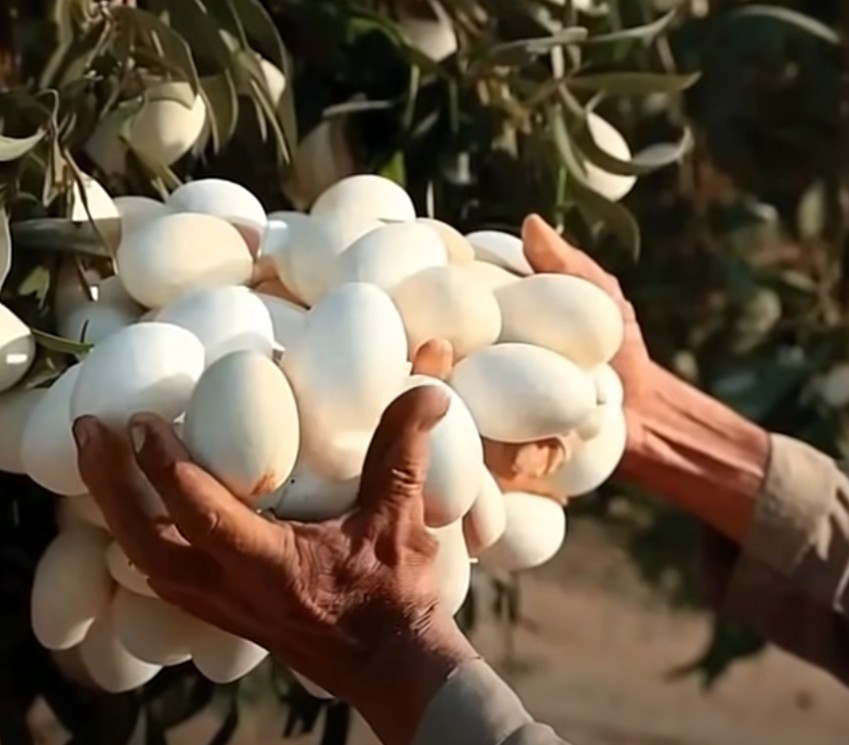
After discovering this white fruit, she was astounded to learn what it was.
Posted on November 24, 2026
An Unexpected Discovery During a Summer Walk Led to a Familiar Recipe With a Different Ingredient
Maria and her daughter, Sofia, were walking through fields near their small town on a warm summer day when an unfamiliar plant caught Maria’s attention. Among its growth were small white fruits unlike the eggplants she knew.
At first, their shape and color reminded her of eggs. She moved closer to examine them, curious about what the plant was producing.
The discovery turned out to be white eggplants. Their appearance was surprising enough to make the walk memorable, but Sofia was already thinking about something beyond how they looked.
She wanted to bring some home and cook them. Maria hesitated, uncertain about preparing an ingredient she had never used, before agreeing to try it.
That decision led them back to a dish Maria already loved: eggplant parmesan. The unfamiliar white fruits would become part of a meal that connected the afternoon’s discovery with a familiar pleasure in their kitchen.
A Familiar Ingredient With an Unfamiliar Appearance
What initially puzzled Maria was the difference between the fruits before her and her expectations. Their white color and small size gave them an appearance she did not immediately associate with eggplant.
Looking more closely changed her understanding. The objects she had first compared with bird or animal eggs were fruits growing on a plant.
Even after recognizing them, she remained unsure about cooking with them. Knowing the general ingredient did not mean she already understood how it would work in a meal.
Sofia responded with enthusiasm. Rather than allowing the unfamiliar appearance to end their interest, she encouraged her mother to bring a few home.
The exchange gave the discovery a practical direction. They were no longer simply looking at something unusual in the fields; they were considering how it might become part of their lunch or dinner.
Maria eventually picked a few eggplants and carried them home. Her uncertainty had not entirely disappeared, but she was willing to learn more before preparing them.
Maria Turned to a Recipe She Already Loved
Once they returned, Maria began looking for recipes online. She wanted to approach the unfamiliar ingredient with some preparation rather than rely only on its appearance.
Searching gave her a way to connect what they had found with cooking she understood. The discovery might have been new, but the meal itself did not have to be.
She chose eggplant parmesan, a traditional Italian dish she had long enjoyed. It offered a familiar combination of eggplant, tomato sauce, and mozzarella.
That choice helped turn curiosity into a manageable kitchen task. Instead of inventing an entirely different meal, she could work with a preparation whose appeal she already knew.
The contrast was part of what made the afternoon interesting. A surprising ingredient from their walk would be prepared through a familiar dish, allowing Maria and Sofia to judge it in a setting they could appreciate.
Maria’s initial reluctance became concentration as she began cooking. The question was no longer whether the white fruits looked unusual, but how the finished eggplant would taste alongside the other ingredients.
Slicing, Frying, and Building the Dish
Maria sliced the eggplants thinly before frying them. As they cooked, their surfaces became golden brown.
The preparation changed their appearance considerably from the small white fruits Sofia had wanted to bring home. They were now becoming the main ingredient in a recognizable meal.
After frying, Maria added tomato sauce and mozzarella cheese. The combination brought together the cooked eggplant with the familiar flavors she had chosen.
She then put the dish in the oven. It baked until the cheese and sauce were hot and bubbling.
The process gave the discovery a clear progression: first the unfamiliar plant, then the decision to try its fruits, and finally a prepared dish ready to share.
For Maria, the important test was still ahead. Careful preparation could produce an appealing meal, but she would not know whether she enjoyed this version until she tasted it.
When the cooking was finished, she and Sofia sat down together. Their walk had brought an unexpected ingredient into the house, and the kitchen had turned it into something they could experience rather than merely discuss.
Maria was pleasantly surprised by the finished eggplant parmesan. The white eggplants were soft, with a sweetness and subtle flavor she enjoyed.
The tomato sauce supplied acidity, while the melted mozzarella added another familiar element. Together, the ingredients created the balance she had hoped to find in the dish.
Her reaction was personal and immediate. The unfamiliar color had made her uncertain at first, but it had not prevented her from enjoying the cooked result.
Sofia’s encouragement had helped bring them to that moment. Without her interest in taking the eggplants home, the plant might have remained only a curious detail from their walk.
The meal also gave them a shared memory attached to the recipe. They could remember not just what they had eaten, but where the idea began.
Eggplant parmesan was already something Maria liked. This preparation added the story of their discovery, making the dish feel more closely connected to an afternoon they had spent together.
A Summer Discovery Became a Repeated Tradition
After that first meal, Maria made a point of returning to the property during later summers. She wanted to see how the white eggplant plant was doing.
The unusual fruits appeared again, renewing the connection with the earlier discovery. What had once seemed strange had become something she looked forward to seeing.
She would bring a few eggplants home and prepare the dish that she and Sofia had enjoyed. Repeating the meal turned the original experiment into a family recipe.
The tradition did not depend on the ingredient continuing to surprise them in the same way. Familiarity gave it a different kind of importance.
Maria now associated the white eggplants with a successful meal and her daughter’s enthusiasm. Returning to the recipe also returned her to the memory of choosing to try something she had initially doubted.
Each summer, the dish connected an outdoor discovery with the warmth of eating together. The simple sequence gave the recipe a place in their family life beyond its ingredients.
Curiosity Made Room for a New Favorite
For Maria and Sofia, the experience broadened what they were willing to consider in the kitchen. It began with noticing a difference rather than searching for a particular food.
Maria’s caution was part of the story, too. She did not immediately know what to do with the eggplants and took time to look for a preparation before cooking.
Sofia supplied the encouragement to continue. Her interest helped turn an uncertain discovery into an opportunity for them to share something new.
The eventual success came through a familiar recipe, showing how novelty can fit within established tastes. Maria did not need to abandon a dish she loved to make room for an ingredient she had not used.
What stayed with them was both the flavor and the experience around it. A walk through nearby fields had led to questions, kitchen work, and a meal worth repeating.
The white eggplants became a reminder of that afternoon: something unexpected they had noticed together, understood more closely, and transformed into a small family tradition.