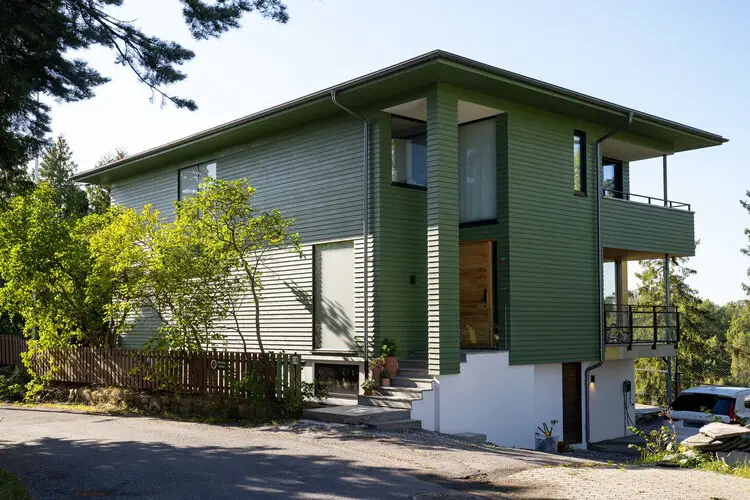
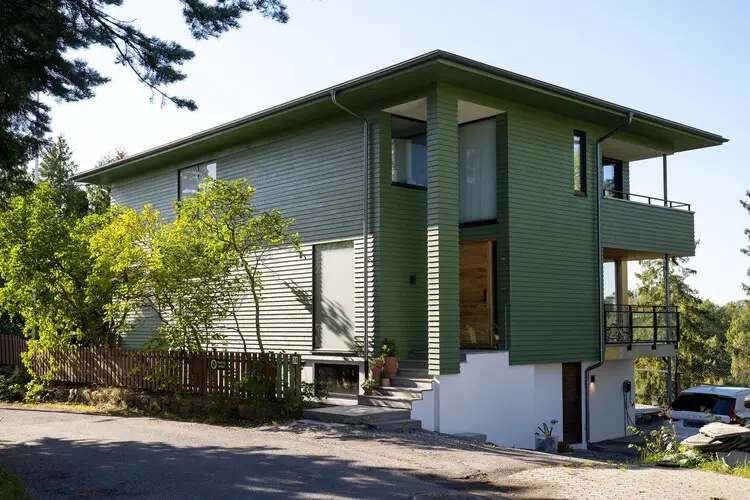
I went to my second home in the Blue Ridge Mountains to get it ready for a long-term rental and found my daughter-in-law’s family drinking my wine.
Not figuratively. Literally sitting on my furniture, pizza boxes spread across the cherry wood coffee table that had been in my family for thirty years, one of my best bottles of Cabernet open on the counter, laughter coming from my living room at ten in the morning on a Tuesday when I had a realtor arriving at ten o’clock sharp with potential tenants.
Brenda, Sarah’s mother, looked up when I walked in the door. She did not stand. She smiled the way people smile when they have decided in advance that they are not in the wrong.
“Sarah told us we could stay,” she said. “This house will be hers someday anyway.”
That sentence contained everything I needed to know about how long this had been going on inside their heads.
My name is Diane Hayes. I was sixty-eight years old that morning, and that cabin was not a forgotten property sitting empty for anyone to use. It was my retirement plan, mine and my late husband Robert’s, bought twenty years earlier with the intention of retiring there, spending our years in the mountains together, away from everything.
Robert died five years ago. Heart attack. Sudden and complete, the kind of loss that rearranges every plan you had made on the assumption that two people would be there to carry them out. The cabin became too quiet after that, too full of the specific silence of a place built for two people that now held one. I moved back to Charlotte, to a townhome that felt manageable for a person living alone.
But I kept the cabin.
I paid the property taxes and maintained the systems and kept the place clean through every season, because it was mine and because I had a plan for it. The rental market in the Blue Ridge Mountains was strong. Two thousand five hundred a month, maybe more for the right tenants. That income was part of how I intended to stay independent, to not become a burden on my son Jason or anyone else, to preserve the particular dignity of a woman who had taught elementary school for thirty-five years and saved carefully and invested thoughtfully and arrived at sixty-eight with the ability to take care of herself.
That ability depended on the cabin generating income.
And the cabin could not generate income if my daughter-in-law had decided it was a vacation property her parents could use whenever the mountains seemed appealing.
I had arrived early that morning specifically to prepare the place. Dust, check utilities, make sure everything looked presentable for the couple Janet was bringing at ten. Instead I was standing in my own doorway looking at five people who had made themselves completely comfortable on the assumption that my death was a reasonable timeline to plan around.
“I own this house,” I said. “What are you doing here?”
Brenda explained that Sarah had given them permission. Larry, her husband, appeared from somewhere in the back of the house with a beer, which given the time of morning told me something about how seriously they were taking the occasion. One of the cousins, a woman I had never met, offered the observation that Sarah had said the place would be hers and Jason’s eventually anyway so they figured it was fine.
I noticed the wine stain on the cherry wood table. I noticed the sink full of dishes. I noticed the crumbs on a rug I had vacuumed two weeks earlier when I drove up specifically to check on the property.
I went to the kitchen. Brenda followed me with her wine glass, still in her hand, still containing my wine.
“Don’t get upset,” she said. “Sarah said the house is basically going to be hers and Jason’s eventually anyway. We’re just enjoying some family time here.”
“This house is mine,” I said. “Not Sarah’s. Not Jason’s. Mine.”
“Well, sure, technically. But when you’re gone—”
“I’m not gone. I’m standing right here.”
She took a sip of wine, my wine, from my cabinet. “You know what I mean.”
I told her I needed them to leave. That I had a realtor arriving in an hour. That I would call the police if they did not go.
Brenda said she wouldn’t, that Sarah was going to hear about this, that I was being ridiculous, that it wasn’t trespassing when family invited family. Larry appeared in the doorway and suggested we all calm down.
I pulled out my phone and started to dial.
Brenda’s face changed. Whatever calculation she was running produced a different result when the phone came out. She grabbed Larry’s arm and told him to come on, that I had lost my mind, and they gathered their things quickly while muttering and shooting looks at me that were meant to convey that I was the unreasonable party in this situation.
At the door, Brenda stopped.
“You’re going to regret this, Diane. Sarah’s going to be furious.”
“Then I’ll deal with Sarah,” I said.
I watched their cars pull out of the gravel driveway. Then I went back inside and assessed the damage and started cleaning.
Janet arrived at exactly ten with David and Michelle, a couple from Asheville in their fifties who moved through the cabin with the attentive appreciation of people who genuinely love mountains and understand what they are looking at. They stood on the back porch for several minutes without speaking, which told me more about their character than any reference check.
“We’d like to sign a lease,” David said. “How soon can we move in?”
Two weeks, I told him.
Perfect, he said.
Janet pulled me aside before they left and asked if everything was all right. I told her it was family drama. She smiled the particular sympathetic smile of a professional woman who had seen enough of the world to know that family drama was its own complete category.
After they left, I sat on the porch where Robert and I used to drink coffee and watch the sunrise. The mountains were doing what mountains do in the early afternoon, holding the light in a particular way that looked painted. I sat there for a few minutes and thought about what I needed to do next.
My phone showed five missed calls from Jason.
I drove back to Charlotte with his name lighting up the screen every twenty minutes. I let every call ring. I knew exactly what was coming because I had been a mother for forty years and I understood the sequence. Sarah would have called him the moment her parents’ cars left my driveway. She would have delivered her version of events, the one in which I was the unreasonable party, the one in which her parents were simply visiting family and I had made it a confrontation.
Jason would call with concern in his voice and confusion in his words and the genuine belief that there were two sides to this situation and that both required consideration.
By the time I reached my townhome, I had decided what I needed to do.
I made tea. I sat at my desk. I opened my laptop.
The savings account I had built for Jason and the grandchildren had sixty thousand dollars in it. I had been setting it aside for years with the intention of helping them with a down payment on their first house. Jason had viewing access to the balance. He knew it existed and he knew what it was for and he had been factoring it into his financial planning.
I transferred every cent back to my private account.
Then I sat back and drank my tea and thought about whether what I was doing was punishment or clarification.
I decided it was clarification. There is a difference. Punishment is what you do to make someone suffer for what they did. Clarification is what you do to make clear the connection between how you treat a person and what that person chooses to do with what belongs to them. My generosity had never been an obligation. It had been a choice, made freely, available to be unmade by the same person who made it under different circumstances.
The sixty thousand dollars was mine. The cabin was mine. My decisions about both were mine.
That was the clarification.
Sarah arrived at my door the next morning without knocking.
She had the particular energy of someone who has spent the night rehearsing a conversation and has arrived ready to deliver it. Her face was flushed. Her voice had the quality it always had when she wanted you to feel guilty before you had fully processed what was happening.
She told me her mother was devastated. She told me they had thought I would be happy the house was being used. She told me we were family and Jason had agreed they could stay there.
I kept watering my African violets.
“Jason has no right to offer my property to anyone else,” I said. “And neither do you.”
Her expression shifted in the particular way that people’s expressions shift when they receive an answer they were not expecting.
“That house is going to be ours anyway,” she said. “Why are you making such a big issue out of this?”
I set down the watering can.
“Someday isn’t today,” I said. “And whether it will ever be yours is still my decision.”
That was the first time Sarah went quiet.
Not the quiet of someone who is sorry. The quiet of someone who is thinking very carefully, recalculating, reassessing the dimensions of a situation they had believed to be much simpler than it apparently was.
“What do you mean, if it will ever be ours?”
“I mean I’m reconsidering my estate plan.”
She went pale in a way that told me the money had always been more present in her mind than she had acknowledged.
We covered the same ground we had been covering since the cabin, and eventually she landed on the sixty thousand dollars and what it meant that I had moved it.
“We’re closing on the house next week,” she said.
“Then you’ll need to find another down payment source.”
“But we’re counting on that money—”
“And I was counting on respect,” I said. “Looks like we’re both disappointed.”
She tried several more approaches. Each one contained some version of the idea that I was being unreasonable, that the punishment didn’t fit the crime, that this was about one weekend. Each time I came back to the same place. It was not about one weekend. It was about the fact that one weekend had revealed how they had been thinking about me and my property for years. The weekend was the evidence. What it evidenced was the problem.
Sarah left. She slammed my door.
I went back to my violets.
Jason called that evening and I answered.
He moved through his version of events, which was gentler than Sarah’s but contained the same structural assumption, that there was something I had overreacted to. I walked him through it the same way I had walked Sarah through it, without anger, with the specific patience of a woman who has decided that she is done performing reasonableness for people who have confused her patience with weakness.
“I’ve been planning my retirement for years,” I told him. “I need that rental income from the cabin. I can’t have your in-laws treating it like a vacation home they have free access to.”
“It was just one weekend—”
“It was one weekend this time. What about next time? And the time after that?”
He was quiet.
“Did Sarah really say this house would be hers someday?” he asked.
“Her mother said it. Right to my face. While she was drinking my wine.”
“I’m sorry. That was wrong.”
“Yes. It was.”
We talked about the money. He said it hurt. I told him it wasn’t punishment. I told him it was about showing him that my generosity was a choice and that choices depended on the conditions surrounding them. I told him that if he and Sarah could respect my boundaries we would be fine, and that if they couldn’t we had a larger problem that money couldn’t solve in either direction.
“I’ll talk to Sarah,” he said.
“Good. And Jason, the next time someone wants to use my property, the answer is I’ll ask my mother. Not sure, go ahead.”
“Okay.”
“I love you. But I’m not a resource to be managed. I’m your mother.”
He said okay again, quietly, with the quality of someone absorbing something rather than just agreeing to it.
David and Michelle moved in two weeks later. They were the kind of tenants that exist at the best-case end of the landlord spectrum. Respectful, punctual, careful with the property, occasionally sending me a brief note saying everything was fine and the mountains were beautiful that week. They treated the cabin with the care of people who understood the difference between something being theirs for now and something being theirs.
Three months after the cabin incident, Jason asked me to dinner. Just the two of us.
We went to a quiet Italian place downtown, and he said the things that needed to be said. He told me he owed me an apology. That he had not stood up for me. That he had taken me for granted. He told me he and Sarah had started counseling.
“The whole cabin thing made us realize we have some issues,” he said. “About boundaries. About respect.”
“I’m glad you’re addressing it,” I said, and I meant it.
“She wants to apologize to you. In person.”
“I’m open to that.”
We ate in the comfortable quiet of two people who have cleared something difficult and are now sitting in the space where it used to be.
“The cabin’s doing well?” he asked.
“Very well. The tenants are great.”
“Good.” He turned his wine glass slowly. “Mom, I’m sorry. For forgetting that your generosity is a choice.”
Sarah came to my door six months after the cabin morning. She knocked this time and waited.
We sat at my kitchen table with tea, and she apologized directly and without the self-protective framing I had expected. She said she was wrong. She said she was in therapy. She said she hoped someday I could forgive her.
I told her I forgave her. I told her things were different now. I told her if she wanted to use the cabin someday she would ask me, and that asking meant asking me directly and genuinely and not arranging an accomplished fact and informing me afterward.
She said she understood.
I believed her, not entirely, not yet, but enough to work with.
“The cabin is beautiful,” she said. “I understand why you want to protect it.”
“Thank you.”
“I’m sorry my mother said what she said. About it being mine someday.”
“For the record,” she added, “I never asked her to say that.”
“But you thought it,” I said.
She looked down. “Yeah. I did. I’m sorry.”
At least that was honest.
A year after the morning I found Brenda and her relatives in my living room, I flew to Italy. Robert and I had planned that trip for twenty years and never taken it, always something else, always the practical next thing, always someday. I went alone and stayed three weeks and stood in places that looked like paintings and ate dinner at outdoor tables and watched the light on old stone buildings and thought about the particular lesson of someday, how it accumulates quietly while you are waiting for the conditions to be perfect, and how sometimes you have to stop waiting and go.
I ran into Brenda at the grocery store about a year after the incident. She apologized, which I had not expected. I accepted the apology. I told her we could move past it as long as it did not happen again. She asked about the cabin, whether it was still available for rent, and I told her it was occupied by long-term tenants, and that even if it wasn’t she would need to ask me directly and pay fair market rate.
Her face flushed.
I walked away with my groceries feeling lighter than I had in years.
The tenants’ lease renewed without difficulty. David sent me a short note saying they had loved every season and were looking forward to another year. I wrote back thanking them for taking care of the place.
I have not decided what happens to the cabin eventually. I might leave it to Jason with conditions. I might sell it and use the proceeds for something Robert and I had only discussed in the abstract, the kind of thing you save for later without specifying what later means. I might keep renting it to people who treat it like what it is, something beautiful that belongs to someone else and deserves to be honored accordingly.
These are my decisions. They belong to me in the same way the cabin belongs to me, not as a burden, not as a responsibility I am waiting to transfer to someone younger, but as a choice I make every day I maintain and protect it.
People take what you let them take. They assume what you let them assume. They occupy the space you do not defend. This is not unique to difficult people or selfish people. It happens with people who love you and mean well. It happens because love, when it is not accompanied by respect, slides quietly into the assumption of access, the belief that what is yours is simply yours until you die and then it redistributes.
But someday is not today.
Today I am sixty-nine years old. I take care of myself. My retirement is secure, my cabin is occupied by good people, my son and I have dinner once a month and talk about things that matter, and my daughter-in-law and I have arrived at something that resembles the beginning of an actual relationship rather than a strategic performance of one.
Robert would have handled it differently. He would have found a gentler way in and a longer path toward the same destination, because that was who he was. But I think he would have agreed with the destination.
The cabin is mine.
And I protect what is mine.
Not out of spite. Not out of grief for what I lost when I lost him, though that is there too, folded into every decision I make about a place we planned together.
Out of respect for myself, and for him, and for the work we did over forty years to build something that was ours.
And I learned, at sixty-eight, that the most important person to protect it from was not a stranger.
It was the comfortable, well-intentioned assumption of the people who loved me and could not quite distinguish between love and entitlement.
Between someday and today.
Between mine and theirs.
The mountains are still there. The view from the back porch is exactly what it was the first time Robert and I stood on it and looked at each other and said yes.
I still sit there sometimes, on the days David and Michelle are out, when I drive up to check on the property and the caretaker in me needs to see that everything is as it should be.
I sit there with my coffee and I watch the light change across the ridgeline and I think about what it means to take care of something, to protect a thing that matters, to refuse to let the passage of time erode what is yours.
And then I drive home to Charlotte, to my townhome that fits one person exactly right, and I live my life.
Mine. Just mine.
And that, it turns out, is more than enough.