The Beacon in the Storm
An Expanded Story
The morning had dawned deceptively calm, the kind of false peace that precedes nature’s most violent tantrums. Margaret Beaumont sat in her wheelchair by the floor-to-ceiling windows of the Beaumont villa’s library, watching the distant horizon where dark clouds gathered like an invading army. The meteorologists had been tracking the storm for days—a late-season hurricane that had intensified unexpectedly, now bearing down on this isolated stretch of the Maine coast with what they were calling “catastrophic potential.”
She should have been afraid. Any sensible person would be. But Margaret had lived through seventy-three years of life’s storms, both literal and metaphorical, and she had learned that fear was a luxury she could no longer afford. Not when she was trapped in a body that had slowly, inexorably betrayed her over the past decade, her brilliant mind imprisoned in failing flesh.
The multiple sclerosis had been insidious in its progression. First, the occasional numbness in her fingers. Then the weakness in her legs that made walking difficult, then impossible. The tremors that made holding a coffee cup an act of concentration. The fatigue that descended like a heavy blanket, making even thought exhausting. Through it all, her mind had remained sharp, crystalline, capable of the same analytical precision that had helped her build a fortune alongside her husband Daniel.
Daniel. Even now, three years after his death, the loss was a physical ache in her chest. He had been more than her husband—he had been her partner in every sense, her intellectual equal, her fierce protector. A brilliant inventor whose patents had made them wealthy beyond imagination, he had devoted the last years of his life to creating devices that would give Margaret independence and dignity as her disease progressed.
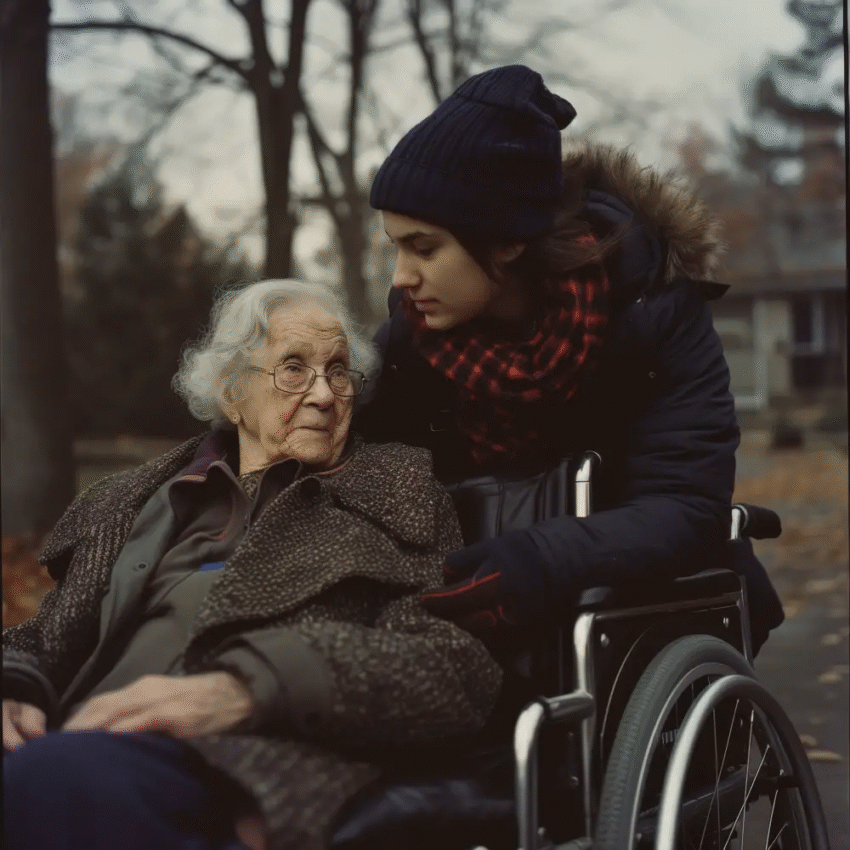
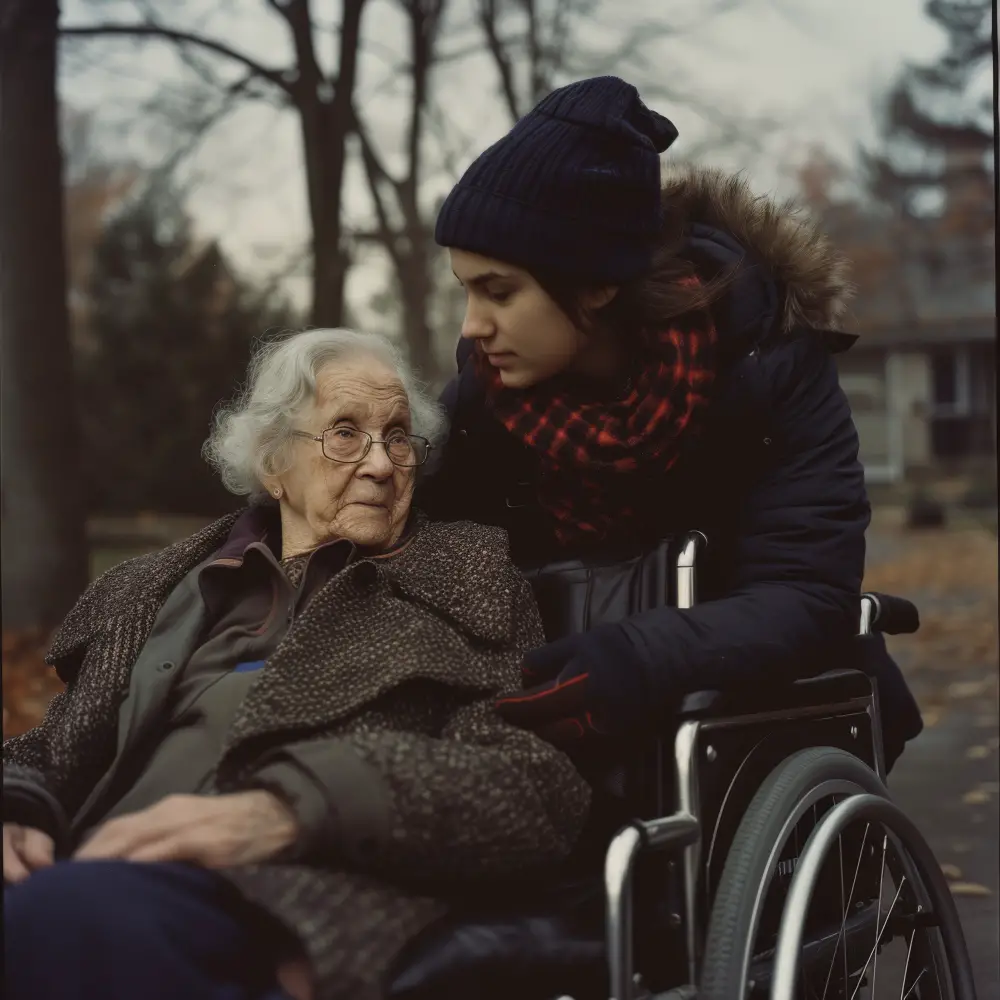
The wheelchair she now occupied was his masterpiece, his final love letter to her. It looked like an ordinary high-end mobility device, but Daniel had packed it with innovations that reflected his genius and his devotion. Terrain-adaptive wheels that could handle beach sand, snow, or rough hiking trails. A gyroscopic stabilization system that prevented tipping. Voice-activated controls for when her hands became too weak or tremulous. A seat that could raise or lower to allow her to reach high shelves or interact at eye level with standing individuals. Solar panels ingeniously integrated into the armrests to keep the battery perpetually charged.
And hidden features that even Margaret didn’t know about, secrets Daniel had taken to his grave, insurance policies against dangers he had intuited but couldn’t name.
“Margaret?” Isabella’s voice cut through her reverie, sweet as poisoned honey. “Are you ready for lunch? I’ve prepared your favorite—that lovely lobster bisque you enjoy so much.”
Margaret turned her chair—a smooth, silent motion that still gave her a small thrill of freedom—to face her daughter-in-law. Isabella stood in the doorway of the library, a vision of calculated elegance in cream cashmere and pearls, her dark hair swept into a perfect chignon. She was beautiful in the way a Renaissance portrait was beautiful: flawless, cold, eternal, and somehow lifeless.
“That’s very thoughtful, Isabella,” Margaret replied, her voice carefully neutral. “Though I must say, I’m surprised you went to such trouble, given the storm approaching. Shouldn’t we be preparing to evacuate?”
Isabella’s smile never wavered, but something flickered in her eyes—annoyance, perhaps, or calculation. “The storm won’t hit until this evening, and the evacuation orders haven’t been issued for this area yet. Besides, Robert specifically asked me to make sure you were comfortable and well-fed while he’s away. You know how he worries.”
The mention of her son sent a pang through Margaret’s heart. Robert, her only child, the boy who had once followed her and Daniel around their workshop with wide-eyed wonder, asking endless questions about how things worked. Somewhere along the way, that curious, earnest boy had become a man who was easy to manipulate, who mistook politeness for kindness and beauty for goodness.
Isabella had recognized Robert’s weakness the moment they met at a charity gala five years ago. Margaret had seen it too—the predatory gleam in Isabella’s eyes when she learned Robert was the Beaumont heir, the calculated charm she deployed like a weapon. Margaret had tried to warn her son, gently at first, then more forcefully, but it had only driven a wedge between them.
“Robert is in Singapore, isn’t he?” Margaret asked, keeping her tone conversational. “Quite far away. How convenient that his business trip coincided with this storm.”
Isabella’s smile tightened almost imperceptibly. “Convenient? Margaret, surely you don’t think I control international business schedules. The Tanaka merger has been in the works for months.”
“Of course,” Margaret murmured. But she knew better. She had seen the email threads, the subtle ways Isabella had encouraged Robert to take this trip, to be away from home for an extended period. Isabella had been planning something, maneuvering pieces on a chessboard only she could see.
And Margaret had been doing her own planning, her own investigation.
It had started six months ago, when Margaret had noticed discrepancies in the quarterly trust statements. Small amounts at first—fifty thousand here, seventy-five thousand there—insignificant enough to escape casual notice given the vast size of the Beaumont fortune. But Margaret’s notice was never casual. She had spent decades managing investments, understanding the flow of money, recognizing patterns.
She had hired a forensic accountant, sworn to secrecy, who had traced those small diversions to a network of shell corporations registered in the Cayman Islands and Panama. The paper trail was deliberately obscured, routing through multiple countries and intermediaries, but eventually, every path led back to one person: Isabella Marchand, using her maiden name, the identity she’d maintained in secret alongside her married identity as Isabella Beaumont.
Over the past two years, Isabella had siphoned nearly eight million dollars from the family trust. Given that the trust was worth over four hundred million, it was still a relatively small percentage, but it revealed something crucial: Isabella was patient. She was willing to steal slowly, carefully, building her own separate fortune while maintaining the façade of the devoted wife and daughter-in-law.
But eight million apparently wasn’t enough. Margaret had discovered more recent transfers, larger ones, that suggested Isabella was escalating. And the timing of Robert’s trip, combined with this isolated “restful getaway” that Isabella had insisted upon, made Margaret’s analytical mind draw an inescapable conclusion.
Isabella was planning to eliminate the primary obstacle to complete control of the Beaumont fortune. She was planning to eliminate Margaret.
Margaret had prepared accordingly. She had drafted a new will, lodged with her attorney, that significantly reduced Isabella’s inheritance. She had compiled a comprehensive dossier of evidence documenting the financial fraud, also lodged with her attorney, with instructions to open it if anything happened to her. She had left detailed notes with her personal assistant, her lawyer, and her oldest friend.
But she hadn’t left. She hadn’t refused to come to the villa, hadn’t insisted on having someone else present, hadn’t called the police with her suspicions. Why?
Because despite everything, despite the evidence and the cold calculation and the predatory charm, part of Margaret still wanted to be wrong. Part of her still hoped that her son’s wife, the mother of the grandchildren she might never have, could be redeemed. Part of her wanted to give Isabella a chance to prove that Margaret’s darkest suspicions were simply paranoia born of grief and illness.
That hope was dying now, watching Isabella’s smile that never reached her eyes, hearing the false sweetness in her voice.
“I’ll join you for lunch in a moment,” Margaret said. “I just want to finish reviewing these documents first.”
Isabella’s eyes flicked to the papers spread across the desk beside Margaret’s wheelchair—the quarterly trust statements, printouts of suspicious transactions, the forensic accountant’s preliminary report. Margaret saw the moment Isabella recognized what she was looking at. Saw the flash of panic, quickly suppressed.
“More work, Margaret?” Isabella said lightly. “You really should rest more. Doctor’s orders.”
“My doctors say mental stimulation is important for managing my condition,” Margaret replied. “And I find this particular work very stimulating indeed.”
The tension in the room thickened, became almost visible. The two women stared at each other, the pretense of civility stretched thin as a soap bubble.
“I’ll go set the table,” Isabella said finally, turning away. “Don’t be long. Lunch is always better when it’s hot.”
After Isabella left, Margaret sat in the humming silence of the library, listening to the wind that was beginning to rise outside. The storm was coming faster than predicted. She could feel the barometric pressure dropping, could sense the gathering violence in the air.
She pressed a button on her wheelchair’s control panel—not one of the obvious controls, but a small, recessed button that most people would never notice. A compartment opened in the armrest, revealing a satellite phone Daniel had installed, independent of the house’s regular phone lines. She speed-dialed her attorney.
“Arnold, it’s Margaret. I need you to listen carefully. I’m at the villa with Isabella. The storm is approaching. If you don’t hear from me by tomorrow morning, I need you to open the sealed file I left with you and contact the authorities immediately. Do you understand?”
Arnold Pemberton, who had been the Beaumont family attorney for thirty years, didn’t question or argue. “Understood, Margaret. Are you in danger? Should I call someone now?”
“Not yet. But if I’m right about what I think is going to happen… just promise me you’ll follow through.”
“You have my word.”
She ended the call and closed the compartment. The storm was going to provide cover for whatever Isabella had planned. An accident during severe weather would be believable, especially with an elderly, disabled woman. A fall down the stairs. A medical emergency complicated by the inability to reach help due to the storm. Or perhaps something more dramatic—something involving the covered veranda that jutted out over the cliff, overlooking the churning Atlantic below.
Margaret had noticed Isabella’s interest in that veranda over the past two days, the way she kept suggesting Margaret might enjoy the “fresh air” despite the approaching storm, the way she’d commented on how the safety railing “really should be reinforced,” planting the seed of danger in anyone’s mind.
The veranda. That’s where it would happen.
Margaret wheeled herself to lunch with her head high and her heart steady. If Isabella was going to make her move, Margaret would face it with the same courage and intelligence she had brought to every other challenge in her remarkable life.
The lobster bisque was excellent, she noted. Rich, creamy, perfectly seasoned. Isabella had clearly put effort into it. Last meal for the condemned, Margaret thought with grim humor.
They ate in the formal dining room, the massive windows showing the rapidly darkening sky, the trees outside beginning to bend and sway as the wind picked up strength. Isabella kept up a stream of pleasant conversation—gossip about mutual acquaintances, updates on various charity boards, speculation about when Robert might return.
Margaret played her part, responding appropriately, while her mind raced through scenarios and possibilities. The house’s landline had mysteriously stopped working that morning—Isabella claimed it was the storm affecting the lines, but Margaret suspected sabotage. Cell service this far out on the coast was spotty at best and would be completely unreliable once the storm hit in earnest.
Isabella was creating the perfect conditions: isolation, communication breakdown, severe weather, and a victim whose death could be explained away as an unfortunate accident.
After lunch, Isabella suggested—as Margaret had known she would—that they move to the veranda for coffee.
“The storm is so dramatic from there,” Isabella said, her eyes bright. “And you always did love watching the ocean. We should enjoy it while we still can, before it gets too violent and we have to shelter inside.”
“That sounds lovely,” Margaret agreed, steering her wheelchair toward the French doors that led to the covered veranda.
The veranda was a architectural feature Daniel had been particularly proud of, cantilevered out from the house to hover forty feet above the rocky shore. Protected by a solid roof but open on three sides with sturdy wooden railings, it provided an unobstructed view of the Atlantic’s raw power. In good weather, it was Margaret’s favorite spot in the house. In weather like this, approaching storm conditions, it was spectacular—and dangerous.
The wind hit them the moment they emerged from the house, strong enough to make Isabella’s hair stream behind her, strong enough to rattle the windows and tug at Margaret’s blanket. The sky was a roiling mass of purple-black clouds, and the sea below had transformed into something primordial and furious, waves crashing against the rocks with explosive force that sent spray fifty feet into the air.
“Magnificent, isn’t it?” Isabella shouted over the wind, settling into one of the cushioned chairs bolted to the deck. “Nature’s power. Unstoppable. Indifferent.”
Margaret positioned her wheelchair near the railing, looking out at the storm. “Yes. But humans have always found ways to survive nature’s fury. Intelligence, preparation, technology—these are the tools that allow the physically weak to prevail against overwhelming force.”
“Not always,” Isabella said, and there was something new in her voice now. Something cold and final. “Sometimes, nature wins. Sometimes, accidents happen that no amount of intelligence or preparation can prevent.”
Here it comes, Margaret thought, her fingers instinctively moving to rest on the wheelchair’s armrest, finding the familiar controls by touch. She had spent hours familiarizing herself with every button, every feature, until she could operate the chair with her eyes closed. It had been Daniel’s insistence—”Muscle memory, Maggie. In an emergency, you can’t rely on sight or conscious thought. Your fingers need to know the way home.”
“Isabella,” Margaret said, her voice cutting through the wind. “I know about the Cayman accounts. I know about the shell corporations. I know you’ve been stealing from the family trust for years.”
The mask dropped. Just like that, the sweet, devoted daughter-in-law vanished, replaced by something reptilian and merciless. Isabella stood, her expensive cashmere whipping around her in the wind, and smiled—a genuine smile this time, filled with liberation and malice.
“Of course you know,” Isabella said, moving closer. “You’re Margaret Beaumont, the brilliant businesswoman, Daniel’s equal partner. You were always going to figure it out eventually. That’s why this has to happen now, before you can tell anyone else. Before you can change the trust documents or alert the authorities.”
“I’ve already told people,” Margaret said calmly. “My attorney has a complete file. If anything happens to me—”
“If anything happens to you, it will be a tragic accident during a terrible storm,” Isabella interrupted. “An old woman in a wheelchair, caught out on a dangerous veranda when the wind got too strong. The railing will show damage from the impact—I’ll make sure of that. Your wheelchair’s brakes will be found to have mysteriously failed. And I’ll be the grieving daughter-in-law who tried desperately to save you but couldn’t reach you in time.”
“And the file with my attorney?”
“Circumstantial evidence of financial irregularities that I can explain away as misunderstandings. Maybe I’ll claim you were experiencing cognitive decline, that the MS was affecting your mental capacity. By the time any investigation gets traction, I’ll have divorced Robert, taken a generous settlement, and disappeared to some non-extradition country with my fortune intact.”
Margaret felt a strange calm settle over her, the kind of clarity that comes when all uncertainty is removed. “You’ve thought this through.”
“I’ve thought of nothing else for months,” Isabella admitted. “Do you know how exhausting it’s been, playing the devoted wife and daughter-in-law? Pretending to care about Robert’s boring business ventures, about your health updates, about this family’s tedious history? I’m so tired of pretending, Margaret. So tired.”
“Then why not just divorce Robert now? Leave?”
“Because I’ve earned more than just a divorce settlement!” Isabella’s voice rose, shrill against the wind. “I’ve put in years with your boring son, years of smiling and nodding and playing my part. The prenuptial agreement Daniel insisted on—the one you probably helped draft—would leave me with almost nothing. But as Robert’s grieving widower after your tragic death and his subsequent ‘accidental’ death a few months from now… well, then I’d inherit everything.”
The admission hung in the air between them. Isabella wasn’t just planning to kill Margaret. She was planning to kill Robert too.
“You’re insane,” Margaret said quietly.
“No. I’m practical. And I’m done talking.”
Isabella moved fast, faster than Margaret would have thought possible. She lunged forward, her hands connecting with the back of Margaret’s wheelchair, and pushed with all her strength.
The wheelchair shot forward, its advanced engineering suddenly working against Margaret. The smooth, low-friction wheels that made it so easy to maneuver also made it impossible to stop when propelled with force. Margaret felt the chair accelerate, felt the momentum carrying her toward the railing.
She had perhaps two seconds to act.
Her right hand, already resting on the armrest, moved with the muscle memory Daniel had insisted she develop. Her fingers found the control panel, skipped over the obvious buttons—drive controls, seat adjustments, lights—and pressed into a small recessed area. Found a button that was slightly raised, covered by a rubber gasket that protected it from water and accidental activation.
The button Daniel had shown her three years ago, in his workshop, just weeks before the heart attack that had taken him from her.
“This is my promise to you, Maggie,” he had said, his eyes serious and loving. “If you’re ever in danger, if you ever need help and can’t reach a phone, you press this button. Press it and hold it for three seconds. It’s waterproof, shockproof, and has its own independent power source. It will send your GPS coordinates and a distress signal directly to the Coast Guard emergency network. They’ll know exactly where you are, and they’ll know you’re in immediate danger. I can’t always be with you to protect you. But this… this is me promising that help will always come when you need it.”
Margaret pressed the button. Held it. One second. Two seconds. The wheelchair hit the railing.
Three seconds.
The railing, which Isabella had clearly been working to weaken, splintered with a sharp crack that was audible even over the storm. The wheelchair tipped forward, and Margaret felt the sickening lurch of gravity taking over.
She was falling.
The last thing she saw was Isabella’s face, illuminated by a flash of lightning—triumphant, beautiful, monstrous.
Then she hit the water.
The cold was a shock so profound it felt like being struck by a physical blow. Margaret’s lungs seized, every molecule of air forced from them by the icy Atlantic. The wheelchair, heavy with its sophisticated technology and reinforced frame, dragged her down immediately. The seatbelt Daniel had insisted on—”In case of a tip, you don’t want to be thrown”—now held her fast to the chair, turning it from a device of freedom into an anchor pulling her toward the bottom.
The world became a chaos of churning water, foam, and darkness. She was tumbling, spinning, utterly disoriented. She couldn’t tell which way was up. The pressure in her ears built as she sank deeper. Her lungs burned, screaming for air.
Panic clawed at her, primal and overwhelming. This was how it ended. This was her death, drowning in the cold darkness while her murderer stood safely on shore, already composing her grief-stricken story for the authorities.
No.
The thought cut through the panic like a knife. Daniel’s voice, clear in her memory: “You’re the strongest person I’ve ever known, Maggie. Not your body—your body has betrayed you. But your mind, your will… those are unbreakable.”
She forced the panic down, forced herself to think. The button. She had pressed the button. Had she held it long enough? Three seconds, he’d said. Had it been three seconds before the impact?
She didn’t know. But if she had managed it, if the signal had gone through, then help was coming. The Coast Guard would have her location. They would know she was in the water.
She just had to survive long enough for them to reach her.
The wheelchair had stopped tumbling, was now sinking in a relatively straight line. Margaret’s hands, numb with cold, felt along the armrests, searching. There—another of Daniel’s modifications. A quick-release mechanism for the seatbelt, designed so she could free herself if the chair ever tipped.
Her fingers, clumsy and uncooperative, found the latch. It was stiff, resisting her weakened grip. She pulled harder, her lungs screaming now, dark spots beginning to dance at the edges of her vision.
The latch gave. The seatbelt released.
Margaret pushed away from the chair with all her remaining strength, kicking upward—or what she hoped was upward. Her legs, weakened by years of MS, barely responded. But her arms, strengthened by years of wheeling herself around, propelled her through the water.
Her head broke the surface, and she gasped, sucking in precious air mixed with spray and foam. A wave immediately crashed over her, pushing her back under. She fought her way back up, coughing and gasping.
The ocean was chaos. Waves the size of houses marched past, their tops torn off by the screaming wind. The sky was nearly black, the storm in full fury now. Lightning flickered, illuminating a nightmare landscape of churning water and airborne spray.
Margaret could swim—had been an excellent swimmer in her youth—but that had been before the MS, before the weakness in her legs. Now, she could barely keep her head above water, could barely fight against the waves that seemed determined to pull her under and hurl her against the rocks.
How long had it been since she pressed the button? Two minutes? Three? How long would it take the Coast Guard to launch a rescue? How long could she survive in water this cold?
The cold was already seeping into her bones, making her movements sluggish. Hypothermia was setting in. She could feel her thoughts beginning to slow, her determination beginning to waver.
A wave lifted her up, and at its peak, she caught a glimpse of the villa, lights blazing in the storm-dark afternoon. Was Isabella still on the veranda, watching to make sure Margaret didn’t survive? Or had she already gone inside to make her frantic 911 call, to begin her performance of grief and shock?
Another wave crashed over her, and when she surfaced, coughing, she realized she couldn’t feel her legs anymore. The cold had progressed from painful to numbness. Her arms were weakening with every stroke.
This is it, she thought with strange clarity. I did everything I could. I pressed the button. I freed myself from the chair. But it’s not enough. The ocean is going to win.
Daniel’s face appeared in her mind, smiling, loving. “I’m coming,” she told him silently. “I’ll see you soon.”
But even as she thought it, even as she felt herself slipping away, a light pierced through the darkness. Not lightning this time—something steady, powerful, sweeping across the water.
A searchlight.
Margaret tried to cry out, but her voice was gone, her throat raw from seawater and screaming. She raised one arm—a feeble gesture, barely breaking the surface—and then a wave pulled her under again.
When she fought her way back up, the light was closer. She could hear something now over the storm—an engine, powerful and deep. The Coast Guard cutter, a beast of a vessel built to handle seas like this, was plowing through the waves toward her.
“There!” A voice, amplified by a megaphone, cutting through the wind. “Starboard side, twenty meters! I see her!”
Margaret felt herself being lifted by another wave, and then there were hands grabbing her, strong hands pulling her from the water. She was hauled onto the deck of the cutter, and immediately they wrapped her in thermal blankets, so many blankets she felt cocooned.
“Ma’am, can you hear me? Ma’am?” A young face, earnest and concerned, swimming in her blurred vision. “We’re taking you to shore. You’re going to be okay. Just hold on.”
She tried to speak, tried to tell them about Isabella, about the murder attempt, about the danger. But her mouth wouldn’t work, her tongue thick and uncooperative. All she could do was grip the young guardsman’s hand and hold on as the cutter turned toward shore, plowing back through the angry seas.
She was alive. Against all odds, against Isabella’s careful planning, against the fury of the storm itself, she was alive.
And now it was time to make sure Isabella paid for what she had done.
The scene on shore was carefully orchestrated chaos. Isabella, wrapped in a blanket provided by a local paramedic, was the picture of devastated grief. Her makeup was smudged from “tears,” her expensive clothes rain-soaked, her voice breaking as she recounted her story to Detective James Kincaid.
Kincaid was a twenty-year veteran of the state police, a man who had seen every variety of human evil and learned to recognize the performance of grief versus its genuine article. And something about Isabella Beaumont’s grief felt rehearsed, polished, too perfectly calibrated.
“It happened so fast,” Isabella was saying, her voice hitching dramatically. “The wind just… it was so strong, and her wheelchair started rolling, and I tried to grab it, I swear I tried, but I couldn’t reach it in time. The railing broke, and she went over, and I couldn’t stop it. I couldn’t save her.”
“What were you doing on the veranda in the first place?” Kincaid asked, his voice neutral. “With a storm like this approaching, it seems like an unusual choice.”
“Margaret insisted,” Isabella said immediately. “She loved watching the ocean during storms. I tried to talk her out of it, told her it was too dangerous, but she was stubborn. You know how elderly people can be—they don’t always think clearly about risks.”
Kincaid made a note. Isabella’s story was plausible. A stubborn elderly woman, insisting on doing something dangerous against advice. An accident during severe weather. It happened.
But something nagged at him. The timing, maybe. Isabella had called 911 at exactly 8:17 PM according to the log. The storm had been building for hours—why venture out onto an exposed veranda at that particular moment?
“Did you try to call for help immediately after she went over?” he asked.
“Yes! Well, I tried, but my cell phone wasn’t working—the storm, you know—so I had to run inside to use the landline, and that took a few minutes because I was so panicked, and then I called right away—”
“The landline was working?” Kincaid interrupted. “I was told the house’s phone service was out.”
Isabella froze for a fraction of a second. “It… it came back on. Must have been a temporary outage earlier.”
Another note. The story was starting to show cracks.
It was at that moment that Kincaid’s radio crackled to life. “Detective Kincaid, this is Coast Guard Cutter Eagle. We have recovered the victim. Repeat, victim recovered alive. We’re returning to shore now.”
The change in Isabella’s expression was minute but unmistakable. For just a second—less than a second, really, the briefest flash—her grief-stricken mask slipped. Kincaid, watching her closely, saw pure rage flicker across her features. Not relief that her mother-in-law had survived. Not joy or gratitude. Rage. The look of someone whose carefully laid plans had just unraveled.
Then the mask was back, and Isabella’s face transformed into something that was supposed to be joyful disbelief. “She’s alive? Oh my God! Oh thank God! It’s a miracle!”
But Kincaid had seen what he’d seen. And he didn’t believe in convenient miracles.
The radio crackled again, this time with a different voice—the Coast Guard captain. “Detective, you should be aware that we only found the victim because her wheelchair is equipped with a personal emergency beacon. The signal was activated at 20:14 hours. That’s how we knew where to look.”
Kincaid glanced at his watch, then back at his notes. The emergency beacon had been activated at 8:14 PM. Isabella had called 911 at 8:17 PM. Three minutes after the victim had apparently pressed a panic button.
“Ms. Beaumont,” he said carefully, “can you walk me through the timeline again? What time, exactly, did the accident occur?”
Isabella’s eyes flickered with something—calculation, fear? “I… I don’t know exactly. It all happened so fast. Maybe around 8:15?”
“And when did you call for help?”
“Right away. As soon as I could get to a phone that worked.”
“The 911 call came in at 8:17,” Kincaid said. “But Mrs. Beaumont’s emergency beacon was activated at 8:14. That’s three minutes earlier.”
The silence stretched between them. Isabella’s mind was clearly racing, trying to find an explanation that would fit the facts.
“She must have… maybe she pressed it as she was falling? Before I could even get inside to call for help?” Isabella’s voice had lost some of its confidence.
“Maybe,” Kincaid said noncommittally. “We’ll know more once we talk to Mrs. Beaumont herself.”
The Coast Guard cutter appeared in the harbor, its powerful lights cutting through the storm-dark evening. Kincaid watched as it maneuvered to the dock, watched as the crew carefully brought a stretcher ashore. Margaret Beaumont was small and pale against the dark blankets, but as they carried her past, she turned her head and locked eyes with Isabella.
The look Margaret gave her daughter-in-law was not one of confusion or fear. It was clear, lucid, and absolutely condemning.
Kincaid stepped forward as the paramedics prepared to load Margaret into the ambulance. “Mrs. Beaumont,” he said gently, leaning close. “Can you tell me what happened?”
Margaret’s lips were blue with cold, her whole body shaking despite the thermal blankets. But when she spoke, her voice was weak but unmistakable.
“Pushed,” she said. “She pushed me.”
The single word fell like a stone into still water, the ripples spreading outward, changing everything.
Isabella’s face went white. “That’s not true! She’s confused, she’s hypothermic, she doesn’t know what she’s saying—”
“I know exactly what I’m saying,” Margaret interrupted, her voice gaining strength. “Isabella pushed my wheelchair over the railing. She tried to murder me. She’s been embezzling from the family trust for years, and she was trying to kill me before I could expose her.”
“This is insane!” Isabella’s voice was rising now, the careful control cracking. “She’s a sick old woman, she’s clearly disoriented—”
“I have a forensic accountant’s report documenting your theft,” Margaret continued, her eyes never leaving Isabella’s face. “Eight million dollars over two years, routed through shell corporations in the Cayman Islands. My attorney has the complete file. And I pressed my emergency beacon before you pushed me, Isabella. Three minutes before you made your ‘frantic’ 911 call. The timeline proves you’re lying.”
Kincaid was already moving, his hand going to his handcuffs. “Isabella Beaumont, I’m placing you under arrest for attempted murder. You have the right to remain silent…”
Isabella’s composure shattered. “No! This isn’t how it was supposed to happen! She was supposed to die! The storm was supposed to cover it up! It was perfect!”
The confession poured out of her in a torrent, weeks of careful planning and suppressed rage finally finding release. She detailed it all—the embezzlement, the plan to kill Margaret and make it look like an accident, the plan to later kill Robert and inherit the entire Beaumont fortune. Years of resentment toward this family that had never truly accepted her, years of pretending to be something she wasn’t, all of it spilled out in the rain-soaked darkness while the storm raged around them.
By the time she stopped talking, stopped screaming her justifications and accusations, she had sealed her own fate completely. The paramedics, the police officers, the Coast Guard crew—all of them had heard every word.
As they led Isabella away to a patrol car, Margaret felt a hand touch hers gently. It was the young Coast Guard guardsman who had pulled her from the water.
“Ma’am,” he said quietly, “that beacon you activated saved your life. If you hadn’t pressed it when you did, we never would have known where to look. Your husband… he must have loved you very much to think of that.”
Tears filled Margaret’s eyes—the first real tears she’d allowed herself to shed. “He did,” she whispered. “He loved me enough to protect me even after he was gone.”
Three weeks later, Margaret sat in a new wheelchair—insurance had replaced the one at the bottom of the ocean—in the library of the Beaumont villa. Her son Robert sat beside her, his face still drawn and aged by the revelations about his wife.
“I should have seen it,” he said for perhaps the hundredth time. “I should have known what she was.”
“She was very good at hiding it,” Margaret said gently. “Sociopaths often are. They study empathy the way actors study roles, and they can play the part convincingly for years.”
“But you knew. You saw through her.”
“Because I was looking,” Margaret admitted. “Because I had experience with people who wanted our money more than they wanted our family. Your father and I dealt with several fortune hunters over the years. We learned the signs.”
Robert was quiet for a long moment. “What happens now?”
“Now Isabella goes to trial for attempted murder and embezzlement. The evidence is overwhelming—her own confession, the timeline discrepancy, the forensic accounting. She’ll spend many years in prison.”
“And us?”
Margaret reached out and took her son’s hand. “Us? We survive. We heal. We remember that most people are good and trustworthy, even though some aren’t. And we honor your father’s memory by living the lives he would have wanted for us—lives of purpose and love and dignity.”
She looked down at the new wheelchair, at the small rubberized button that had been installed under the right armrest. The technicians had replicated Daniel’s design exactly, had even improved upon it with updated technology.
“Your father,” she said softly, “knew that I would outlive him. The MS would slow me down, but it wouldn’t kill me, not for years or maybe decades. And he knew that being wealthy and vulnerable made me a target. So he built me an insurance policy. A silent guardian angel.”
“The emergency beacon.”
“More than that,” Margaret said. “He built me a promise. A promise that even though he couldn’t physically be here to protect me, his love would endure. His care would continue. And when I needed help most desperately, when I was drowning in the dark and the cold, he would still find a way to save me.”
She pressed the button gently—not hard enough to activate it, just a soft touch, a connection across the veil between life and death.
“I love you, Daniel,” she whispered. “Thank you for keeping your promise.”
Outside the window, the ocean sparkled in the afternoon sun, calm and beautiful, all traces
of the storm washed away as if it had never been. But Margaret knew better. The storm had happened. The violence had been real. And she bore the marks of it—not just in the fading bruises and the persistent cough from the seawater she’d aspirated, but in the way she now understood the fragility of safety, the thinness of the barrier between life and death.
Robert stood and walked to the window, his shoulders slumped with the weight of his guilt and grief. “I keep thinking about what she said in her confession. About planning to kill me too. About how patient she was willing to be.”
“Don’t torture yourself with what-ifs,” Margaret said firmly. “She didn’t succeed. You’re alive. I’m alive. And now she’ll never hurt anyone again.”
“But I brought her into our family. I married her. I was going to give her children—” His voice broke. “What kind of judge of character am I?”
“The kind who sees the best in people,” Margaret said. “The kind your father was. Yes, it makes you vulnerable to manipulation, but it also makes you kind. Don’t let Isabella’s evil turn you cynical, Robert. That would be letting her win in a different way.”
He turned back to face her, his eyes red-rimmed. “How are you not angry with me? How can you forgive me for bringing a monster into our home?”
“Because you’re my son,” Margaret said simply. “And because love means forgiving the mistakes made with good intentions. You thought you were marrying someone wonderful. You thought you were building a life. You’re not responsible for her deception.”
Robert crossed the room and knelt beside her wheelchair, taking her hands in his. “I’m going to do better, Mom. I’m going to be more careful, more aware. And I’m going to make sure you’re protected, that nothing like this ever happens again.”
“I appreciate that, darling. But I’m not a fragile thing to be wrapped in cotton wool. I’m a survivor. Your father made sure of that.”
A knock at the library door interrupted them. Margaret’s longtime assistant, Patricia, poked her head in. “Mrs. Beaumont? Detective Kincaid is here. He said you were expecting him?”
“Yes, show him in please.”
Detective Kincaid entered, looking more relaxed than he had on that storm-ravaged evening three weeks ago. He carried a folder under his arm and nodded respectfully to both Margaret and Robert.
“Mrs. Beaumont, Mr. Beaumont. Thank you for seeing me. I wanted to update you on the case and return some property.”
“Please, sit,” Margaret gestured to one of the leather chairs facing her. “What news?”
“Isabella’s attorney is trying to negotiate a plea deal, but the DA isn’t interested. With her recorded confession and all the physical evidence, they’re confident of a conviction on all counts. We’re looking at twenty-five to thirty years minimum.”
Robert made a sound that might have been relief or pain or both.
“There’s something else,” Kincaid continued, opening his folder. “When we searched Isabella’s belongings, we found extensive documentation of her plans. Journals, actually. She’d been keeping detailed records of every step—the embezzlement, her research into making deaths look accidental, even contingency plans if the first attempt failed.”
“Contingency plans?” Margaret felt a chill run down her spine.
“If pushing you off the veranda hadn’t worked, she had backup ideas. Tampering with your medications. Causing a fall down the stairs. Even researching untraceable poisons.” Kincaid’s expression was grim. “Mrs. Beaumont, I’ve been doing this job for twenty years, and I’ve rarely seen such cold, calculated malice. She was absolutely determined to kill you.”
The room fell silent. Margaret found herself gripping the armrests of her wheelchair, her knuckles white.
“But she didn’t succeed,” Robert said fiercely. “Because of Dad’s beacon. Because he was smarter than she was.”
“Speaking of which,” Kincaid pulled something from his folder—a waterproof bag containing what looked like a small electronic device. “This is the beacon module from your wheelchair. The Coast Guard recovered it from the wreckage at the bottom of the cliff. I thought you might want it.”
Margaret took the bag with trembling hands. The device was scratched and dented, but the small LED light on its surface still blinked steadily—red, red, red, a tiny heartbeat continuing even after its purpose was fulfilled.
“It’s still transmitting,” she said wonderingly.
“The battery is designed to last for seventy-two hours after activation,” Kincaid explained. “Your husband really thought of everything. The Coast Guard said they’ve never seen a civilian emergency system so sophisticated. The signal included not just your GPS coordinates but also biometric data—your heart rate, body temperature, even an indication that you were in water. It gave the rescue team crucial information before they even reached you.”
Margaret pressed the bag to her chest, feeling the slight warmth of the still-functioning device through the plastic. Daniel. Always protecting her. Always thinking three steps ahead.
“There’s one more thing,” Kincaid said, his tone shifting. “We found Isabella’s correspondence with her mother—her biological mother, not the woman who raised her. Apparently, Isabella was the product of an affair between her mother and a wealthy married man who refused to acknowledge her. She grew up watching her mother struggle while her biological father lived in luxury with his ‘legitimate’ family. It created a pathological obsession with wealth and what she saw as her ‘stolen’ inheritance.”
“You’re not trying to make me feel sorry for her, are you?” Margaret’s voice was sharp.
“No, ma’am. Understanding isn’t excusing. But I thought you should know that this wasn’t personal to you or your family specifically. You were simply the vehicle for her to act out a lifetime of resentment. She saw what she wanted, and she was willing to do anything to take it.”
After Kincaid left, Margaret sat in silence, still holding the waterproof bag with its blinking beacon. Robert had moved to stand by the window again, his usual position these days, as if he were trying to keep watch over threats that had already passed.
“Mom?” he said quietly. “Can I ask you something?”
“Of course.”
“When you were in the water… when you were sinking… were you scared?”
Margaret considered the question carefully. “Yes and no. I was terrified of dying, of drowning in the dark and cold. But I wasn’t afraid of death itself. Because I knew if I died, I’d see your father again. And that brought a strange kind of peace.”
“But you fought anyway.”
“Because I had something to live for. You. And the chance to see justice done. And because your father had given me the tools to survive, and I owed it to him to use them.” She looked down at the blinking beacon. “He saved my life that night, Robert. Three years after his own death, he reached across from wherever he is now and pulled me back from the edge.”
“I miss him so much,” Robert said, his voice breaking.
“I know, darling. So do I. Every single day.”
Robert turned from the window, his expression thoughtful. “I’ve been thinking. About the beacon, about Dad’s inventions. He created so many devices to help people, but most of them were custom-made for you. What if… what if we made them available to others?”
Margaret looked up sharply. “What do you mean?”
“The Beaumont Foundation. We could pivot its mission. Instead of just giving grants, we could fund the development and distribution of assistive technology—emergency systems for vulnerable people, devices that give independence and security to those with disabilities. We could make Dad’s genius available to people who need it, not just our family.”
For the first time since the attack, Margaret felt something besides grief and anger. She felt hope. Purpose.
“Your father would love that,” she said softly. “He always said his inventions were acts of love, but love shouldn’t be hoarded. It should be shared.”
“So we’ll do it? We’ll redirect the foundation?”
“Yes. But Robert, I need you to understand something. This work—it’s going to be your responsibility. I’m seventy-three years old, and the MS is progressing. I’m not going to be able to run a foundation much longer.”
“Then I’ll run it,” Robert said, and for the first time since Isabella’s arrest, he sounded certain of something. “I’ll make it my life’s work. I’ll honor Dad’s memory and make sure his legacy helps thousands of people, not just us.”
Margaret smiled, feeling tears prick her eyes again. “That’s my boy. That’s exactly who your father raised you to be.”
Six months later, the courtroom was packed for Isabella’s sentencing. She had been found guilty on all counts: attempted murder, embezzlement, fraud, and a host of lesser charges. The trial had been a media sensation—the beautiful socialite who had tried to murder her disabled mother-in-law for money. Every sordid detail had been picked over by reporters and true crime enthusiasts.
Margaret attended the sentencing, despite her doctor’s concerns. She wore a navy suit that Daniel had always said brought out her eyes, and she sat in her wheelchair in the front row, her spine straight and her gaze unwavering.
Isabella, dressed in an orange jumpsuit and handcuffs, looked diminished somehow. Her beauty was still there, but without the designer clothes and perfect styling, without the mask of charm, she looked ordinary. Human. Pitiable, almost.
Almost.
The judge, a stern woman in her sixties, looked down at Isabella with undisguised contempt. “Ms. Beaumont, I have presided over many cases in my career, but few have demonstrated such calculated, cold-blooded malice as yours. You married into a family, gained their trust, and then systematically planned to destroy them for financial gain.”
Isabella stared at the floor, her jaw tight.
“The victim impact statement submitted by Mrs. Margaret Beaumont is one of the most powerful I have ever read,” the judge continued. “She describes not just the physical trauma of being pushed into a stormy ocean, not just the terror of drowning, but the betrayal of trust, the violation of family bonds, the psychological damage of knowing that someone she welcomed into her home wanted her dead.”
Margaret kept her expression neutral, but inside, she remembered writing that statement. It had taken her three days, working in short bursts when the memories didn’t overwhelm her. Patricia had typed while Margaret spoke, capturing every detail of the terror and betrayal.
“However,” the judge said, and Margaret detected a note of satisfaction in her voice, “Mrs. Beaumont also writes about resilience. About survival. About refusing to let your evil actions define her life. She writes about transforming her trauma into purpose, about using her experience to help others.”
The judge looked directly at Isabella now. “You wanted to silence Mrs. Beaumont. Instead, you have given her a platform and a mission. You wanted to take everything from her. Instead, she has emerged stronger and more determined. In trying to destroy her, you have only proven her strength.”
Isabella’s hands clenched into fists, but she said nothing.
“Isabella Marchand Beaumont, I hereby sentence you to thirty years in state prison for attempted murder, to run consecutively with fifteen years for embezzlement and fraud. You will serve a minimum of forty years before being eligible for parole, at which time you will be seventy-four years old—approximately the age of the woman you tried to murder.”
The gavel came down with a sharp crack that seemed to echo through the courtroom. Isabella’s composure finally broke. She let out a sob, her shoulders shaking, and had to be supported by the bailiffs as they led her away.
Margaret watched her go without emotion. She felt no triumph, no satisfaction. Only a quiet sense of justice done, of a chapter closed.
Outside the courthouse, reporters swarmed, shouting questions. Robert and Patricia formed a protective barrier around Margaret’s wheelchair, but she held up a hand.
“I’ll make a brief statement,” she said.
The reporters quieted, cameras and microphones thrust forward.
“Today, justice was served. But I didn’t come here for revenge. I came to bear witness to the truth and to mark the end of a dark chapter in my life.” Margaret paused, choosing her words carefully. “What happened to me was evil. But I survived it because of the love and foresight of my late husband, because of the skill of the Coast Guard, and because of the determination of law enforcement to uncover the truth.”
She took a breath. “The Beaumont Foundation is launching a new initiative in my husband Daniel’s name. We will be developing and distributing emergency response technology for vulnerable populations—the elderly, the disabled, anyone who might need help and be unable to reach it through traditional means. My husband’s final gift to me saved my life. We’re going to make sure that gift is available to everyone who needs it.”
“Mrs. Beaumont,” a reporter called out, “do you have any message for others who might be in danger from family members?”
Margaret’s expression hardened. “Trust your instincts. If something feels wrong, it probably is. Don’t dismiss your own discomfort or fear because someone seems charming or because you want to believe the best of people. And if you’re in danger, have a backup plan. Have people who know your situation. Have tools and resources that give you options.”
Another reporter: “What about forgiveness? Can you ever forgive Isabella for what she did?”
Margaret considered the question. “Forgiveness is a complicated thing. I can forgive the broken child she once was, the girl who grew up feeling cheated and resentful. But I cannot and will not forgive the woman who deliberately planned to murder me and my son. Some actions are beyond forgiveness. What I can do is refuse to let her actions poison the rest of my life. And that’s what I choose.”
One year after the attack, Margaret stood—actually stood, supported by a walker but standing nonetheless—at the dedication of the Daniel Beaumont Center for Assistive Technology. Physical therapy and a new medication regimen had given her back some mobility, enough that she could stand for brief periods, could take a few supported steps.
The center was housed in a converted warehouse, its interior transformed into a state-of-the-art research and development facility. Engineers and designers worked at stations throughout the open floor plan, creating devices that would help vulnerable people stay safe and independent.
Robert stood at the podium, addressing the crowd of donors, press, and disability advocates. “My father was a genius inventor, but more than that, he was a man who believed technology should serve human dignity. Every device he created for my mother was designed not just to compensate for her limitations, but to enhance her capabilities, to give her freedom and autonomy.”
Margaret listened, her hand resting on the walker, her eyes bright with tears.
“The emergency beacon that saved my mother’s life was just one example of his vision,” Robert continued. “Today, we’re announcing that the Daniel Beacon—a next-generation personal emergency system incorporating my father’s design—will be made available free of charge to anyone who needs it, regardless of their ability to pay. We’ve partnered with disability organizations, senior centers, and domestic violence shelters to ensure these devices reach the people who need them most.”
Applause filled the center. Margaret closed her eyes, feeling Daniel’s presence so strongly it was almost physical. This is what you wanted, she thought. Not just to protect me, but to protect everyone.
After the ceremony, as the crowd mingled and examined the various prototypes on display, a young woman approached Margaret tentatively. She was in her twenties, also in a wheelchair, with a service dog at her side.
“Mrs. Beaumont? I’m Sarah Chen. I just wanted to say… your story saved my life.”
Margaret turned to her, curious. “How so?”
“I was in an abusive relationship. My boyfriend seemed perfect at first, but gradually he became controlling. He isolated me from my family and friends. And then he started talking about how I’d be ‘better off dead’ than living with my disability. He made it sound like he was being compassionate, like he was doing me a favor by considering ending my suffering.”
Margaret felt her blood run cold. “Oh, my dear.”
“But then I read about what happened to you. About how your daughter-in-law tried to disguise murder as mercy. And I realized that’s what my boyfriend was doing too. He wasn’t trying to help me—he was trying to kill me and make it look like assisted suicide. So I left. I got help. And I’m alive because you had the courage to tell your story publicly.”
Tears were streaming down both women’s faces now. Margaret reached out and took Sarah’s hand.
“I’m so glad you got out,” Margaret said. “I’m so glad you’re safe.”
“I have one of the beta versions of the Daniel Beacon now,” Sarah said, touching a small device clipped to her wheelchair. “I test it every week. And every time I do, I think about your husband and how he loved you enough to protect you even after he was gone. It reminds me that I’m worth protecting. That my life has value.”
“Your life has infinite value,” Margaret said fiercely. “Never let anyone tell you otherwise.”
After Sarah moved on, Robert came to stand beside his mother. “You okay, Mom?”
“Better than okay,” Margaret said. “I’m grateful. For every day I have, for every person we can help, for every life we can save.”
She looked around the center, at the engineers working on prototypes, at the advocates discussing distribution strategies, at the people with disabilities testing new devices. This was Daniel’s legacy. This was love made tangible, made practical, made available to everyone who needed it.
“You know what I realized?” she said to Robert. “Isabella thought she could erase me. She thought that by killing me, she could take everything your father and I built and reshape it for her own purposes. But she didn’t understand the most important thing.”
“What’s that?”
“Love doesn’t die. Real love—the kind your father and I had—it transcends death. It lives on in the work we do, the people we help, the legacy we leave. Isabella could have killed my body, but she never could have killed what your father and I created together. That’s immortal.”
Robert put his arm around her shoulders gently. “He’d be so proud of you, Mom. Of what you’ve done with your pain.”
“He’d be proud of both of us,” Margaret corrected. “We’re doing this together, carrying on his work.”
They stood there for a long moment, mother and son, surrounded by the hum of innovation and purpose. Outside, the ocean was visible through the center’s large windows—calm and beautiful, the scene of her near-death now transformed into a symbol of survival and resilience.
Margaret thought about that night in the storm, about the moment she had pressed the button, about the faith it had taken to believe that help would come. She thought about Daniel, in his workshop three years before his death, installing that beacon and making her promise to use it if she ever needed it.
“I kept your promise, Daniel,” she whispered. “And now I’m making a new one. I promise that your final gift to me will become a gift to thousands. That your love will continue to save lives long after both of us are gone. That’s how love works—it multiplies, it spreads, it endures.”
The beacon on her current wheelchair blinked its steady red light, a tiny heartbeat of technology and devotion. Ready. Waiting. Watching over her, always.
Just as Daniel had promised it would.
Epilogue: Five Years Later
The waves rolled gently onto the shore below the Beaumont villa, their rhythm as steady and eternal as a heartbeat. Margaret sat on the rebuilt veranda—now with reinforced railings that could withstand anything short of a direct hurricane strike—watching the sunset paint the sky in shades of orange and gold.
She was seventy-eight now, and the MS had progressed. She could no longer stand, even with assistance, and her speech sometimes slurred when she was tired. But her mind remained sharp, and her spirit remained unbroken.
The Daniel Beaumont Center had distributed over fifty thousand emergency beacons in the past five years. They’d documented 237 lives saved—people who had pressed their beacons during medical emergencies, accidents, domestic violence incidents, and natural disasters. Each saved life was tracked on a wall in the center, a growing memorial to Daniel’s love and vision.
Margaret had received letters from many of those people. Letters of gratitude, letters telling stories of survival, letters from families who still had their loved ones because of a button their mother or father or spouse had pressed in a moment of desperate need.
She kept every letter in a leather-bound book that Robert had given her. She read them when the pain was bad, when the frustration of her declining body threatened to overwhelm her. They reminded her that she had transformed her own near-death into a legacy of life for others.
Isabella was in year six of her sentence, with thirty-four years still to serve. Margaret rarely thought about her anymore. The woman who had tried to kill her had become irrelevant, a footnote in a story that had grown so much larger than one night of violence and betrayal.
Robert appeared on the veranda, carrying two glasses of wine. He was forty-two now, graying at the temples, more serious than he had been but also more purposeful. He’d never remarried, had thrown himself instead into the foundation’s work with singular dedication.
“To Dad,” he said, handing Margaret a glass and settling into the chair beside her wheelchair.
“To Daniel,” Margaret agreed, raising her glass to touch his. “And to love that endures.”
They drank in comfortable silence, watching the sun sink toward the horizon. Somewhere in the house, Patricia was preparing dinner. Somewhere across the country, people were wearing Daniel Beacons, going about their lives with the quiet confidence that came from knowing help was always just a button-press away.
“Mom,” Robert said eventually, “I’ve been thinking. When the time comes—and I know that’s morbid to talk about, but when it does—what do you want done with your beacon? The one you wore that night?”
Margaret touched the waterproof bag that still sat on her desk in the library, the original beacon with its steady red blink finally exhausted after seventy-two hours, now preserved as a reminder of survival.
“Put it in the center,” she said. “In a display case, with the story of that night. Let people see it, touch the case, understand that this small device was the difference between life and death. Let it inspire people to protect themselves, to believe in the possibility of rescue, to understand that love finds a way.”
“And your current beacon?” Robert gestured to the device on her wheelchair.
“That stays with me,” Margaret said firmly. “Until the end. Because even though I’m not afraid of death anymore, even though I know I’ll see your father again when my time comes, I’m still not ready to give up. I still have work to do. Stories to tell. Letters to answer. Life to live.”
Robert smiled. “That’s my mom. Still fighting.”
“Always,” Margaret agreed. “Your father made me a promise that he’d always protect me. I’m keeping my promise to him to live fully and completely for as long as I can.”
The sun touched the horizon, a perfect sphere of gold sinking into the dark blue ocean. Margaret watched it, remembering another sunset years ago when Daniel had stood beside her on this veranda, before the MS, before the wheelchair, before any of the trials that would come.
“What are you thinking about?” he had asked her.
“How lucky I am,” she had answered. “To have this view, this house, this life with you.”
“Luck has nothing to do with it,” he had replied, taking her hand. “We built this together. And whatever comes, whatever challenges we face, we’ll face them together.”
He had kept that promise. Even death hadn’t broken it.
The beacon on Margaret’s wheelchair blinked its steady rhythm, a tiny light in the gathering darkness, a technological manifestation of eternal devotion.
Ready. Waiting. Always watching over her.
Just as love always does.