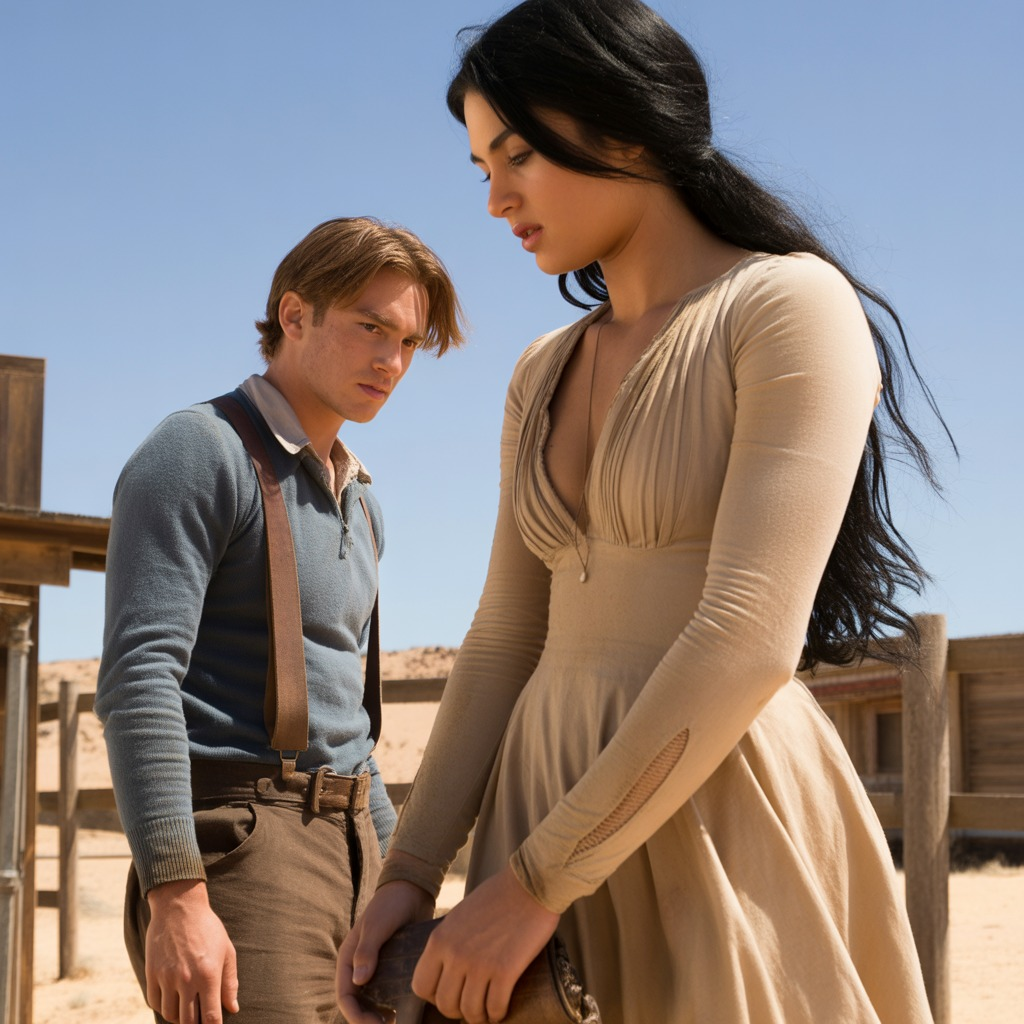
“I need to make love, don’t move,” the towering widow pleaded with the solitary rancher. But he did, and the next shock was profound. This is the extraordinary love story of Magnolia Thornbell and Bekeetarobe, set in the arid Redemption Flats of Waomen, a dusty little town where secrets and broken souls find refuge.
Magnolia, a widowed blacksmith who stands six feet four inches tall, has been consumed by loneliness and grief for 18 months since the death of her husband, Silas. Her imposing stature and strength have made her an enigma to the villagers, who call her the gigantic Thorn Bale and regard her with a mixture of fear and curiosity.
On the other hand, Bequet is a solitary rancher who, since the tragic loss of his wife and newborn five years ago, has worked tirelessly on his decaying ranch, silently bearing the weight of his grief. It was a clear November morning in 1875 when Bequet arrived at Magnolia’s blacksmith shop with his horse limping from a broken horseshoe.
The sun was just beginning to warm the dry earth, and the sound of Magnolia’s hammer echoed like a drum in the air. When Bequet mounted, his eyes met hers for the first time. Magnolia, her black dress barely containing her powerful figure, looked up with a serious expression, but her dark eyes held a spark of humanity that Bequet hadn’t expected.
“What does your horse need, sir?” Magnolia asked in a deep, resonant voice, wiping the sweat from her brow with the back of her hand. Bequet, a thin man with broad shoulders, nodded respectfully. “The left hind shoe came loose. I need you to fix it quickly. I have a long day ahead of me.”
Magnolia bent down to examine the horse’s hoof, and Bequet couldn’t help but notice how easily she handled the animal, a skittish stallion that rarely allowed strangers to touch him. In just a few minutes, she had replaced the shoe with a precision that impressed Bequet. As she handed him the reins, their hands briefly brushed, and an awkward silence filled the air.
He murmured a thank you and left, but something inside him compelled him to look back. Magnolia was watching him from a distance, and for a moment their eyes met again. In the following days, Bequet found excuses to return to the workshop. First it was a broken bridle, then a loose nail on a saddle.
Each visit was a step closer to Magnolia, whose physical strength contrasted with a gentleness he was beginning to discover. She, for her part, found in Bequet’s kindness a balm for her wounded heart. They spoke of their losses: Silas, killed in an accident with a cart loaded with iron, and the fever that took Bequet’s wife and their young son
In those conversations, a bond was born that neither of them had anticipated. One afternoon, as the sun set behind the hills, Magnolia invited Bequeta for coffee on the small porch of her workshop. Sitting in the twilight, she confessed to him, “I’ve always been seen as a monster because of my size.
“They say I’m too much for this world.” Her voice trembled, but her eyes sought his with a mixture of defiance and vulnerability. Bequet, leaning toward her, replied with a shy smile. “I don’t see a monster. I see a strong woman, a mountain that has weathered storms. To me, you are perfect.” Those words ignited something within Magnolia.
For the first time in years, she felt someone saw her for more than just her height and muscles. Days turned into weeks, and their friendship blossomed into something deeper. They met in secret, away from the judgmental eyes of the town, walking through the fields or sitting by the river that wound near Bequet’s ranch.
The chemistry between them was undeniable, but so was the weight of gossip. The small, conservative town of Redemption Flats soon began to whisper. Some saw Magnolia as a threat, a woman who defied the norms with her imposing presence. Others, envious of the land she had inherited from Silas, began plotting to take away her workshop and home.
The mayor, a greedy man named Idan Bas, called a meeting to discuss the problem of Widow Tombale. Rumors circulated that they wanted to force her to sell her property or, worse, expel her from the village. Bequet, upon learning of these plans, felt a fury he had rarely experienced. That night, under a starry sky, he took Magnolia’s hand and said, “I won’t let them hurt you.
You are my home now. Magnolia, with tears in her eyes, replied, “Dequet, I don’t want you to get into trouble for me. I’m too different.” But he interrupted her, standing up and looking at her with determination. You are my mountain, my refuge, and I will fight for you. The village meeting came the next day.
The square was filled with hostile faces, and Iran Bas, in his nasal voice, began to speak of protecting the people’s morale. Before he could finish, Bequet rose from the crowd. Everyone fell silent as he said in a clear, firm voice, “I love Magnolia Thornvell. I want to marry her. She is the strongest and most beautiful woman I have ever known, and I will not allow her to be treated as if she doesn’t belong here.”
A murmur rippled through the crowd. Some laughed, others whispered scornfully. But Magnolia, who had quietly crept into the back of the square, moved toward Bequet. Her footsteps echoed on the dusty ground, and when she reached his side, she looked at him with a mixture of awe and gratitude. “Are you sure?” she whispered.
“Safer than ever,” he replied, taking her hand. Bequetep’s proposal changed the course of the meeting. Iram tried to protest, but several villagers, moved by Bequet’s courage, began to advocate for the couple. In the end, the village, though reluctant, agreed to leave them in peace, at least for the time being.
Days later, under a wooden arch adorned with wildflowers, Magnolia and Bequet were married. The ceremony was simple, with few witnesses, but the love they shared filled the air. For the first time, Magnolia didn’t feel overpowered. Bequet saw her as his equal, and she found in him a partner who lacked her strength. Life on Bequet’s ranch changed with Magnolia’s arrival.
She used her blacksmithing skills to repair tools and strengthen fences, while he taught her the secrets of the land. Together they transformed the ranch into a thriving community. Their nights were filled with laughter and conversation around the fire, where they shared their dreams and healed their wounds. However, the peace would not last long.
One night, as they lay in bed, a strange sound woke them. Bequet got up to investigate, but before he could reach the door, a group of masked men burst into the house. They were Iram’s henchmen, determined to take revenge and seize the land by force.
Magnolia, with her protective instincts, stood up and faced the intruders. “Don’t move, Bequet,” she said firmly, grabbing a poker from the fireplace. “I need to make love, not fight, but if you force me.” Bequet, ignoring her warning, lunged for a rifle hanging on the wall. The movement unleashed chaos.
One of the men fired, and the bullet grazed Magnolia’s arm. Enraged, she used her strength to knock down two of the attackers with a single blow, while Bequet fired into the air to scare off the others. The intruders fled, leaving behind a tense silence. Magnolia, blood trickling from her arm, turned to face Bequet.
“Why didn’t you stay put?” she asked, half angry, half worried. “Because I couldn’t leave you alone in this,” he replied, hugging her tightly. “We’re a team.” The incident marked a turning point. The next day, Bequet and Magnolia gathered evidence against Iram and confronted him before the SIF (Special Investigations Force). With the support of several neighbors who had changed their minds, Iram was arrested, and the couple regained the peace they deserved.
Years later, Redemption Flats witnessed a new legend: that of the towering widow and the solitary rancher, whose love defied prejudice and danger. Magnolia and Bequet lived a life filled with challenges, but also with unwavering love. Their ranch became a symbol of hope, and their children, born of their union, inherited their mother’s strength and their father’s kindness.
And so, on the plains of Waomen, two broken souls found redemption in each other’s arms, reminding the world that true love knows no limits or measures.
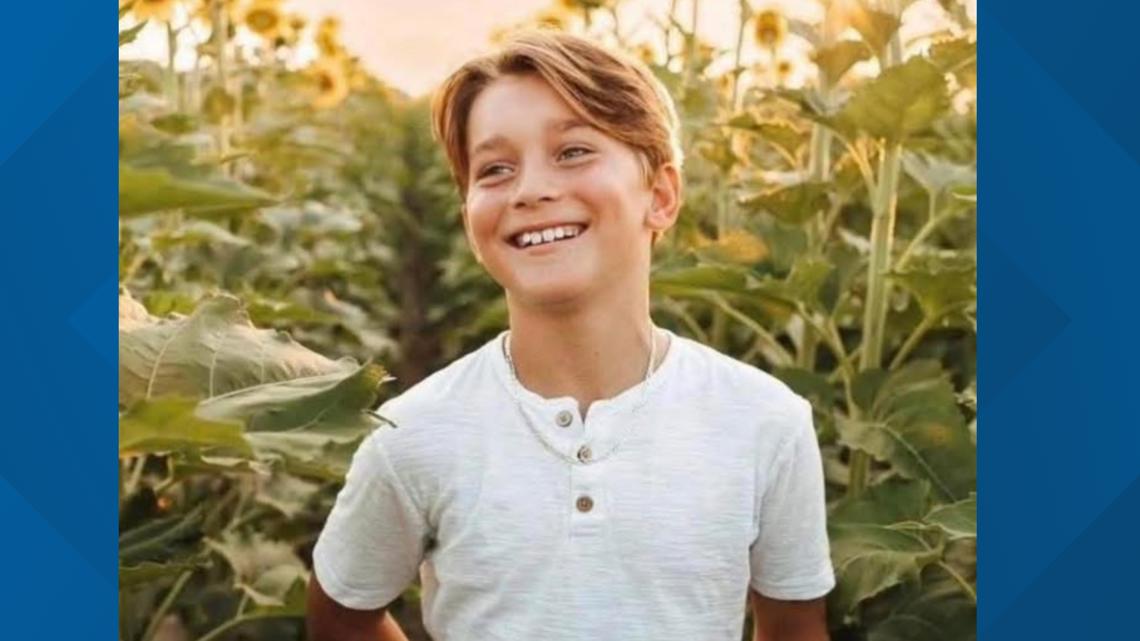
Crowds gathered at the edge of the emergency zone in Rome, holding their breath as Branson Blevins-GT09-giangtran

Crowds gathered at the edge of the emergency zone in Rome, trembling in stunned silence as Branson Blevins—the beloved athlete whose rise inspired millions—fought desperately for his life after an accident so violent that witnesses still shake describing the sound.
The cobblestone streets surrounding the historic arena were flooded with flashing red lights, frantic medics and panicked teammates, all struggling to comprehend how a man known for invincibility could suddenly collapse beneath the weight of a single catastrophic moment.
Tourists who had been taking photos minutes earlier dropped their cameras, frozen in horror as debris scattered across the square, smoke rising in eerie spirals that swallowed the warm Roman afternoon.
Witnesses described hearing a deafening metallic crack followed by a sickening thud, a sound so abrupt and brutal that several people screamed before they even understood what had happened.
Within seconds, Branson was on the ground, motionless, his body twisted painfully as his teammates rushed toward him, shouting for help and waving desperately at approaching paramedics.
Doctors pushed through the crowd with urgency, sliding to their knees beside him, assessing shattered impact injuries that left several medics exchanging horrified glances none dared verbalize publicly.
Phones dropped, conversations halted and the entire city seemed suspended in breathless disbelief as Branson’s chest barely moved, rising and falling with uneven, terrifying weakness.
He was rushed into the ambulance with such speed that several fans stumbled backward, trying to touch the vehicle as if their hands alone could somehow hold his life together.
News broke within minutes, sending shockwaves across social media, where fans launched frantic vigils, global hashtags and raw emotional messages pleading for updates from the Italian emergency teams.
His official team released a somber statement calling the situation “a race against fate,” confirming that multiple surgeons had already begun preparing the trauma wing for immediate intervention.
Outside the hospital, hundreds gathered with candles, jerseys, handwritten notes and trembling hope, transforming the stone courtyard into a sea of emotion that flickered beneath the Roman twilight.
One little boy wearing Branson’s jersey fell to his knees crying, telling reporters he had dreamed of growing up to be “strong like him” and begging the universe not to take his hero away.
Security struggled to contain the swelling crowd as more people arrived, whispering prayers in dozens of languages, united only by fear and the heartbreak that comes when icons suddenly become mortal.
Inside the operating room, surgeons fought through a maze of internal injuries, fractured bones and torn vessels, racing the clock to stabilize a man whose body had absorbed unimaginable trauma.
One surgeon later admitted anonymously that the extent of damage “would have ended the life of an ordinary man instantly,” emphasizing Branson’s remarkable physical resilience even in catastrophe.
Fans worldwide watched livestreams of the hospital entrance, counting every ambulance, every doctor, every small movement in hopes of spotting a sign that the nightmare was beginning to turn.
Comment sections overflowed with desperate messages, from athletes posting tearful tributes to grandmothers sending blessings, all begging for a miracle they feared might never come.
Sports analysts compared the moment to other legendary tragedies, calling it “a fracture in global morale,” one of those rare events where the world collectively pauses in shock.
Journalists described Rome as eerily quiet, with restaurants lowering their music and pedestrians speaking in hushed voices as though the entire city had entered a period of sacred mourning.
Inside the hospital, doctors reported sudden complications during surgery, forcing additional specialists to rush inside while nurses sprinted for equipment in scenes described as “controlled chaos.”
Bright red warnings flashed on medical monitors repeatedly, triggering alarms that echoed through the hallways, making even seasoned staff flinch with dread.
Meanwhile, Branson’s father arrived, collapsing into a chair outside the ICU, burying his face in his hands while whispering prayers, begging his son to wake up and fight harder than he ever fought before.
His mother stood motionless beside him, gripping a rosary so tightly her knuckles turned white, her eyes fixed on the ICU doors as though staring hard enough could pull her son through.
Teammates arrived in waves, some still wearing practice gear streaked with dust, tears streaming uncontrollably as they replayed the accident in their minds, wishing they could reverse one second of fate.
One teammate murmured that Branson had suffered nightmares about losing everything suddenly, confessing that this tragedy felt hauntingly close to something he had feared for years in silence.
Outside, fans lit hundreds of candles until the courtyard glowed like a field of trembling stars, each flame carrying the fragile hope that Branson would return from the edge.
A soft rain began to fall, but nobody left, choosing instead to lift umbrellas over the candles to protect them, believing extinguishing a flame might somehow extinguish their prayer.
Doctors finally emerged after hours of surgery, faces pale and exhausted, delivering an update so carefully worded that even reporters hesitated to breathe while listening.
They said Branson was alive but in critical condition, placed on assisted ventilation, his next twenty-four hours determining whether he would stabilize or fade beneath the weight of his injuries.
A collective sob rippled through the courtyard, followed by trembling applause meant not for success but for survival, for the sliver of hope the world had been desperately clinging to.
Fans began singing softly — not an anthem, not a chant — but the simple lullaby Branson once dedicated to his late grandmother, turning the night into a moment of aching beauty.
Doctors urged the family to speak to him, reminding them that hearing familiar voices sometimes pulls patients back from unconsciousness even when their bodies seem too broken to respond.
His mother entered the room first, placing her hand on her son’s forehead, whispering the childhood nickname only she used, begging him to move even one finger to prove he could hear her.
For a heartbreaking minute, nothing happened — then a faint twitch stirred beneath his blanket, enough to send his mother collapsing into tears and doctors rushing back to reassess monitors.
The news spread instantly, sparking global elation, with fans flooding the internet with messages of gratitude, hope and promises to continue praying until Branson stood again.
As dawn approached, Rome grew quiet once more, waiting with trembling anticipation for the next update, believing that this small miracle signaled the beginning of a long but possible recovery.
And somewhere inside that ICU room, beneath the soft rhythm of machines and whispered prayers, Branson Blevins continued fighting — not for stadiums, trophies or headlines, but for life itself.