A Family Vanishes Into the Wild
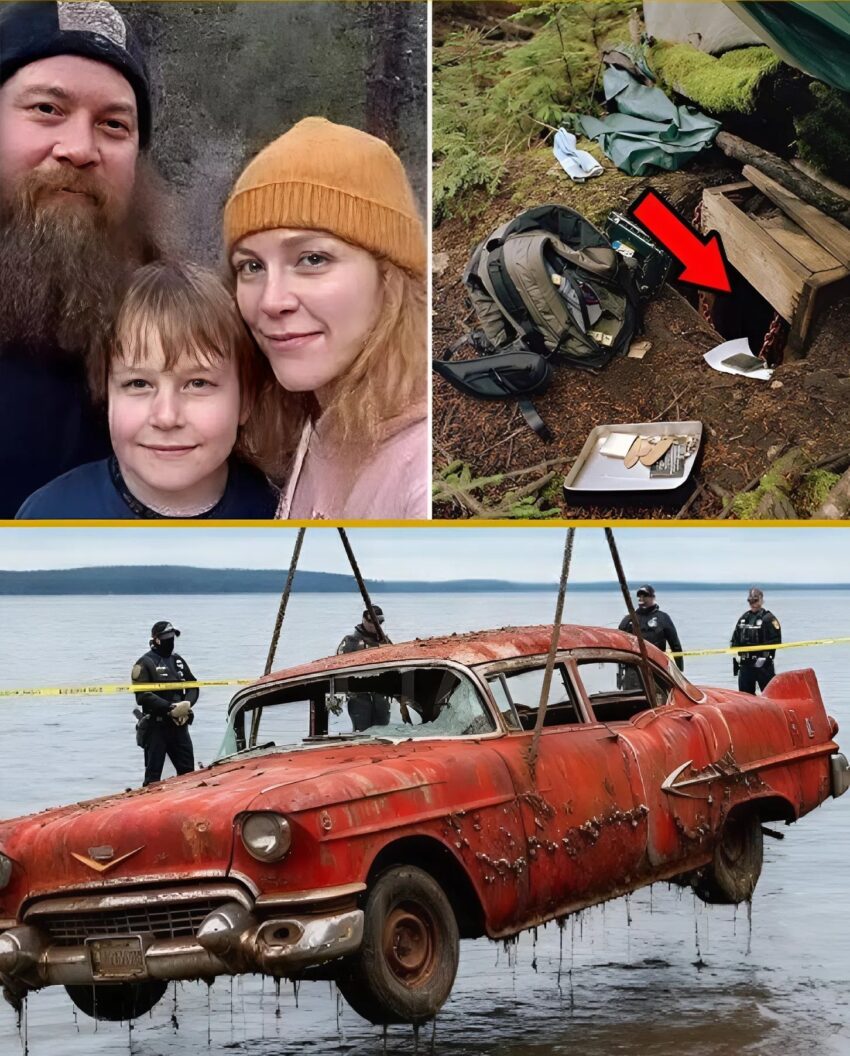
On a bright July morning in the summer of 2016, Thomas and Carolyn West loaded up their aging silver Subaru in Minneapolis, Minnesota, ready for a long-awaited family adventure.
Their nine-year-old son, Eli, practically bounced in the back seat, clutching a stack of superhero comics and a brand-new pair of junior binoculars. Glacier National Park had been their dream destination for years—a place they imagined as a wilderness cathedral, full of unmapped wonder.
Thomas, 42, was a quiet infrastructure engineer who kept meticulous trip journals. Carolyn, 38, was an adored elementary school teacher known for her bright scarves and even brighter laugh.
Their lives were defined by routine, responsibility, and devotion to their son. This trip was meant to be a grounding escape, a reconnection with nature.
They left Minnesota on July 14. Four days later, on July 18, they checked in at Two Medicine—a peaceful, less-visited corner of Glacier filled with turquoise lakes, unpredictable winds, and steep, folded mountainsides.
That evening, Carolyn left a cheerful voicemail for her sister:
“Eli’s obsessed with the mountains. We’re exhausted but so excited. This place feels unreal.”
That message became the final trace of the family—before their story dissolved into one of the most unsettling mysteries in modern national park history.
The Empty Subaru and the First Signs of Trouble
When the Wests failed to check out or move campsites by July 20, rangers conducted a routine patrol. What they found was puzzling.
The Subaru sat neatly in its parking spot. No broken windows. No scratches. No sign of intrusion. The keys were still hidden beneath the driver’s-side floor mat—just as many hikers do for convenience.
Inside the vehicle, rangers spotted Eli’s half-finished Spider-Man coloring book, freshly purchased granola bars, and an open map of Glacier National Park. The map featured odd hand-drawn marks—tiny circles and Xs—leading away from typical trails into unmaintained backcountry.
Their tent, stove, and sleeping bags were nowhere to be found.
No one had seen the family leave the parking lot. No one recalled hearing a struggle or witnessing wildlife activity.
For a place that swelled with summer hikers, the silence around the Wests’ disappearance grew stranger by the hour.
The Largest Search in Two Medicine’s History
Within 24 hours, Glacier organized one of the largest coordinated searches in the region’s history. Helicopters combed ridgelines. Search-and-rescue teams hiked through dense brush and bear country.
Cadaver dogs swept ravines and riverbanks. Divers explored frigid lakes whose waters remain icy even in mid-July.
Nothing.
Not a footprint.
Not a scrap of fabric.
Not a dropped granola wrapper.
The family’s cell phones stopped registering activity the night of July 18. No pings. No outgoing signals. Park officials confirmed the devices had likely powered off or run out of battery—though the timing raised eyebrows.
By week two, theories began fermenting. Had they been mauled by a bear, their remains scattered too widely to detect?
Abducted by someone familiar with the terrain? Fallen into one of the park’s many hidden crevasses, the kind that swallow sound and evidence alike? Or—something far stranger?
The case soon became a ghost story whispered by rangers and visitors alike. Newspapers ran features titled “The Vanishing Family of Glacier.” Amateur sleuths speculated endlessly online.

Yet the park service maintained a careful line: no evidence of foul play, no reason to suspect a cover-up, and nothing substantial to go on.
After months, the official search was “suspended,” not closed. The Wests’ names joined the quiet, unsettling list of long-term missing persons in America’s national parks.
Five Years of Silence and Shadow
From 2016 to 2021, the West family’s disappearance became a legend as haunting as the mist that clings to Glacier’s peaks at sunset. Some hikers reported hearing a child’s voice echoing on the trail.
Others claimed to have seen a woman’s silhouette through the trees. Superstition thrives where answers die.
The Wests’ relatives pushed for annual updates, but Glacier officials had little to offer. Files remained sealed.
Internal discussions—what little could be obtained through Freedom of Information Act requests—suggested disagreements about search boundaries and initial assumptions.
Critics accused the park service of shutting down rumors too aggressively, fueling speculation rather than calming it.
Then, five years after that cheerful voicemail, everything changed.
The Discovery in the Gorge
In late August 2021, Ranger Lucas Hale was on an overnight patrol in one of the park’s most remote and hazardous areas—a steep, isolated gorge accessible only by technical climbing.
Few rangers ventured that deep unless responding to emergencies.
Halfway down the gorge, Hale spotted something unnatural among the stones: a fragment of bright red nylon tangled in a fallen branch.
On closer inspection, it was part of a shredded backpack.
Nearby, a torn shoe. A rusted camping pot. And then, scattered bone fragments.
The gorge had been visually inspected during the 2016 search but never physically accessed due to its extreme terrain. Now, with new climbing protocols in place, Hale descended farther.
What he found triggered an immediate shutdown of the area and a multi-agency forensic response.
DNA confirmed what many feared: the remains belonged to all three members of the West family.
But the condition of the site raised more questions than it answered.
What Really Happened? The Darker Truth Surfaces
The official narrative released by the park service in early 2022 described “a tragic fall” in “hazardous backcountry terrain.” According to the summary, the family had somehow ventured off-trail, possibly attempting a shortcut or exploring, and slipped into the gorge.
But the details leaked by those close to the investigation painted a far more disturbing picture:
- The remains were not clustered together but widely scattered, as if moved over time—or by something.
- The gear showed signs of tearing inconsistent with a simple fall. Some cuts appeared clean, others jagged.
- The hand-drawn map markings aligned precisely with unofficial ranger trails, routes not made public.
- The gorge’s entrance was hours from their campsite with no logical reason for the family to be there.
Privately, several park employees admitted that certain areas of Glacier were known—though never publicly acknowledged—to have “unpredictable hazards” including hidden pits, unstable limestone shelves, and sudden rock slides triggered without warning.
Still, nothing fully explained why an experienced hiker like Thomas, cautious to a fault, would have taken his wife and son into such dangerous ground.
Unless someone led them.
Or something chased them.
The Questions That Still Haunt Glacier
What happened between Carolyn’s joyful voicemail on July 18 and the moment the family entered the gorge remains a void—a gulf of unanswered questions.
Why did their map contain markings that aligned with unofficial trails?
Why did Glacier’s internal search logs reference “unverified wildlife activity” near Two Medicine the night they vanished—then redact the details?
Why were certain investigative notes permanently classified?
Some believe the Wests encountered illegal activity—perhaps poachers or someone living off-grid. Others insist they fled from a predator, human or animal, and became disoriented.
And then there are those who say Glacier—vast, ancient, and unforgiving—contains secrets that defy explanation.
A Legacy of Absence
Today, visitors at Two Medicine sometimes notice a small wooden plaque near the trailhead. It reads:
In memory of the West family.
May their journey remind us that wild places are beautiful—and merciless.
The gorge remains closed to the public. The internal investigation, though officially completed, has spawned new inquiries by independent researchers and journalists determined to uncover what the park service might be withholding.
The truth, whatever it is, remains buried in those mountains—just like the Wests were for five long years.
But the discovery of their remains did not bring closure. Instead, it opened a deeper, colder mystery:
What really happened to the West family in Glacier National Park—and why was the truth so hard to find?