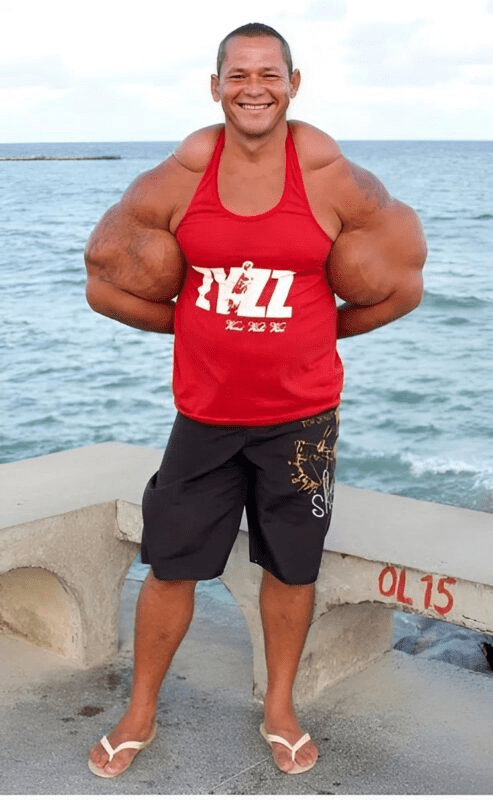
In Brazil, few names have sparked as much fascination in bodybuilding circles as Arlindo de Souza. For a time, he was widely known for his astonishing 75-centimeter biceps—measurements so extreme they seemed almost unreal. With confidence and flair, he proudly referred to himself as the “most handsome man in Brazil.” Cameras followed him. Strangers stared. Social media buzzed with disbelief. Yet behind the spectacle of his oversized arms was a deeper story—one that carried consequences far more serious than admiration, applause, or fleeting fame.
Arlindo’s journey began much like that of many aspiring bodybuilders. He trained consistently, pushed through grueling workouts, and followed structured routines designed to build muscle the right way. Discipline, effort, and patience shaped his early progress. Like countless athletes striving to improve their physique, he embraced the fundamentals of strength training. But over time, ordinary progress no longer felt satisfying. The incremental gains that once motivated him began to seem slow and inadequate. He didn’t just want to be muscular—he wanted to be unforgettable. He wanted something larger than life.
That desire marked a turning point. In pursuit of dramatic, rapid results, Arlindo chose a path that veered away from science-backed training and into dangerous territory. Instead of relying solely on nutrition, structured workouts, and legitimate supplementation, he began injecting a homemade mixture of oil and alcohol directly into his muscles. These injections were not supervised by medical professionals. They were not approved treatments. They were improvised solutions aimed at creating the illusion of massive muscle size almost overnight.
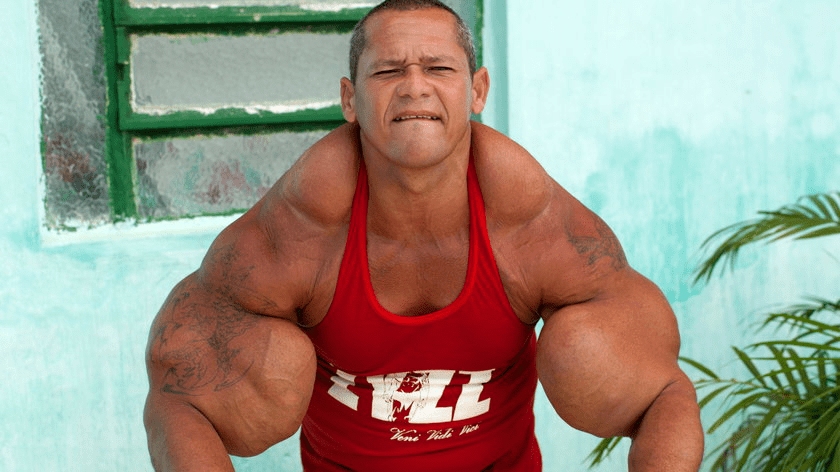
The transformation was immediate and shocking. His arms ballooned to extraordinary proportions. Onlookers were stunned. Some were impressed, believing they were witnessing a level of strength beyond imagination. Others were confused, unsure whether what they were seeing represented athletic achievement or something unnatural. To the casual observer, his arms looked powerful. To medical professionals, however, they represented a serious and escalating health risk.
Injecting foreign substances into muscle tissue can lead to severe complications. Infections are common when non-sterile materials are introduced into the body. Tissue necrosis—the death of muscle cells—can occur when blood flow is disrupted or when toxic substances damage surrounding areas. In extreme cases, individuals who experiment with these methods face the possibility of amputation to prevent life-threatening infection. Some have even lost their lives. What appeared to be a shortcut to glory was, in reality, a gradual movement toward physical collapse.
For a time, the attention overshadowed the risks. Arlindo’s unusual appearance made him a viral figure. Interviews circulated online. Curious fans asked questions. His nickname spread. Yet the consequences of his decisions were quietly building beneath the surface. Pain, inflammation, and long-term damage do not always appear immediately. They accumulate.
The true wake-up call came when tragedy struck close to home. Paulinho, a close friend who had followed the same injection routine, died as a result of similar practices. The loss was devastating. It forced Arlindo to confront the reality he had tried to ignore. The substances they had injected were identical. The risks had been identical. The difference was that he survived—and his friend did not. Reflecting on that painful moment, Arlindo later stated, “I will never do it again. We injected the same stuff. I lived, he didn’t. It was a terrible experience, and I wouldn’t wish it on anyone.” Those words carried more weight than any flexed pose ever could.
The experience left scars that extended beyond the physical. Grief reshaped his perspective. The pursuit of exaggerated size no longer seemed glamorous when measured against the cost of a human life. What once felt like ambition began to look like obsession. What once felt like confidence began to resemble denial.
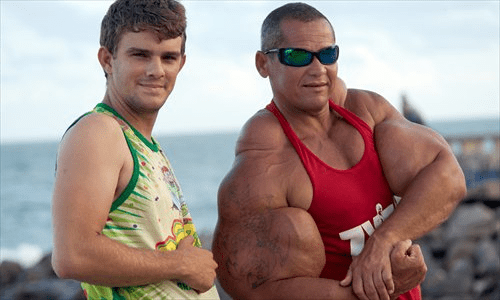
Even so, the attention did not disappear overnight. According to his family, many people—particularly women—continued to express fascination with his physique. Strangers still stared when he walked into public spaces. Some admired him openly. Others reacted with unease. His presence could be magnetic, but it could also be unsettling. Extreme appearance has a way of commanding attention, whether positive or negative.
Yet beneath that attention lies an essential question: is admiration worth sacrificing health? Applause can be loud, but it is temporary. Physical damage can be silent, but it is lasting. The contrast between image and well-being becomes stark when examined closely. Public fascination does not repair damaged tissue. Online recognition does not restore compromised health. In many cases, it only masks deeper wounds.
Arlindo’s story ultimately transcends bodybuilding. It speaks to a broader cultural pressure—the constant push toward “bigger,” “better,” and more dramatic transformations. In the age of viral content and instant visibility, extremes often receive more attention than balance. Dramatic results spread quickly across screens. Measured, patient progress rarely does. For individuals vulnerable to that pressure, shortcuts can appear tempting.
True strength, however, is not defined by circumference measurements or social media reactions. It is defined by resilience, discipline, and longevity. Sustainable fitness is built through consistency, informed decision-making, and respect for the body’s limits. When appearance begins to outweigh health, the pursuit of strength can morph into addiction. The line between dedication and self-destruction becomes dangerously thin.
Today, Arlindo openly acknowledges that he is grateful simply to be alive. The irony is difficult to ignore. He once chased physical perfection at any cost. Now, survival itself feels like victory. The massive arms that once symbolized success have become reminders of risk. In hindsight, the pursuit of spectacle nearly overshadowed the basic gift of health.
His life now stands as a cautionary tale. It reminds aspiring athletes—and anyone tempted by extreme measures—that shortcuts often carry hidden consequences. Real fitness is rooted in balance. It requires patience. It demands respect for medical guidance and evidence-based practices. There are no safe substitutes for time, training, and thoughtful progression.

From the heights of viral fame to the sobering clarity of regret, Arlindo de Souza’s journey reveals the darker side of extreme bodybuilding culture. His enormous biceps made him a household name, but the methods behind them nearly cost him everything. The applause faded. The risks remained. In the end, his legacy is not about size. It is about lessons learned the hard way.
When health is sacrificed for image, victory becomes hollow. When appearance overshadows well-being, admiration loses meaning. True strength is quieter and far more enduring. It lies in survival, in the ability to change course, and in the wisdom to step back before it is too late. Arlindo’s story reminds us that the greatest measure of power is not how large we appear to the world, but how well we protect the life we have.