Every single day, our readers delight us with photographs of the antiques and curiosities they uncover—tucked away in attic trunks, discovered at estate sales, inherited from grandparents, or stumbled upon at flea markets and auctions. Each object carries a whisper of the past, a fragment of someone else’s daily life. Sometimes the purpose is obvious: a butter churn, a typewriter, a hand-stitched quilt. But every so often, an item appears that leaves even seasoned collectors scratching their heads.
That’s when we turn to you—our wonderfully knowledgeable community of history lovers, collectors, and antique enthusiasts. There is something deeply satisfying about solving these small mysteries together. So today, we’re sharing six intriguing finds submitted by readers. Take a careful look at the descriptions, imagine the feel and weight of each object in your hands, and see if you can identify them. As always, thank you for sharing your discoveries and keeping history alive.

From Sandra Turner:
“Can someone tell me what this was used for? The only marking is ‘Sterling.’”
Sterling silver items often spark immediate curiosity. The simple word “Sterling” suggests quality—92.5% pure silver—and hints that the object may have once been both functional and refined. But sterling pieces come in countless forms: vanity tools, condiment servers, sewing implements, calling card cases, baby rattles, grooming accessories, and more.
Without decorative engravings or additional hallmarks, identifying such an item can be challenging. Was it part of a lady’s dressing table set? A specialized serving utensil for sugar cubes or olives? A small ceremonial object? Sterling items were frequently gifted for weddings, christenings, or anniversaries, meaning the piece may have held sentimental as well as practical value.
The mystery deepens when the object’s shape doesn’t immediately reveal its purpose. Sometimes the smallest household tools—button hooks, glove stretchers, cigar piercers—are the most difficult to recognize today because they relate to habits that have long disappeared.
From Carol Musselman:
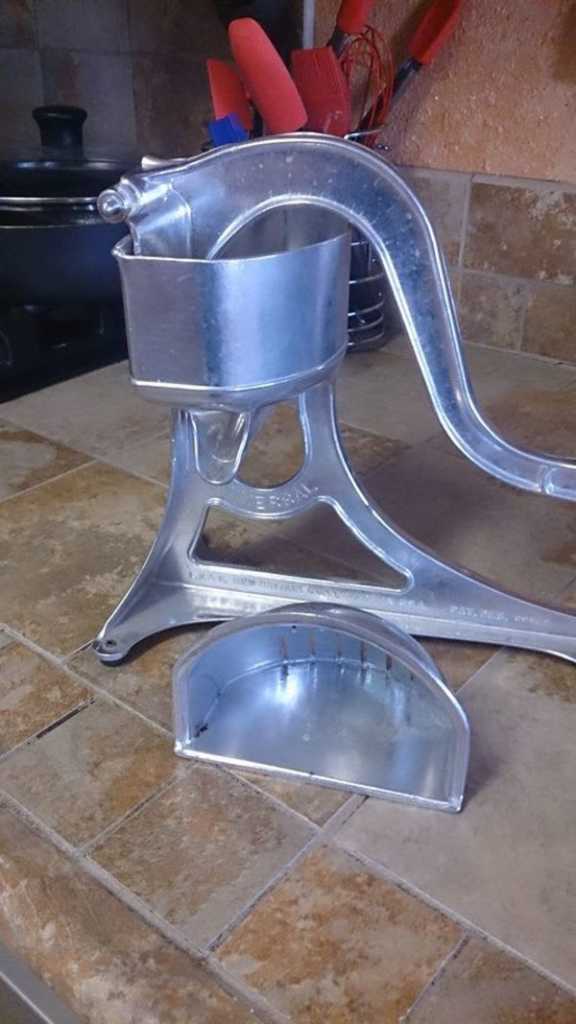
“Does anyone know what in the heck this thing is? I found it in my cabinet with the auction tag still on it.”
Auction tags add another layer of intrigue. They suggest the item was once considered valuable enough to catalog and sell, yet its function has faded from memory. Objects rediscovered in cabinets often belonged to previous homeowners or relatives, quietly waiting decades to be noticed again.
Could it be a kitchen gadget from the early twentieth century, designed for a single specialized purpose? Many vintage culinary tools—egg coddlers, cherry pitters, aspic molds, or biscuit cutters—look unusual by modern standards. Alternatively, it might be a tool related to hobbies once popular, such as hat making, sewing, pipe smoking, or letter writing.
When we encounter these puzzling pieces, we’re reminded of how dramatically everyday life has changed. Entire categories of objects have vanished simply because the routines they supported no longer exist.
From Kelsey Teymer:
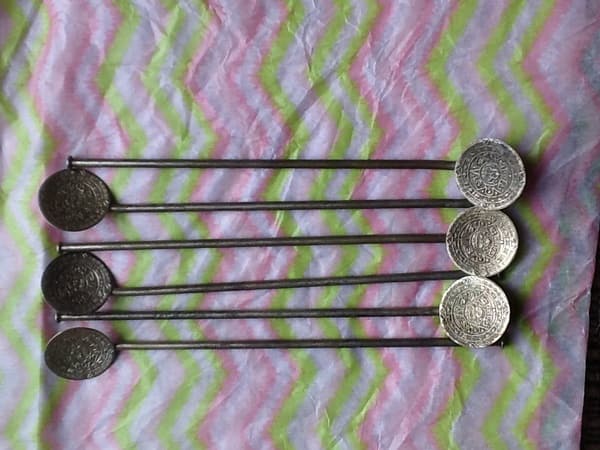
“We received these from my husband’s great grandmother. Anyone know what they are or their age? It’s a set of 6 with hollow rods and some kind of Aztec depiction in the center of the circles. The only marking is ‘Made in Mexico’ in Spanish on the back. Any info would be greatly appreciated! Thank you!!”
Items marked “Made in Mexico” often date from the mid-twentieth century, when Mexican silverwork and artisan crafts became highly sought after. The reference to Aztec imagery suggests a decorative style influenced by pre-Columbian motifs, which gained popularity in tourist markets and export goods from the 1930s through the 1970s.
A set of six hints at tableware—perhaps napkin rings, small holders, or decorative drink accessories. Hollow rods may indicate handles or supports. Mexican metalwork from this era frequently combined bold symbolism with practical design, blending artistry and function.
Inherited pieces like these are especially meaningful. Passed down from a great grandmother, they connect generations. Even if their exact purpose is unclear, they represent family continuity and the enduring appeal of handcrafted objects.
From Leslie Rabalais:
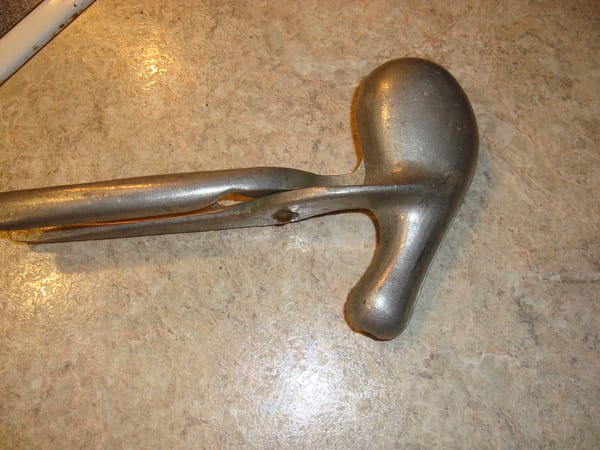
“Wondering what this is. It opens and closes, has an opening on the tapered end. I think it’s cast aluminum.”
Cast aluminum objects became widespread in the twentieth century due to their lightweight durability. If the item opens and closes, it likely served as a container or press of some kind. The tapered end with an opening suggests controlled dispensing—perhaps for icing, dough, spices, or even mechanical lubrication.
Vintage kitchen tools again come to mind: cookie presses, cream horns, or specialized pastry molds. But aluminum was also used for camping gear, automotive tools, and industrial molds. The mechanism—how it hinges or locks—often provides the strongest clue.
Objects like this remind us that earlier generations valued tools that performed one task exceptionally well, even if that task seems obscure today.
From Amber Marshall:
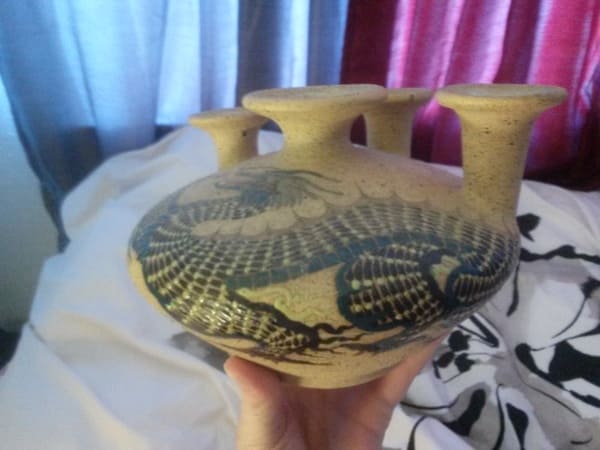
“I’m trying to find out what this is and maybe what it could be worth. Help!”
Value is always an understandable question. Yet before determining worth, identification must come first. Is the item decorative or utilitarian? Mass-produced or handmade? Marked with a manufacturer’s stamp, patent number, or artisan signature?
Condition also plays a critical role. Tarnish, cracks, missing components, or repairs can significantly influence value. Some seemingly ordinary objects turn out to be rare specialty items, while others were produced in large quantities and hold primarily sentimental rather than monetary worth.
Antiques often carry two kinds of value: market value and personal value. The latter can far exceed any auction price, especially when tied to family history.
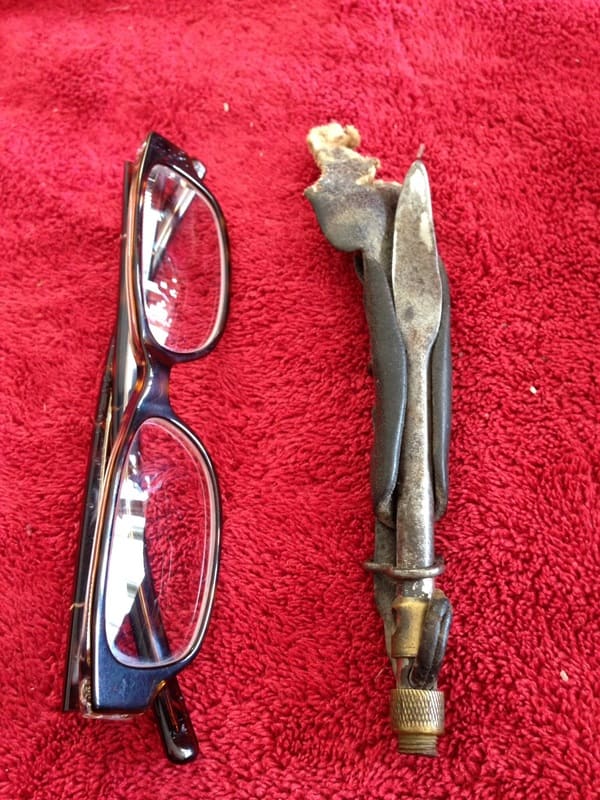
From Jolea Haydon:
“Would love to know what this is. I got it from my grandmother’s antique store 40 years ago.”
An object acquired from an antique store four decades ago is itself now part of history. What was considered collectible in the 1980s may reflect trends of that era—Victorian revival pieces, Depression glass, brass décor, or rustic farmhouse items.
When an item has remained unidentified for so long, it suggests either a highly specialized purpose or a decorative novelty. Antique dealers sometimes purchased unusual industrial tools or obsolete household gadgets simply because they were intriguing.
The fact that it came from a grandmother’s shop adds another layer of charm. It is not just an object; it is a memory of time spent among shelves of curiosities, surrounded by stories waiting to be told.
These six items serve as gentle reminders that history lives in the details. Everyday objects—once essential, now mysterious—offer glimpses into forgotten routines, vanished industries, and evolving tastes. Solving their identities is more than a guessing game. It is an act of preservation.
So now we turn to you. Study the descriptions. Imagine their size, weight, and texture. Have you seen something similar before? Do family stories ring a bell?
Share your thoughts, your expertise, and your memories. Together, we can give these objects their names back—and in doing so, keep the past wonderfully present.