Many people still remember the comforting rhythm of an old-fashioned kitchen—the soft hum of morning routines unfolding without hurry. Sunlight filtered through simple curtains.
A kettle warmed on the stove. Warm bread rested beneath clean towels, rising slowly in bowls passed down through generations. Outside, milk bottles clinked gently as they were gathered from the porch.
Nothing felt rushed, and almost nothing went to waste. Every object had a purpose. Every leftover found new life in another meal. Practicality guided design, and even the most ordinary tools carried quiet importance.
Among those humble but ingenious household items was the bottle drying rack, often affectionately called a “bottle tree.” At first glance, it might have seemed unremarkable—a metal stand with evenly spaced prongs reaching upward. Yet in kitchens of the late nineteenth and early twentieth centuries, it was indispensable.

Long before plastic containers, paper cartons, and automatic dishwashers simplified domestic work, glass bottles were a daily necessity.
Milk, cream, soda, vinegar, homemade syrups, preserves, and medicinal tonics were all stored in sturdy glass containers designed for repeated use. After their contents were emptied, the bottles were not discarded. They were washed carefully by hand, scrubbed inside and out with brushes and hot soapy water.
But washing was only part of the process.
Drying glass bottles properly was essential. If even a small amount of moisture remained trapped inside, mold or bacteria could develop quickly—especially in an era before refrigeration was widespread.
Bottles needed to dry thoroughly and efficiently, and they had to do so without collecting dust or debris. The solution was simple yet brilliant: position them upside down so gravity could draw out every drop of water.
The metal bottle rack solved this problem with quiet efficiency.
Constructed from iron or steel, it featured multiple upward-angled hooks arranged in symmetrical rows. Each bottle slipped securely over a prong, suspended upside down in open air. The design allowed airflow to circulate freely inside and around the glass, speeding up the drying process and preventing contamination.
Sturdy and reliable, these racks were built to endure years—sometimes decades—of daily use.
Their construction emphasized durability over decoration, yet their repeating lines and radial symmetry created an unintentional elegance.
When filled with rows of glistening glass bottles catching the morning light, the rack became more than a tool. It was part of the visual language of the kitchen—functional, orderly, quietly beautiful.
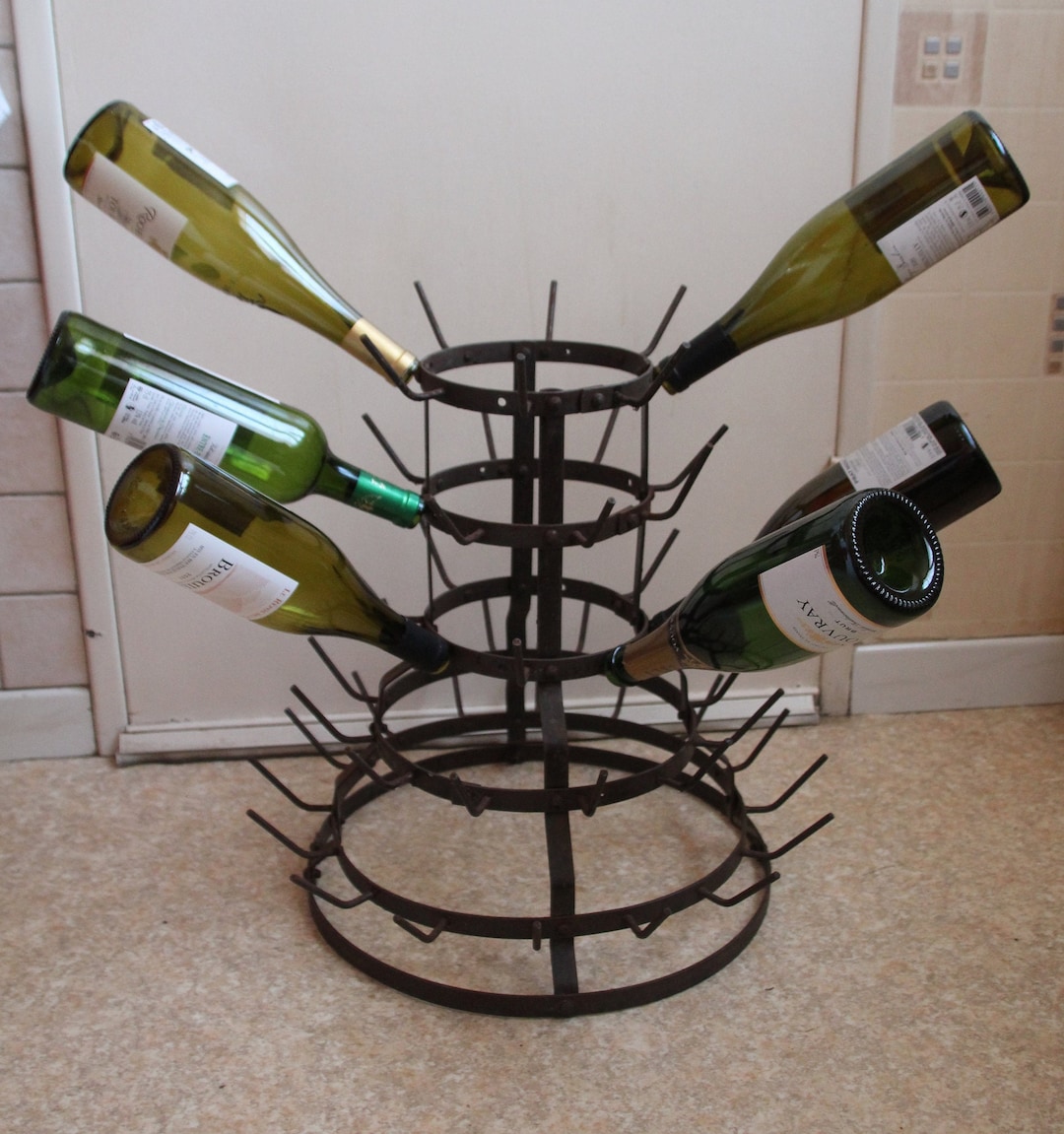
During this period, reuse was not a trend; it was a way of life.
Families returned milk bottles to dairies, where they were sanitized and refilled.
Small-town businesses depended on these systems of exchange. Bakeries stored flavorings and extracts in glass containers. Breweries and taverns rotated bottles for ale and other beverages. Pharmacies dispensed tonics in reusable glass. The bottle rack supported this entire ecosystem of circular use.
In many homes, the rack occupied a permanent place near the sink or on a worktable.
Its presence became as ordinary as the cast-iron stove or the wooden bread box. Children grew up watching parents and grandparents load freshly washed bottles onto its prongs. The act itself was rhythmic—wash, rinse, turn, hang. A simple routine repeated countless times.
As decades passed, however, industrial shifts began reshaping daily life. Disposable packaging emerged as a symbol of convenience and modernization. Cardboard cartons replaced refillable milk bottles. Plastic containers offered lightweight alternatives to glass.
Large-scale factories introduced automated cleaning systems, and dishwashers became increasingly common in private homes. Gradually, the bottle rack’s necessity diminished.
What had once been an everyday essential slowly faded into obscurity.
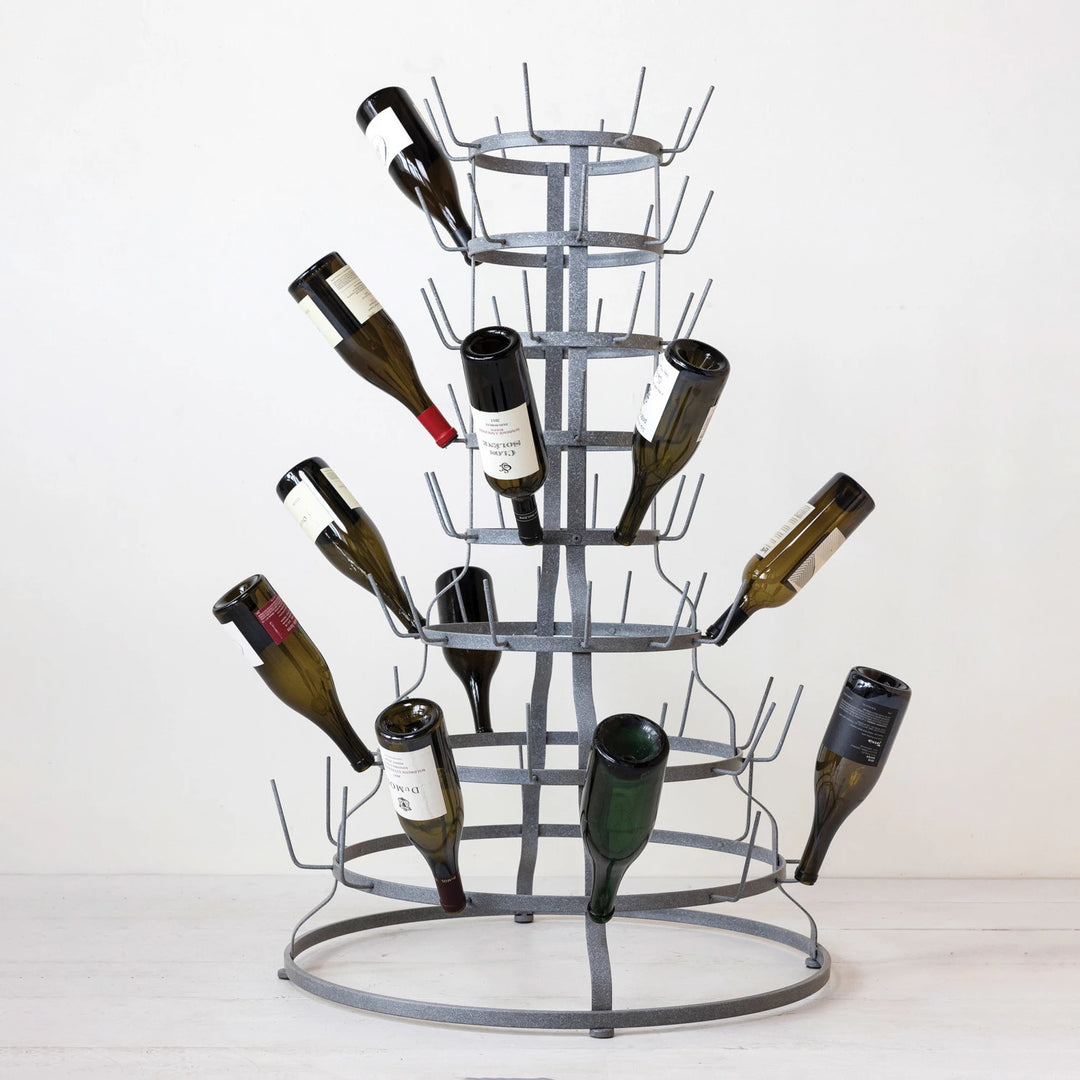
Today, many younger generations encounter vintage bottle racks only at flea markets, antique shops, or estate sales.
Without context, their spiked silhouettes can appear puzzling—almost abstract. Some mistake them for coat stands or decorative sculptures. Others admire their industrial aesthetic without realizing their practical origins.
Yet fascination persists.
Collectors value these racks for their craftsmanship and historical significance.
Each weld and curve reflects an era when objects were engineered for longevity.
Designers and artists, too, have found inspiration in their form. In fact, in the early twentieth century, French artist Marcel Duchamp famously presented a bottle rack as a readymade artwork, challenging conventional definitions of art.
By placing the utilitarian object in a gallery context, he revealed the sculptural beauty embedded in its design.
Even outside museums, the rack’s geometric structure continues to captivate. Its radial balance and repetition of lines create visual harmony. In modern interiors, repurposed bottle racks sometimes serve as holders for mugs, jewelry, or decorative items. What was once strictly functional now bridges past and present.
Beyond aesthetics, however, the bottle rack symbolizes something deeper: resourcefulness.
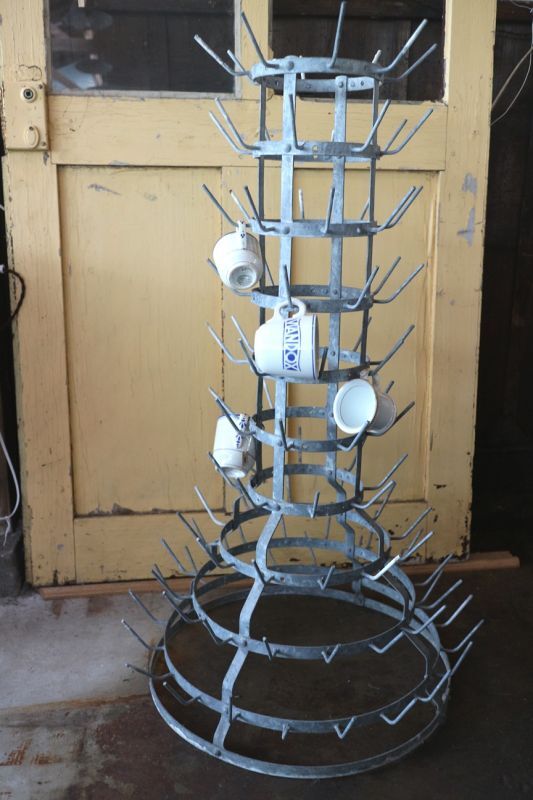
It represents a mindset rooted in stewardship rather than disposability. People repaired instead of replaced. They invested in tools meant to last. Objects were chosen for strength and reliability, not novelty.
The rhythm of daily chores reinforced patience and care. Washing and drying bottles required time, but that time was integrated naturally into the pace of life.
In today’s world—where convenience often overrides durability—the bottle rack stands as a quiet reminder of sustainability before the term became fashionable. It speaks to an era when households functioned as small systems of reuse. Waste was minimized not through complex policies, but through habit and intention.
This does not mean the past was without hardship. Domestic labor was physically demanding, and technological advancements have undeniably improved efficiency and sanitation. Yet there is something worth remembering in the philosophy behind those older tools. They were designed not for disposability, but for endurance.
The bottle rack’s legacy invites reflection. What might modern living look like if we reclaimed some of that intentionality? If we valued objects for how long they serve rather than how quickly they can be replaced? If we recognized beauty not only in decoration but in purpose?

Standing quietly in a corner of an antique store, a vintage bottle drying rack may seem insignificant.
But its metal frame carries echoes of kitchens filled with warmth, industry, and care. It tells a story of families who understood the importance of small, practical solutions. It reminds us that efficiency does not have to erase elegance, and that simplicity can coexist with ingenuity.
In a world often overwhelmed by disposable goods and rapid turnover, this humble stand offers a gentle lesson. The simplest tools—designed thoughtfully and used faithfully—can endure far beyond their era. And sometimes, in their quiet persistence, they reveal a kind of beauty that no trend can replace.