The entire internet tried to solve the mystery, yet at first glance, almost no one could identify the strange object. Photos of it began circulating across social media, forums, and comment sections, sparking endless debate.
People zoomed in, speculated, argued, and confidently declared answers—only to be proven wrong moments later. The confusion seemed to grow with every repost, as wild theories ranged from obscure mechanical parts to forgotten medical tools or even abstract art pieces
What made the object so puzzling was its simplicity. There were no labels, no obvious modern purpose, and nothing about it screamed “technology” or “tool.” Younger users, in particular, were baffled.
Many admitted they had never seen anything like it before. Even some older adults hesitated, squinting at the images, trying to jog their memories.
Then came the revelation—and for many, an instant wave of nostalgia.
The object wasn’t mysterious at all. In fact, it was something countless adults recognized immediately the moment the name was mentioned: Clackers.
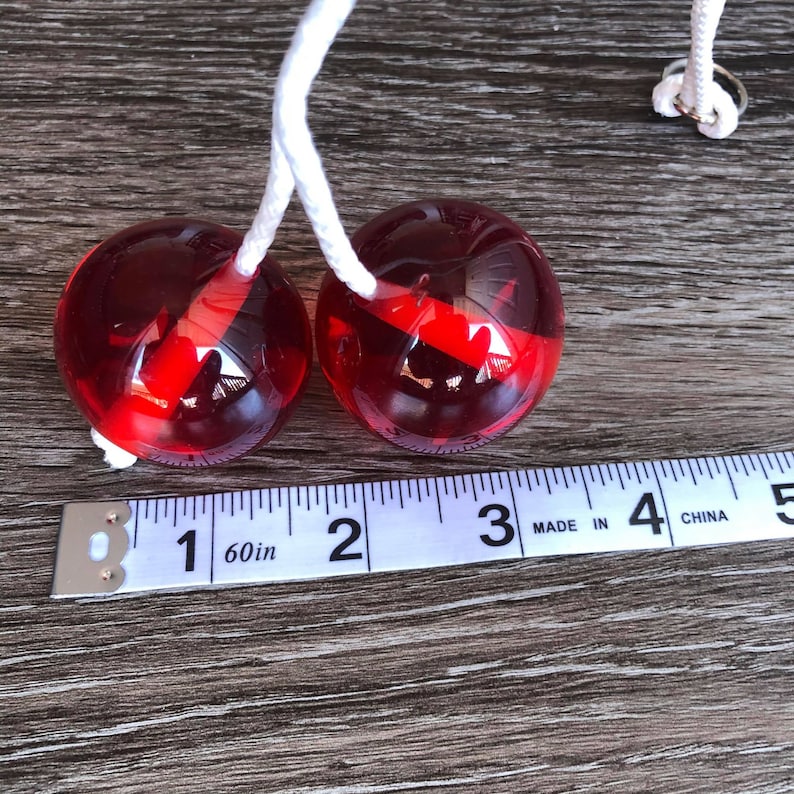
Also known as Lik Klaks, Clackers were one of the most iconic toy crazes of the early 1970s. Long before smartphones, video games, and endless screen time, this simple toy captivated millions of children around the world.
The design couldn’t have been more straightforward. Clackers consisted of two hard plastic balls attached to opposite ends of a string, with a small ring or handle in the center. That was it—no batteries, no instructions, no upgrades. And yet, the simplicity was part of the magic.

The goal was deceptively challenging. By holding the ring and moving your hand up and down in a controlled rhythm, you could make the two balls swing and strike each other repeatedly.
When done correctly, they produced a loud, unmistakable “clack-clack” sound that echoed across playgrounds, sidewalks, and schoolyards. The faster and more smoothly you moved, the more impressive the sound—and the performance.
Clackers were first introduced around 1969 by Wham-O, the legendary toy company responsible for other cultural phenomena like the Hula Hoop and the Frisbee. With that kind of pedigree behind them, it was no surprise that Clackers took off almost instantly.
Once they hit store shelves, their popularity exploded. Kids begged their parents for them. Friends showed off their skills to one another.
Playgrounds turned into informal competitions, with children trying to outdo each other by keeping the rhythm going longer, swinging faster, or even performing tricks by changing directions or speeds.

For many kids, mastering Clackers became a badge of honor. It took practice, coordination, and patience—qualities that weren’t always easy to come by. Beginners often learned the hard way that timing mattered.
One wrong move, and the swinging balls could smack painfully into knuckles, wrists, or fingers. The sharp sting was almost a rite of passage, something kids laughed about later once the pain faded.
But the craze wasn’t without its problems.
Some of the early versions of Clackers were made from brittle plastic that couldn’t always withstand the constant impact. Over time, repeated collisions caused cracks—and in some cases, the balls shattered completely.
Flying plastic shards quickly turned a harmless toy into a potential hazard. As reports of injuries increased, parents, teachers, and school administrators grew concerned.
Schools began banning Clackers from classrooms and playgrounds. In certain areas, restrictions followed, and warnings were issued about their use. Wham-O responded by redesigning the toy, using stronger materials in an attempt to make them safer. But by then, the cultural moment had begun to pass.
Like many toy crazes, Clackers burned bright and fast. Within a few years, their dominance faded, replaced by the next big trend. What remained, however, was a lasting impression on the generation that grew up with them.
Today, Clackers exist mostly as a nostalgic symbol of a different kind of childhood—one defined by imagination, repetition, and simple pleasures. They remind people of a time when entertainment didn’t require screens, updates, or internet connections.
All you needed was a bit of coordination, a lot of patience, and the willingness to endure a few sore knuckles along the way.
So when that strange object resurfaced online and puzzled an entire generation, it wasn’t just a guessing game. It was a quiet reminder of how quickly everyday objects can slip from collective memory—and how instantly they can return, carrying the sound, energy, and joy of childhood with them.