The Quiet Girl in the Back of the Classroom Who Held a Secret for Months
Опубликовано: 06.04.2026Рубрика: NEWS
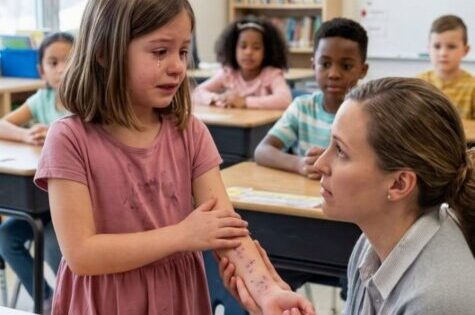
The Quiet Girl in the Back of the Classroom Who Held a Secret for Months
Naomi Whitaker had spent nineteen years teaching first grade in Millfield, Ohio.
Over that time, she learned to read her students like books—distinguishing scraped knees from broken hearts, exhaustion from hunger, and ordinary sadness from something heavier.
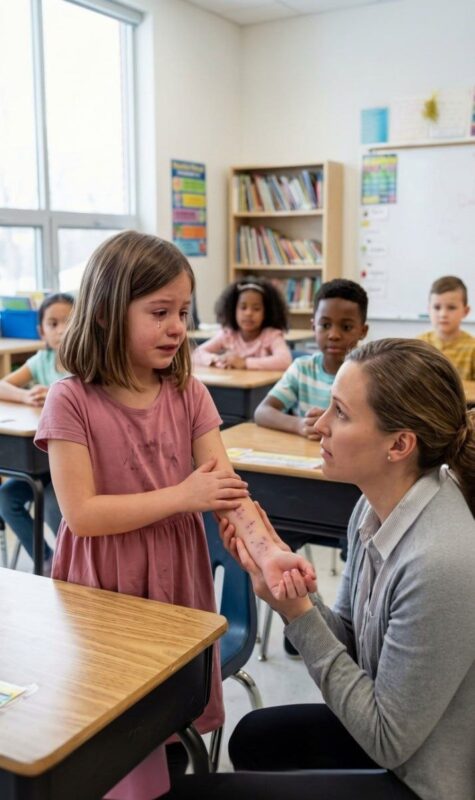
Yet nothing could have prepared her for the morning Room 14 fell completely silent.
Normally, twenty-two six-year-olds filled the room with chatter, whispered secrets, and questions before she finished giving instructions.
That day, their voices gradually faded. Naomi followed their gaze to the back corner, where a tiny girl sat perfectly still, as though she could disappear entirely.
Her name was Ivy Callahan, a recent transfer. Small for her age, her sandy hair fell in untidy strands, her sweaters hung past her wrists, and her sneakers were worn thin.
She rarely spoke up, ate quietly, and sometimes slipped an extra cracker into her pocket. Naomi had noticed, but had respected her dignity—until that morning.
Crouching beside Ivy, Naomi spoke softly. “Can you look at me for a moment?”
Ivy lifted her eyes, wide and wary, carrying a deep, lasting fear. “Please don’t tell anyone,” she whispered.
Naomi noticed Ivy holding her left arm stiffly. “May I see your arm?” she asked gently. After a brief pause, Ivy nodded.
Naomi rolled back the sleeve and saw a deep, inflamed wound along her forearm—clearly not a playground scrape.
“Mrs. Dorsey,” Naomi said, “please stay with the class and call Nurse Bell immediately.”
Caroline Bell, the school nurse, arrived quickly. Her face drained of color when she saw the injury. “This needs urgent medical attention—today,” she said.
Ivy’s tears finally came, full and unrestrained. “My grandma tried… she really tried. Please don’t be mad at her,” she sobbed.
Naomi knelt beside her, holding her gaze. “No one is angry. We just want to make sure you’re safe.”
With Nurse Bell’s guidance, Naomi called for emergency assistance, realizing that the small warning signs she had noticed over the past three months were pieces of a painful puzzle she could no longer ignore.
Ivy had always entered Room 14 quietly, her sagging backpack and folded hands making her seem smaller than she was.
She spoke little, guarded her food, and returned notes home unsigned.
Once, showing Naomi a drawing of a modest apartment, she said, “Just me and Grandma Lenora… she works a lot, gets tired, but she’s trying.”
Naomi remembered that quiet resilience.
After the paramedics arrived, Naomi stayed at Ivy’s side, holding her hand and whispering reassurance:
“None of this is your fault.” She promised Ivy that help would reach her grandmother too.
Back in the classroom, Ivy’s desk remained empty. Naomi explained simply that she was recovering and being cared for.
Students made cards, and Naomi collected them, aware of the hidden struggles that exist alongside everyday life.
Months later, Naomi remembered that day—not for the fear, but for the moment Ivy finally trusted an adult’s words:
“I’m here.” She understood that noticing, acting, and refusing to look away can begin a child’s healing.
No child should bear adult burdens while suffering. Often, the smallest signs are the loudest calls for help.
True courage is in stepping forward to see, speak, and stay beside a frightened child. Healing begins when we refuse to ignore discomfort—and give a child the safety to be seen.