Brooklyn spent the next forty-eight hours learning exactly how badly she had been betrayed.
Winston’s attorney, Helen Cross, arrived the following morning.
She was in her fifties, sharply dressed and unimpressed by almost everyone.
Helen spread bank statements across the dining-room table.
“Three months ago, Bradley increased your life-insurance policy from $180,000 to $500,000.”
Brooklyn frowned.
“I didn’t sign that.”
“We know.”
Helen showed her the signature.
Brooklyn stared.
“That isn’t mine.”
“Close imitation.”
“Bradley forged it?”
“Possibly.”
Winston sat across from them.
“Keep going.”
Helen turned another document.
“Marlene has approximately $96,000 in personal debt.”
Another page.
“Corey owes roughly $71,000 after a failed contracting business.”
Another.
“Vivian has $43,000 in credit-card and private-loan debt.”
Brooklyn leaned back.
“That’s almost…”
“Two hundred ten thousand dollars,” Helen said.
Brooklyn’s eyes narrowed.
“My grandmother left me $180,000.”
“Yes.”
Everything suddenly connected.
Six months earlier, Brooklyn had inherited the money after her grandmother died.
Bradley had immediately wanted to invest it in Corey’s construction business.
Brooklyn refused.
The arguments began.
Then came Marlene.
Family helps family.
Vivian.
You’re selfish.
Corey.
It’s just sitting in a bank.
And Bradley.
If you loved me, you’d trust my family.
Brooklyn looked at Winston.
“They wanted the inheritance first.”
“Looks that way.”
“And when I wouldn’t give it to them…”
Helen tapped the insurance policy.
“They found a larger number.”
Brooklyn stood.
“I need air.”
She walked toward the windows.
Winston followed but kept his distance.
For nearly a minute, neither spoke.
Then Brooklyn said, “Nine years.”
Winston waited.
“Nine years of my life.”
“You survived.”
“That doesn’t give them those years back.”
“No.”
She turned.
“I don’t want sympathy.”
“You won’t get it from me.”
Brooklyn blinked.
Winston continued calmly.
“Sympathy keeps people sitting down. You need information.”
That got her attention.
“What information?”
“Your husband is spending money.”
“How do you know?”
“He bought champagne yesterday.”
Brooklyn stared.
“Champagne?”
“Four bottles.”
“Bradley hates champagne.”
“He apparently likes it when he thinks his wife is dead.”
Brooklyn’s expression hardened.
“Where?”
“His mother’s house.”
Helen closed her folder.
“Someone inside that family is nervous.”
“Who?”
“Vivian,” Winston said.
“How do you know?”
“She called Bradley eleven times yesterday.”
Brooklyn stared at him.
“You’re watching them.”
“Yes.”
“Is that legal?”
Helen answered before Winston could.
“Some of it.”
Brooklyn looked between them.
“That is not comforting.”
“It wasn’t intended to be,” Winston said.
Despite herself, Brooklyn smiled.
It vanished quickly.
“Why are you doing all this?”
Winston’s expression changed.
“You really don’t remember me.”
“No.”
“Eight years ago. Twenty-four-hour diner on Cicero Avenue.”
Brooklyn searched her memory.
She had worked nights there before marrying Bradley.
Hundreds of customers.
Thousands.
Then Winston said, “January. Snowstorm.”
Something shifted.
“A man came in around three in the morning.”
Winston nodded.
“He had blood on his shirt.”
Helen looked at him.
Winston ignored her.
Brooklyn remembered.
The stranger had looked exhausted and dangerous.
He ordered coffee.
Then realized he had no wallet.
Brooklyn had given him soup, bread and coffee anyway.
“You were that man?”
“Yes.”
“You looked terrible.”
“I’d been shot.”
Helen sighed.
“Wonderful confession, Winston.”
Brooklyn stared.
“I thought you’d been mugged.”
“I didn’t correct you.”
“I gave you chicken soup.”
“And twenty dollars.”
Brooklyn laughed softly.
“You said you needed a cab.”
“I did.”
“You never came back.”
Winston reached into his wallet.
He removed an old folded twenty-dollar bill.
Brooklyn’s smile disappeared.
“You kept it?”
“You told me something that night.”
“I don’t remember.”
“You said, ‘Everybody deserves one night when somebody helps without asking what they’ll get back.’”
Brooklyn stared at him.
“I said that?”
“You did.”
“I was twenty-six.”
“You were right.”
Winston put the bill away.
“For eight years, I wondered who you were.”
“Why didn’t you find me?”
“I did.”
Brooklyn stiffened.
Winston continued.
“You married Bradley six months later. You looked happy.”
“So you stayed away.”
“Yes.”
She studied him.
“And then you heard me screaming.”
“Yes.”
A silence passed between them.
Brooklyn finally said, “That’s a very inconvenient coincidence.”
Winston almost smiled.
“I’ve experienced worse.”
Helen’s phone rang.
She answered.
Listened.
Then her expression changed.
“What?”
Brooklyn turned.
Helen ended the call.
“County investigators recovered something near the Whitfield dock.”
“What?”
“Your shoe.”
Brooklyn looked down.
Helen continued.
“There’s something else.”
“What?”
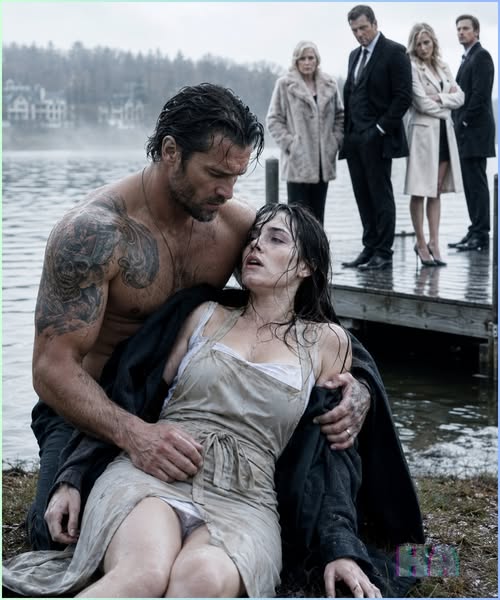
“A security camera from a property farther down the shoreline captured the Whitfields leaving the dock.”
Brooklyn inhaled.
“Did it capture them pushing me?”
“No. Wrong angle.”
Her hope vanished.
“But it shows all four of them leaving less than two minutes after you went into the lake.”
Winston leaned forward.
“That destroys Bradley’s statement that he attempted a rescue.”
Helen nodded.
“Partially.”
Brooklyn looked toward the folder again.
“Not enough.”
“No,” Helen said. “We need one of them to talk.”
Brooklyn thought about Bradley.
Corey.
Marlene.
Then Vivian.
The weakest liar in the family.
Brooklyn’s eyes narrowed.
“Vivian will talk.”
Winston looked at her.
“How do you know?”
“Because Vivian can lie to strangers.”
Brooklyn picked up her phone.