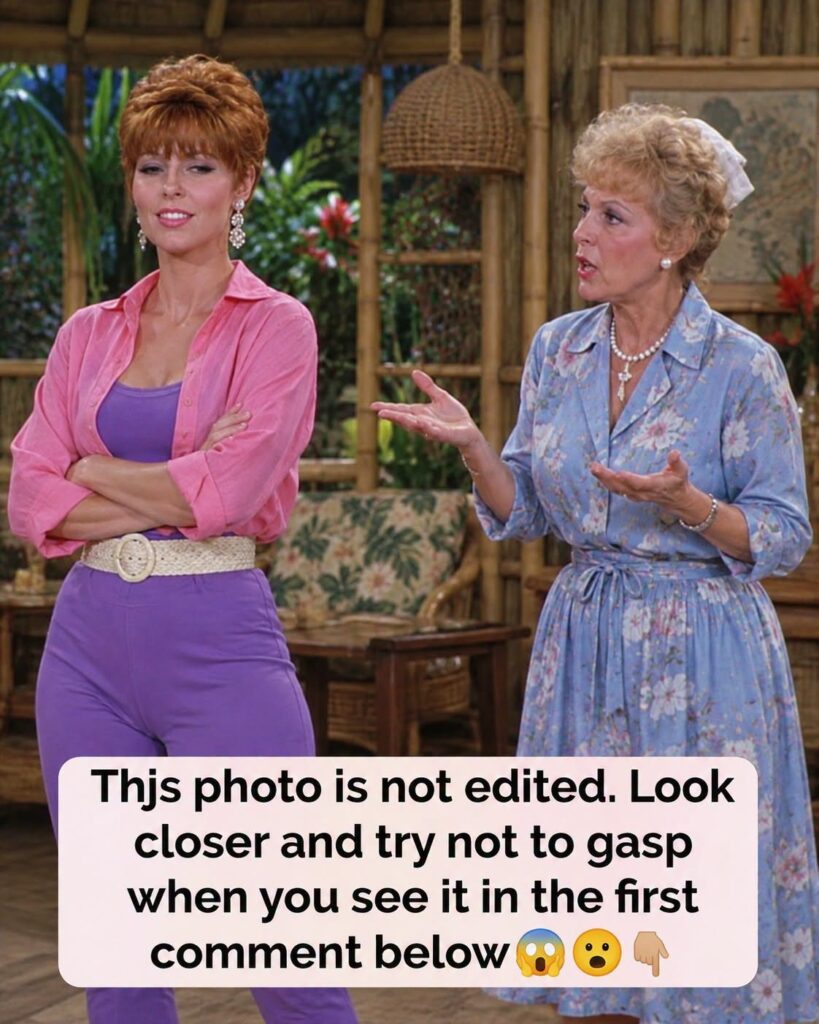
The illusion was never perfect—and that’s exactly why it still haunts us. A boat that shifts size, a shoreline that quietly rearranges itself, a bracelet that vanishes between cuts. Each flaw is a fingerprint, pressed into the film by rushed hands and vanished routines. Look closely, and the island begins to crum…
Gilligan’s Island survives not because it was seamless, but because its seams still show. The shifting beaches, wandering props, and inconsistent costumes quietly reveal a studio world built from lumber, canvas, and guesswork. Those visible compromises turn a simple sitcom into a record of how television once felt: hurried, inventive, and unembarrassed by imperfection. What once looked like “mistakes” now reads as evidence of human presence.
Rewatching the series becomes less about catching errors and more about recognizing the people behind them—carpenters extending a lagoon, camera operators dodging palm fronds, actors repeating lines while the sun and shadows refuse to match. The comedy remains, but the context deepens. Each continuity slip links the episode to its time, its tools, and its unspoken customs. In noticing those details, viewers rescue ordinary labor and fleeting choices from being erased by nostalgia’s smooth, polished surface.