
Lionel Messi Was a Small Boy Whose Family Struggled to Afford His Medical Treatment — Then He Became a Football Lege
From an Uncertain Childhood to an Extraordinary Football Career
Long before Lionel Messi became one of the most recognizable athletes in the world, he was a young boy in Argentina whose future was far from certain.
He had an extraordinary talent for football, a family that supported his ambitions, and a passion for the sport that shaped nearly every part of his childhood.
But behind his natural ability was a serious medical challenge that threatened to make his journey far more difficult.
Doctors diagnosed Messi with growth hormone deficiency when he was around ten years old. The condition affected his physical development and required medical treatment that placed considerable financial pressure on his family.
At an age when most children were focused on school and playing with friends, Messi and his parents were confronting decisions that could influence his health and his future.
Eventually, an opportunity thousands of miles from home changed the direction of his life.
At thirteen, Messi moved from Argentina to Spain to join FC Barcelona’s youth development system, beginning a journey that would lead to historic achievements in club and international football.
His story would eventually include championship victories, devastating defeats, individual records, and one of the most celebrated moments in World Cup history.
A Working-Class Childhood in Rosario
Lionel Andrés Messi was born on June 24, 1987, in Rosario, Argentina.
He grew up in a working-class household with parents who worked to provide for their family while encouraging their children’s interests.
His father, Jorge Messi, worked in a steel factory and was also involved in coaching football. His mother, Celia, worked in a workshop that manufactured magnets.
Football was an important part of Lionel’s surroundings from an early age.
He spent much of his childhood playing the game, developing skills and habits that would later become defining characteristics of his professional career.
Although his family did not possess enormous financial resources, Messi grew up with encouragement and a strong connection to the people around him.
Those early relationships became an important foundation for the challenges he would eventually face.
The Young Boy Who Showed Unusual Football Ability
Messi’s talent became noticeable while he was still very young.
He demonstrated exceptional coordination, close control of the ball, and an instinctive understanding of how to move past opponents.
While other children were developing their basic football skills, Messi already appeared comfortable making quick decisions with the ball at his feet.
He could recognize spaces on the pitch and change direction rapidly, often overcoming opponents who were physically bigger than him.
His small stature did not prevent him from making an impression.
Instead, his quick movements and ability to retain possession became significant advantages.
The qualities that would later make him famous were already emerging during ordinary childhood football matches.
The Important Role of His Grandmother
Among the people who encouraged Messi during his early years was his grandmother, Celia.
She believed in his talent and supported his desire to play football.
Her encouragement helped him pursue opportunities to develop his ability at an age when his future in the sport was impossible to predict.
For a young child, having someone take his ambitions seriously could make a meaningful difference.
Messi’s grandmother became an important figure in the story of his early development, representing the personal support that surrounded him before professional clubs recognized his abilities.
Her belief in him remained part of the wider story of how a boy from Rosario began moving toward a professional football career.
A Medical Diagnosis Created New Uncertainty
Despite his exceptional talent, Messi faced an obstacle unrelated to his technical abilities.
When he was around ten years old, doctors diagnosed him with growth hormone deficiency.
The condition affected his growth and meant that he was developing physically at a different rate from many children his age.
Medical treatment was necessary to address the hormone deficiency, and the recommended care involved regular treatment over time.
For Messi’s family, the diagnosis created an immediate concern.
They wanted him to receive the medical assistance he needed, but paying for the treatment was difficult.
His footballing ability did not eliminate the practical challenge of obtaining suitable healthcare.
His parents therefore had to consider both his medical needs and the opportunities available for his sporting development.
The Financial Pressure Facing His Family
The cost of Messi’s treatment became a serious burden for his household.
His parents were already supporting their family through ordinary working-class incomes, and the additional medical expenses created further pressure.
They worked to find ways to meet the costs while continuing to encourage Lionel’s development.
The situation demonstrated that having exceptional talent did not automatically provide access to the resources required to pursue a professional career.
Without financial and medical support, Messi’s path forward remained uncertain.
No one could guarantee that he would eventually play professionally, even if his skills were remarkable.
At that stage, the family’s immediate priority was ensuring that he could continue receiving appropriate treatment while growing up as normally as possible.
Why His Physical Size Did Not Define His Football
Messi was smaller than many other young players, but his footballing approach allowed him to compete effectively.
His low center of gravity contributed to his balance and ability to change direction.
He could move through crowded areas while keeping the ball close to his feet.
Instead of relying mainly on physical strength, he used timing, acceleration, and technical control.
These characteristics made it difficult for opponents to predict his next movement.
As he continued playing, Messi refined the combination of skills that would become central to his success.
His example also demonstrated that football performance depends on many qualities, including decision-making, awareness, and technique.
Physical size was only one part of the game.
The Opportunity That Arrived From Barcelona
Messi’s performances eventually attracted the attention of FC Barce
The Spanish club recognized his potential and offered him an opportunity to continue his football development within its youth system.
For Messi and his family, the proposal involved much more than joining a new team.
Barcelona also agreed to help cover the cost of his medical treatment.
That support addressed an important difficulty his family had been facing.
The club could provide a structured environment for developing his football abilities while helping him receive the care required for his growth hormone deficiency.
The opportunity represented a major turning point, although it still offered no guarantee of professional success.
Messi would need to adapt to a demanding new environment and prove himself against increasingly competitive players.
Leaving Argentina at Just Thirteen Years Old
In 2000, Messi traveled to Spain when he was thirteen.
The move required him to leave behind much of the life he had known in Rosario.
His friends, familiar surroundings, and established routines were suddenly far away.
Adapting to a new country presented challenges beyond the demands of football training.
Messi had to become comfortable with unfamiliar surroundings while continuing his education, medical treatment, and sporting development.
For someone so young, the experience involved considerable personal sacrifice.
But the decision also gave him access to opportunities that had previously seemed uncertain.
His family understood that moving to Barcelona might provide the support he needed to pursue his ambitions.
The journey marked the beginning of a new chapter in his childhood.
Developing His Talent at La Masia
Barcelona’s La Masia academy became central to Messi’s development.
The youth system provided a competitive football environment where young players received coaching and worked to improve their skills.
Messi continued building on the technical qualities that had distinguished him in Argentina.
His dribbling, movement, awareness, and ability to make decisions under pressure became increasingly refined.
He was not known primarily for being outspoken or seeking attention away from the pitch.
His performances were what made him stand out.
Coaches and teammates gradually recognized that the quiet young Argentine possessed remarkable ability.
Still, progressing through a youth academy required consistent improvement and discipline.
Talent alone was not enough to secure a place in Barcelona’s senior team.
The Beginning of His Professional Career
In 2004, at seventeen years old, Messi made his official first-team debut for Barcelona.
The appearance marked a significant milestone in the career of a young player who had arrived from Argentina only a few years earlier.
He was now competing at a level that demanded exceptional technical and tactical ability.
The transition from youth football to the senior team provided new challenges.
Matches were faster, opponents were more experienced, and expectations were considerably higher.
But Messi continued demonstrating the qualities that had attracted Barcelona’s attention in the first place.
His ability to retain control of the ball, create attacking opportunities, and recognize spaces made him increasingly valuable.
Over time, he established himself as one of the club’s most important players.
Becoming One of Barcelona’s Greatest Players
As Messi gained experience, his influence on Barcelona’s performances continued growing.
He became renowned for his close dribbling, precise passing, quick acceleration, and ability to score difficult goals.
His style combined individual creativity with an understanding of how to contribute to the team’s attacking play.
He could create opportunities for teammates as effectively as he could finish them himself.
These qualities helped Barcelona achieve sustained success.
Messi contributed to domestic championships and UEFA Champions League victories, becoming a central figure in one of the most successful periods of the club’s history.
His performances also brought widespread individual recognition.
The young player whose family once faced uncertainty over medical treatment was now competing among the leading footballers in the world.
A Career Filled With Individual Achievements
Messi’s accomplishments eventually extended far beyond his first appearances for Barcelona.
He collected multiple Ballon d’Or awards, recognizing his exceptional performances at the highest level of football.
He also established numerous records through his goalscoring, assists, and contributions to championship-winning teams.
His ability to influence matches in different ways became one of his defining strengths.
Some moments were remembered for extraordinary individual dribbling.
Others highlighted his passing, movement, or ability to deliver in important situations.
Across many seasons, Messi demonstrated a level of consistency that distinguished his career.
His achievements made him an internationally recognized sporting figure, admired by football supporters across different countries and generations.
Success at Club Level Did Not Prevent International Disappointment
Although Messi experienced extraordinary success with Barcelona, his career with Argentina included difficult periods.
Representing his national team brought a different kind of pressure.
Argentine supporters had enormous expectations, particularly because of the country’s history in international football.
Messi was regularly compared with Diego Maradona, whose achievements had become an important part of Argentina’s sporting identity.
Those comparisons intensified whenever the national team failed to win a major tournament.
Despite Messi’s individual quality, Argentina experienced painful defeats in important international matches.
The disappointments attracted criticism and renewed questions about whether he could lead the team to a major championship.
For years, international success remained the missing achievement in an otherwise exceptional career.
The Weight of Repeated Criticism
Messi faced intense scrutiny whenever Argentina fell short of expectations.
Some commentators questioned his leadership, while others focused on comparisons with Maradona.
The criticism created a difficult contrast.
At club level, Messi had won major trophies and established himself among football’s most accomplished players.
With Argentina, however, supporters continued hoping for a championship that would reflect his immense ability.
The pressure was not simply about personal statistics.
It concerned the collective success of a national team representing millions of supporters.
Messi continued playing for Argentina despite the disappointments.
His commitment would eventually contribute to a major change in the country’s international fortunes.
The Copa América Victory That Changed His International Story
In 2021, Argentina won the Copa América.
For Messi, the victory represented an important breakthrough after years of unsuccessful attempts to win a major senior international title.
The achievement carried considerable emotional significance.
It answered one of the most persistent questions surrounding his career and rewarded years of commitment to the national team.
The championship also demonstrated that earlier disappointments had not prevented Argentina from pursuing further success.
Messi had experienced major defeats, criticism, and uncertainty.
But he remained part of the team’s efforts to win a significant international trophy.
The Copa América victory became a defining milestone.
It also prepared the way for an even more celebrated achievement the following year.
The 2022 FIFA World Cup in Qatar
In 2022, Messi led Argentina into the FIFA World Cup in Qatar.
The tournament represented another opportunity to compete for football’s most prestigious international title.
Messi had already accomplished extraordinary things during his career, but a World Cup championship remained particularly meaningful.
Argentina progressed through the tournament and eventually reached the final.
The decisive match against France became one of the most memorable contests in World Cup history.
Both teams delivered dramatic moments during an intensely competitive final.
Argentina ultimately secured victory following a penalty shootout.
Messi and his teammates became world champions.
For Argentina, the achievement represented a historic national celebration.
For Messi, it completed an extraordinary journey through years of international disappointment and growing expectations.
The Moment That Defined a Generation
Messi lifting the World Cup trophy became one of the most recognizable moments of his career.
It symbolized more than victory in a single match.
The celebration reflected years of preparation, teamwork, difficult defeats, and continued determination.
For longtime supporters, the achievement brought together the many chapters of his international career.
They had watched him develop from a promising young player into an established star.
They had also witnessed painful losses in major competitions.
The World Cup victory provided a moment of celebration that contrasted sharply with those earlier disappointments.
It became one of the central achievements in Messi’s sporting legacy.
His Influence Reached Far Beyond Football Trophies
Messi’s career has influenced the way many young people approach football.
His playing style demonstrates the importance of technical ability, awareness, balance, and decision-making.
He became especially recognizable for maintaining close control of the ball while moving rapidly through challenging defensive situations.
His success also attracted attention because of the difficulties he had faced during childhood.
Young athletes could recognize that his professional career had not begun under ideal circumstances.
He required medical treatment, his family faced financial pressure, and he moved to another continent at a young age.
Those experiences became part of his wider story, although his eventual achievements also depended on access to professional support, sustained training, and exceptional ability.
The Importance of Family Support
Throughout Messi’s early development, his family played an important role.
His parents worked to support his medical needs and football ambitions.
They faced uncertainty about treatment expenses and the practical consequences of moving abroad.
His grandmother encouraged him when he was very young.
These relationships helped create opportunities for Messi to continue pursuing the sport he loved.
His success was ultimately achieved through years of personal work, but his early circumstances show that individual achievement often depends on support from others.
Without the assistance surrounding his medical care and move to Barcelona, his journey could have been very different.
Why His Medical Challenge Remains an Important Part of His Story
Messi’s growth hormone deficiency is often mentioned when people discuss his childhood.
The condition required medical attention and created financial concerns for his parents.
It also became an important factor in the family’s decision to consider an opportunity in Spain.
However, the medical diagnosis should not be treated as the sole explanation for Messi’s achievements.
Receiving treatment helped address his health needs.
His football career also required years of development, discipline, coaching, and competitive experience.
The significance of the story lies partly in how access to appropriate support helped a talented young athlete continue progressing.
His physical challenges did not eliminate his potential, but overcoming the practical barriers required more than determination alone.
A Journey That Began Without Guarantees
When Messi left Argentina at thirteen, there was no certainty that he would become a professional footballer.
Barcelona provided an opportunity to develop his abilities, but that opportunity still required commitment and consistent improvement.
He had to adapt to a different country and a demanding football environment.
He also had to continue managing the challenges associated with his medical treatment.
Each stage of his development presented new expectations.
Success in youth football led to greater competition.
A first-team opportunity brought higher demands.
And professional achievements eventually created worldwide scrutiny.
Messi’s career developed through these stages rather than through a single moment of discovery.
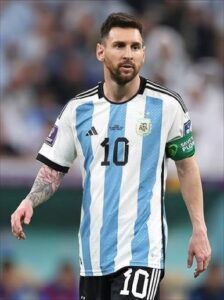
From Rosario to Worldwide Recognition
The distance between Messi’s childhood in Rosario and his later international success was enormous, both geographically and professionally.
He began as a young boy who loved football and played whenever he could.
His family recognized his talent but also had to address serious concerns about his physical development.
An opportunity at Barcelona allowed him to continue treatment while developing within a respected youth academy.
He progressed to the first team and became one of the club’s defining players.
His achievements eventually included major domestic and European championships, individual honors, and significant international victories.
With Argentina, the 2021 Copa América and 2022 World Cup became especially important milestones.
Each achievement reflected a different stage of a career that had begun under uncertain circumstances.
The Lasting Meaning of Lionel Messi’s Extraordinary Life Story
Lionel Messi’s journey is often celebrated through photographs of trophies, unforgettable goals, and stadiums filled with supporters.
But those images represent only the most visible results of a much longer story.
He was born into a working-class family in Rosario, Argentina, where football quickly became his greatest passion.
His extraordinary talent appeared early, and his grandmother was among the people who encouraged him to continue playing.
Then a diagnosis of growth hormone deficiency created a serious challenge for his family.
The treatment was expensive, and his parents struggled to find sustainable financial support.
When Barcelona offered him an opportunity, Messi moved to Spain at thirteen, leaving behind his familiar life to pursue a future that remained uncertain.
At La Masia, he continued developing the abilities that would eventually distinguish his professional career.
In 2004, he made his official first-team debut.
Over the following years, he became one of Barcelona’s most accomplished players and collected numerous individual and team honors.
His international career included painful disappointments and intense criticism before Argentina’s victories in the 2021 Copa América and 2022 FIFA World Cup.
Those achievements brought a remarkable sense of completion to a journey that had begun many years earlier.
Messi’s life illustrates how extraordinary results can emerge from circumstances filled with uncertainty.
His talent was exceptional, but he also benefited from the sacrifices of his family, access to medical treatment, professional coaching, and opportunities that allowed him to develop.
The boy who once faced an uncertain sporting future became a world champion and one of football’s most recognized figures.
And behind the international fame remains the story of a child whose love of football, supported by the people around him, opened the door to an extraordinary career.