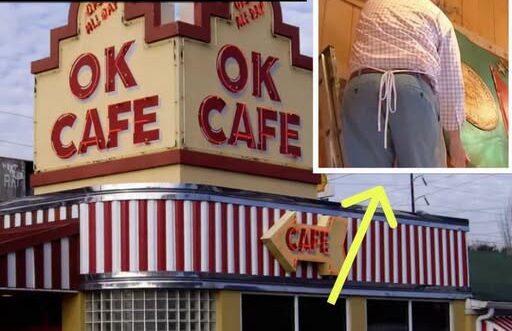
Atlanta’s OK Café Took Down Its Confederate-Era Flag Design After 30 Years. The Auction Plan Drew New Criticism
Customers Applauded the Removal, While Local Activists Questioned the Owner’s Plan to Give the Proceeds to Police
People inside Atlanta’s OK Café applauded on a Friday when a flag bearing Georgia’s 1956 state design came down. The flag, which incorporated the Confederate battle emblem, and an accompanying banner had hung from the rafters of the Buckhead restaurant for about 30 years.
Longtime owner Susan DeRose said she removed the display after receiving threats against the business and recognizing that the flag offended people. She said she planned to auction it and give the money to the local police force. That proposal became the focus of a new disagreement over what the removal meant and how the restaurant should respond to years of criticism.
Why Susan DeRose Decided to Remove the Flag
For decades, the flag was a fixture in the dining room. DeRose said she associated it with the civil rights gains she remembered from 1964, including gains for women. Critics saw the Confederate battle emblem as a reminder of Georgia’s resistance to integration during the civil rights era.
DeRose described both her attachment to the flag and the calls that prompted her to take it down. She also explained what she wanted to do with it next.
“I have it up because it means a lot to me,” DeRose explained. “It means a lot to me about what happened in 1964 when women got the civil rights. I realize a lot of people don’t agree with that, and some people have been calling saying they’re going to burn us down. I thought, ‘Well, I’m just going to take it down.’ We’re going to auction it off because I understand it offends people. So I’m going to take it down and we’re going to give the money to the police force.”
Her remarks addressed why she had kept the flag and why she chose that moment to remove it. The design itself dated to 1956. Its Confederate emblem was the feature critics had objected to, regardless of the events DeRose personally associated with it.
A Sunday March Brought Demonstrators Past the Restaurant
That Sunday, demonstrators with Buckhead for Black Lives marched past the OK Café. Among them was Isabel Johnson, a Georgia Tech student and a leader in the youth-led group. As the march passed the restaurant, participants noticed a tea party stand out front with a sign that read, “Lives that matter are made with positive purpose.”
The wording was interpreted as a response to Black Lives Matter. The sign was eventually taken down. Its appearance outside the restaurant brought another part of the business into the discussion just as the flag inside was coming d
Johnson welcomed the removal of the flag. She saw it as a step toward making the café friendlier to more people and said the way people were treated deserved continued attention.
“I’m glad that it’s a good gesture in the right direction,” Johnson said. “I’m glad to see that steps are being taken to kind of reform the restaurant and to make it a little bit more friendly for everyone. I think it’s a good first gesture, but I think a lot more needs to be done in reforming how people are treated.”
Vincent Fort Questioned the Decision to Give Auction Proceeds to Police
Former Georgia state Sen. Vincent Fort was less receptive. He focused on how long the flag had remained above the dining room and how it had been received by Black residents and others who objected to its display. The removal came after decades in which the emblem was visible to people who entered the restaurant.
“This has been a calculated attempt to insult Black people—and not just Black people, but their allies, because there are a lot of white folks that have seen this and said, ‘Hold it,’” Fort remarked. “These guys have been so calculated, so offensive for so long that I’m not willing to give them a break.”
Fort also questioned DeRose’s choice to direct the money to law enforcement. The move would carry the flag beyond the restaurant through an auction and put the revenue toward a recipient she selected. Fort saw both choices as part of the café’s response to the objections it had faced.
“We’ve been trying to get them to do the right thing, and I’m not convinced that taking down the symbol and giving the money to the police is the right thing, or the only thing that they should be doing,” Fort argued.
A Disagreement Over What the Restaurant Would Do Next
The people who reacted to the removal were looking at different parts of the same decision. The applause in the dining room came when the flag was physically taken down. Johnson’s response centered on whether that change would be followed by improvements in how people were treated. Fort’s criticism addressed both the history of the display and the owner’s choice of beneficiary.
DeRose presented the auction as a way to dispose of an item she knew offended people while raising money for local police. For Fort, the destination of that money was part of the gesture and deserved scrutiny in its own right. The dispute therefore carried on even after the flag stopped being part of the room.
The sequence of events also helps explain why one decision drew several reactions. On Friday, customers saw a display that had lasted about 30 years come down. On Sunday, marchers encountered a sign outside the same restaurant that some read as a criticism of their movement. Johnson could welcome the change inside while still asking what people would experience when they visited the café.
By removing the flag and banner, DeRose ended a display that had occupied the dining room for decades. Her announcement established what she intended to do with the flag. Johnson and Fort raised a wider question about the restaurant’s relationship with the community, one they judged through the café’s choices about whom it welcomed, how it treated people, and where it planned to send the proceeds.