Mum’s the word!
Truth be told, there are no actual coyotes on staff at the Pocono Wildlife Rehabilitation and Education Center in Pennsylvania.
But mum’s the word — there are a handful of little souls receiving care there who really mustn’t know that.
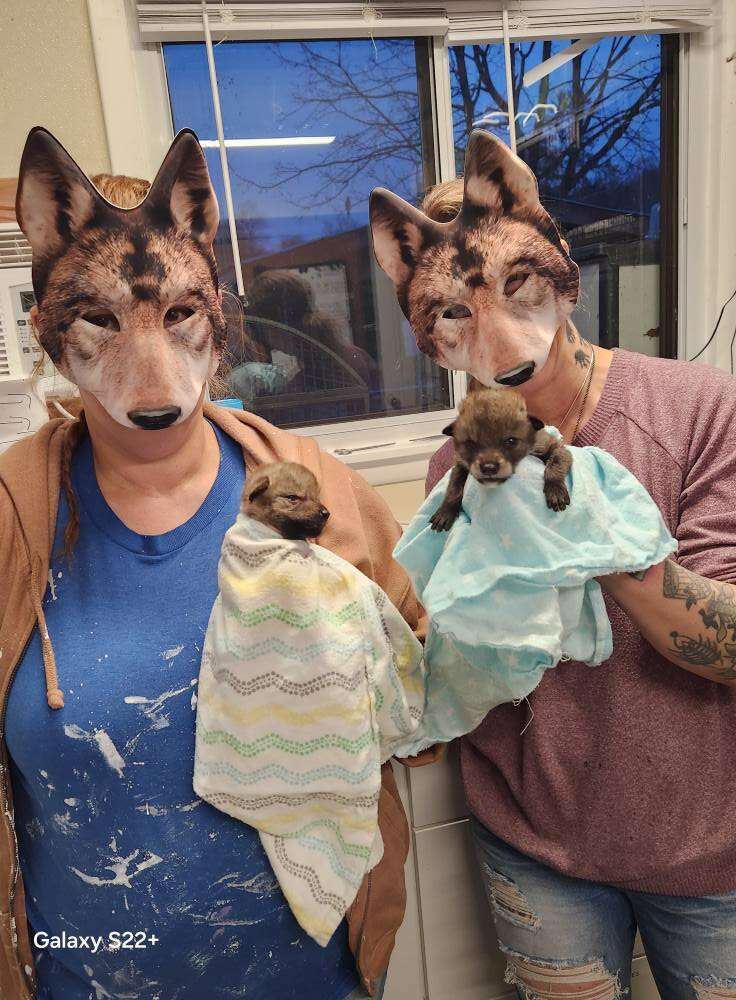
A few weeks back, staff at the rehab center took in six baby coyotes after their pregnant mother was struck and killed by a car.
An emergency C-section performed by a vet who witnessed the accident had saved their lives.
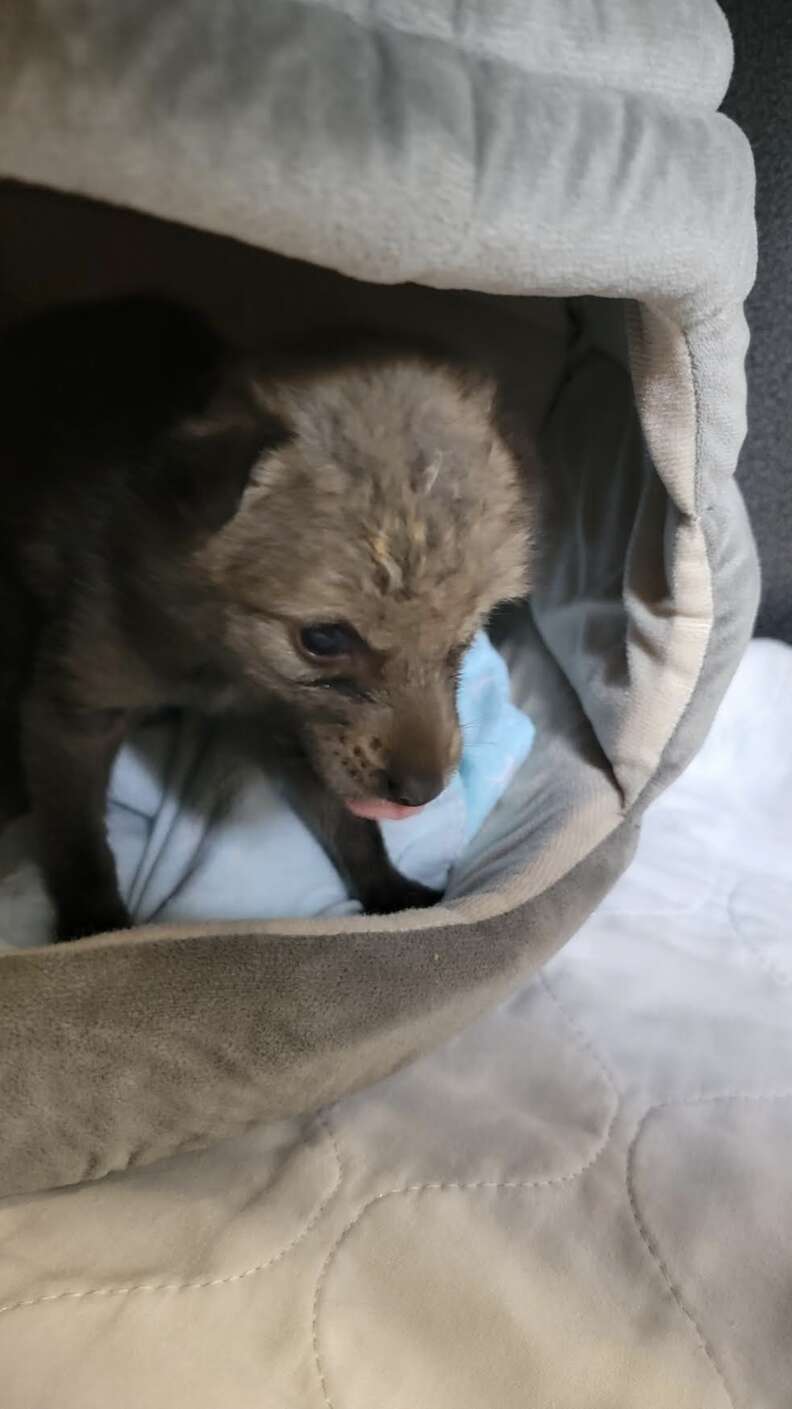
Thankfully, the little pups are in good hands now. Their caretakers, meanwhile, are going to great lengths to ensure that they don’t know exactly whose hands they really are.
Wearing masks, they’ve been pretending to be coyote moms.
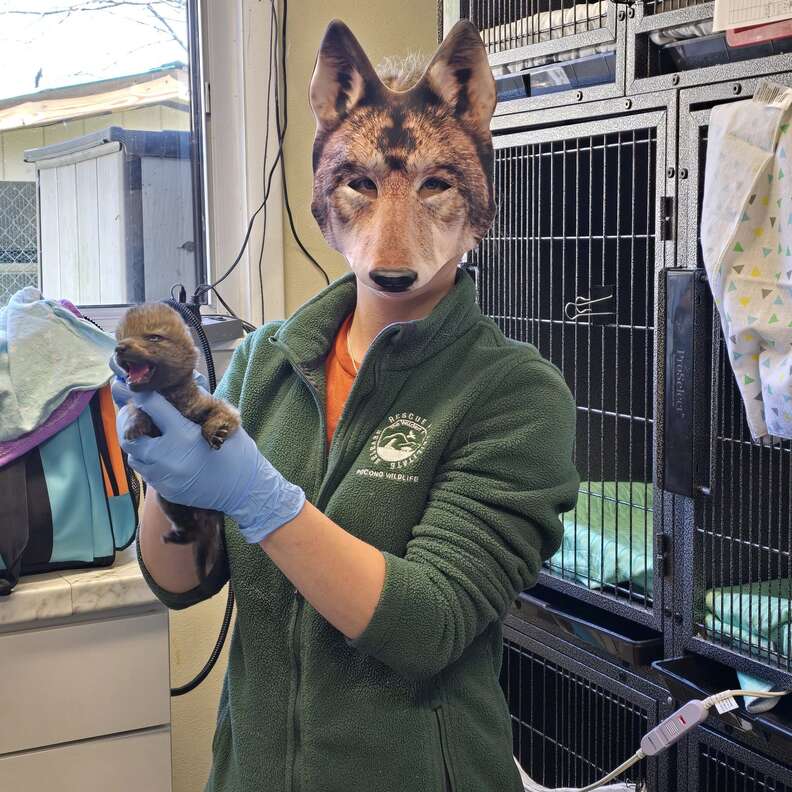
This little ruse might seem amusing, but it’s vitally important for the coyote pups’ future success.
“The masks are necessary for certain species that imprint very easily, like coyotes and eagles,” rehabber Amanda told The Dodo. “Here, we started using the masks once [the coyote pups’] eyes opened, so they do not associate humans with food and care.”
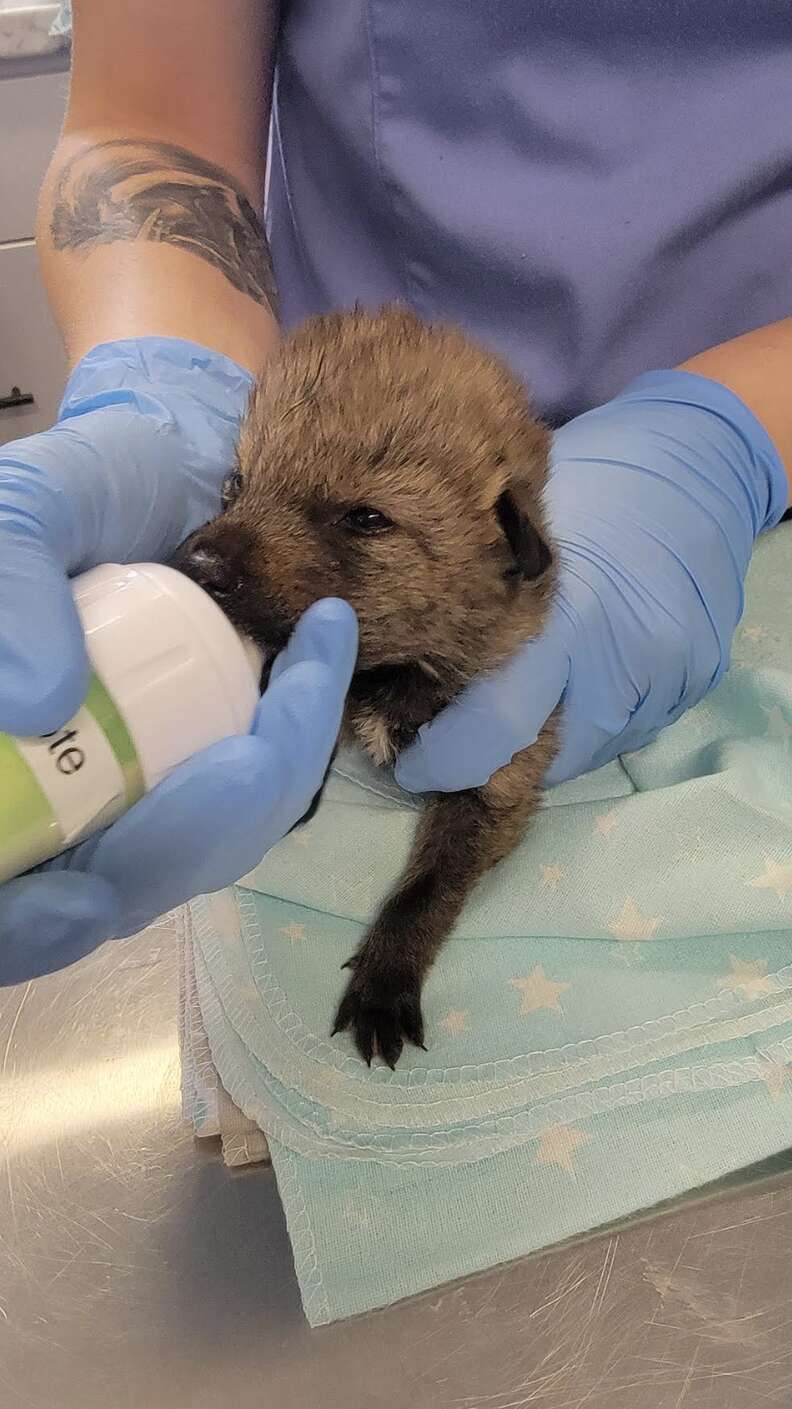
It’s a striking sight, but the little coyotes have no idea that something is amiss.
“Masks are a bit unusual to see around the clinic, as most of the animals we care for don’t run quite that high risk of imprinting,” Amanda said, adding: “We also take other steps to minimize imprinting, like limiting interaction and avoiding speaking too much around them.”
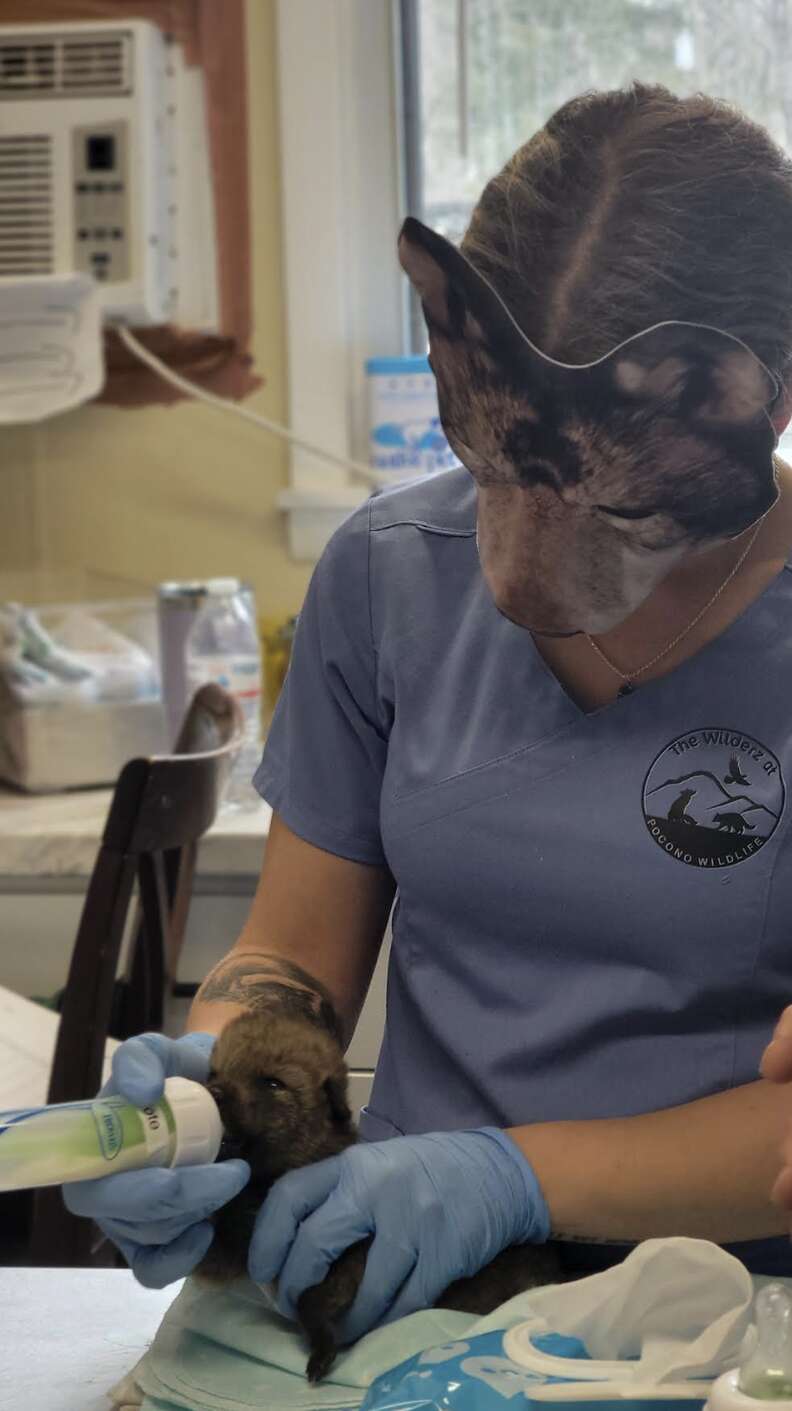
Playing the part of coyote mom — and looking the part, as well — is an early step in a longer process to help these orphaned pups live normal, healthy lives.
When they’re a bit older and more self-sufficient, they’ll be moved into an enclosure, where human interaction will continue to be limited via a one-way mirror, allowing for staff to observe them without being seen.
Until then, it’s masks on.
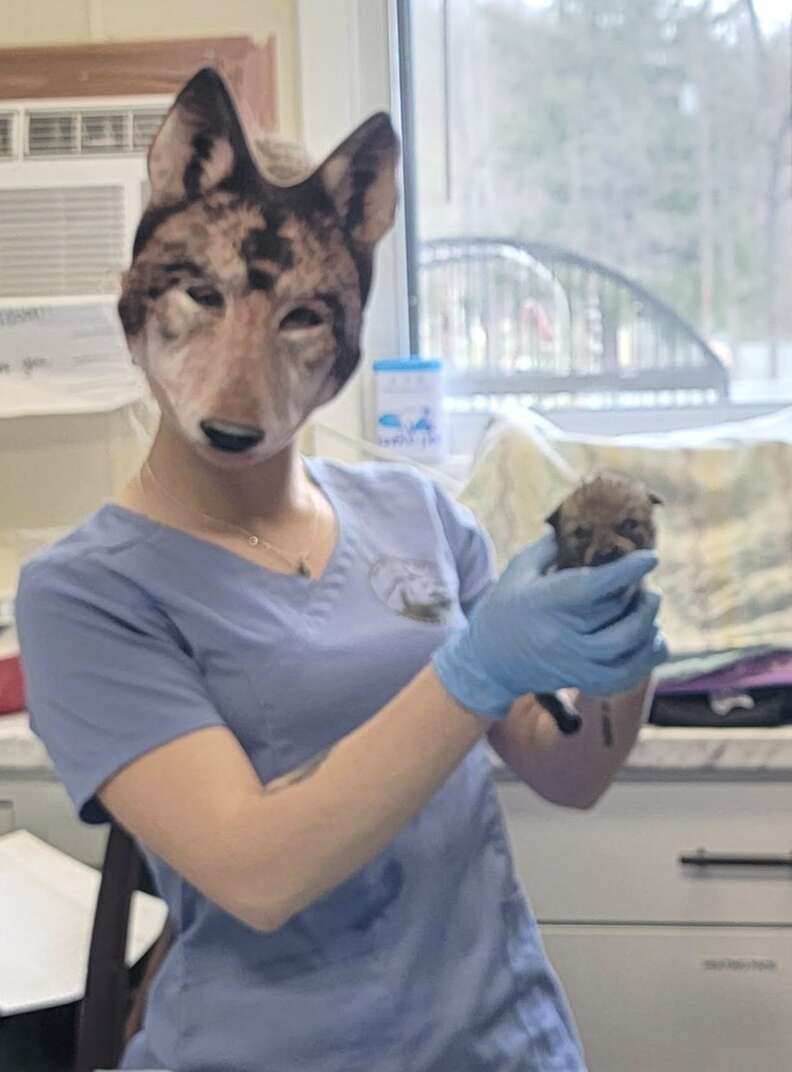
Thanks to this clever and conscientious handling technique, the pups’ sad beginnings have a better shot at leading to a happy ending.
“After about nine months of being in our care, they will be released with the assistance of the PA Game Commission, far away from any residences to further limit the potential for human interaction,” Amanda said. “The pups are all doing well, so we are optimistic that they will be returned to the wild.”