She was totally stuck 😰
Late last month, a Liverpool, Australia, resident was walking around in her yard when she noticed something stuck in her pear tree’s netting. As she got closer, she realized there was a bat entangled in the net, desperately trying to escape.

It was clear the bat had been trying to free herself for quite some time, which had only resulted in her getting more and more hopelessly entangled. Knowing the bat needed help, the homeowner called Sydney Wildlife Rescue.
As soon as Sydney Wildlife Rescue volunteer Bel arrived, she immediately got to work disentangling the bat, whom she identified as a grey-headed flying fox.
“It took over 25 minutes to free her from [the] netting, which was tightly wound around her body due to her struggle to get free,” Janine Davies, a representative from Sydney Wildlife Rescue, wrote on Facebook.
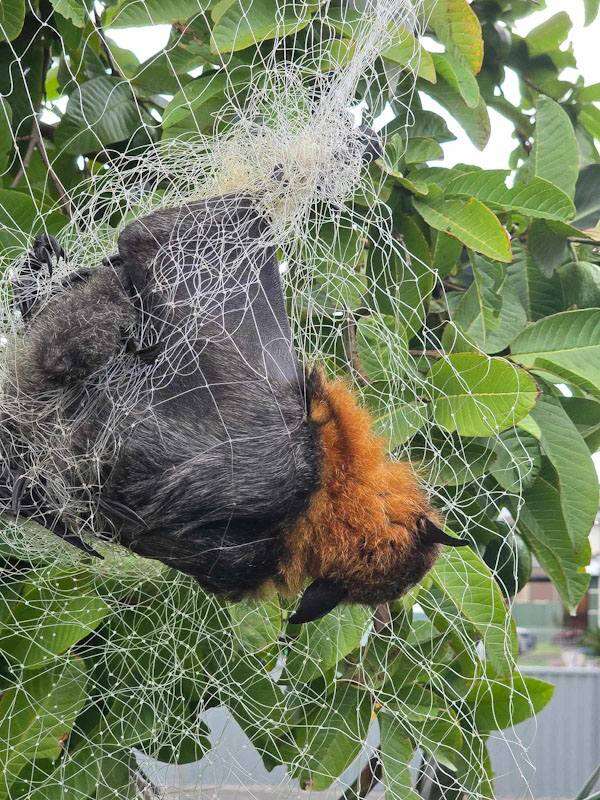
Unfortunately, as grey-headed flying foxes face habitat loss and increasingly have to find food in people’s backyards, rescuers have been seeing more and more entanglement cases.
“When there are not sufficient eucalyptus blossoms or native fruits available, flying foxes will look elsewhere for a food source,” Davies told The Dodo. “With the scarcity of eucalyptus blossoms, flying foxes are increasingly foraging in urban backyards, leading to a rise in rescues.”
When a bat gets stuck in netting, it can sometimes lead to the animal becoming seriously hurt. Thankfully for this bat, though, her injuries were relatively minor.

Bel, who preferred to have her last name omitted, transported the bat to the rescue facility. There, they named her Willow and got her the medical care she needed.
Flying foxes play an important role in their local ecosystems, acting as “nighttime pollinators.” As they feed on blossoms, nectar and fruit, pollen gets stuck in their fur and then dispersed to other plants.
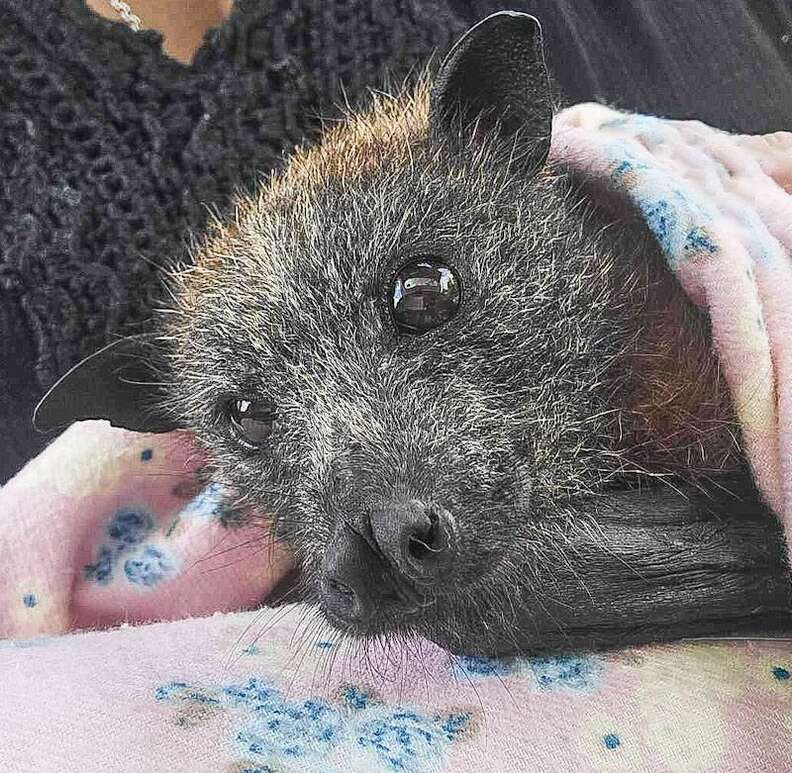
To help protect this vulnerable species, it’s important to choose tree netting that is safe for bats and other animals. Sydney Wildlife Rescue recommends choosing a net with holes that are small enough to prevent animals from passing through them.
“If the mesh is large enough to fit your fingers through, wildlife can become trapped,” Davies said.
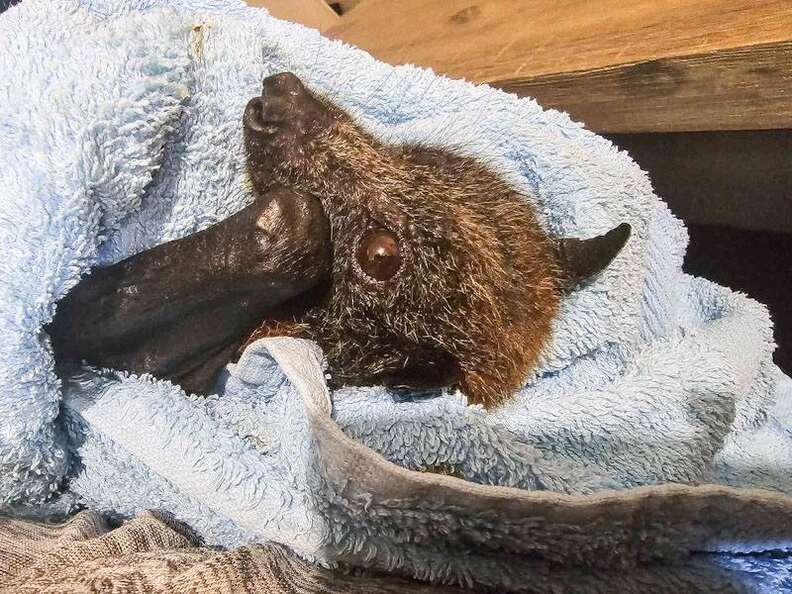
Willow will continue to be monitored, pampered and fed tasty snacks until she’s fully recovered from her ordeal. Once she’s feeling completely better, she’ll be released back into the wild, where she can fly free.